
Unanswered Questions
Plain explanations of conditions, symptoms and test results, for when nobody explains them.
Tingling in Hands: Causes and When to Worry
Tingling in your hands? See the common causes, from carpal tunnel to a pinched nerve, diabetes and low B12, and the signs that need a doctor, 911 or 999.
POTS Symptoms Checklist: Full List for Women, Men and Teens
A POTS symptoms checklist to tick and print: common and less obvious signs, what is different for women, men and teens, and what else it could be.

Scalloped Tongue: Causes, What It Means and When to Get Help
A scalloped tongue has wavy dents along its edges. See what causes it, including sleep apnea, thyroid problems and low vitamins, and when to get help.

Migraine Symptoms: The 4 Phases, Aura and When to Get Help
Migraine symptoms include throbbing pain, nausea and light sensitivity. See what each of the 4 phases feels like, how long attacks last and when to get help.

Dysautonomia Symptoms: Signs, Types and When to Get Help
Dysautonomia symptoms by body system: dizziness and a racing heart on standing, gut, sweating and bladder problems. The main types, tests and when to get help.

Hashimoto’s Symptoms: Checklist to Tick, Early Signs and Flares
Tick the Hashimoto’s symptoms you have and print the list for your doctor. Early signs, symptoms in women, flare-ups, and the blood tests that confirm it.
How to Read Blood Test Results: Ranges, Flags and Common Tests
How to read blood test results: what reference ranges, units and H or L flags mean, what common tests check, and what to ask your doctor about them.

Multiple Sclerosis (MS) Symptoms: Early Signs and When to Get Help
Multiple sclerosis symptoms explained: the common and early signs, what an MS relapse feels like, how MS is diagnosed and when to get urgent help.

Crohn’s Disease Symptoms: Early Signs, Flares and When to Get Help
Crohn’s disease symptoms: diarrhoea, belly pain, tiredness and weight loss, early signs that are easy to miss, flares, Crohn’s vs IBS and when to get help.

SIBO Symptoms: Signs, Causes, Tests and When to See a Doctor
SIBO symptoms: bloating, gas, tummy pain, diarrhoea or constipation. What causes SIBO, how the breath test works, how it is treated and when to see a doctor.
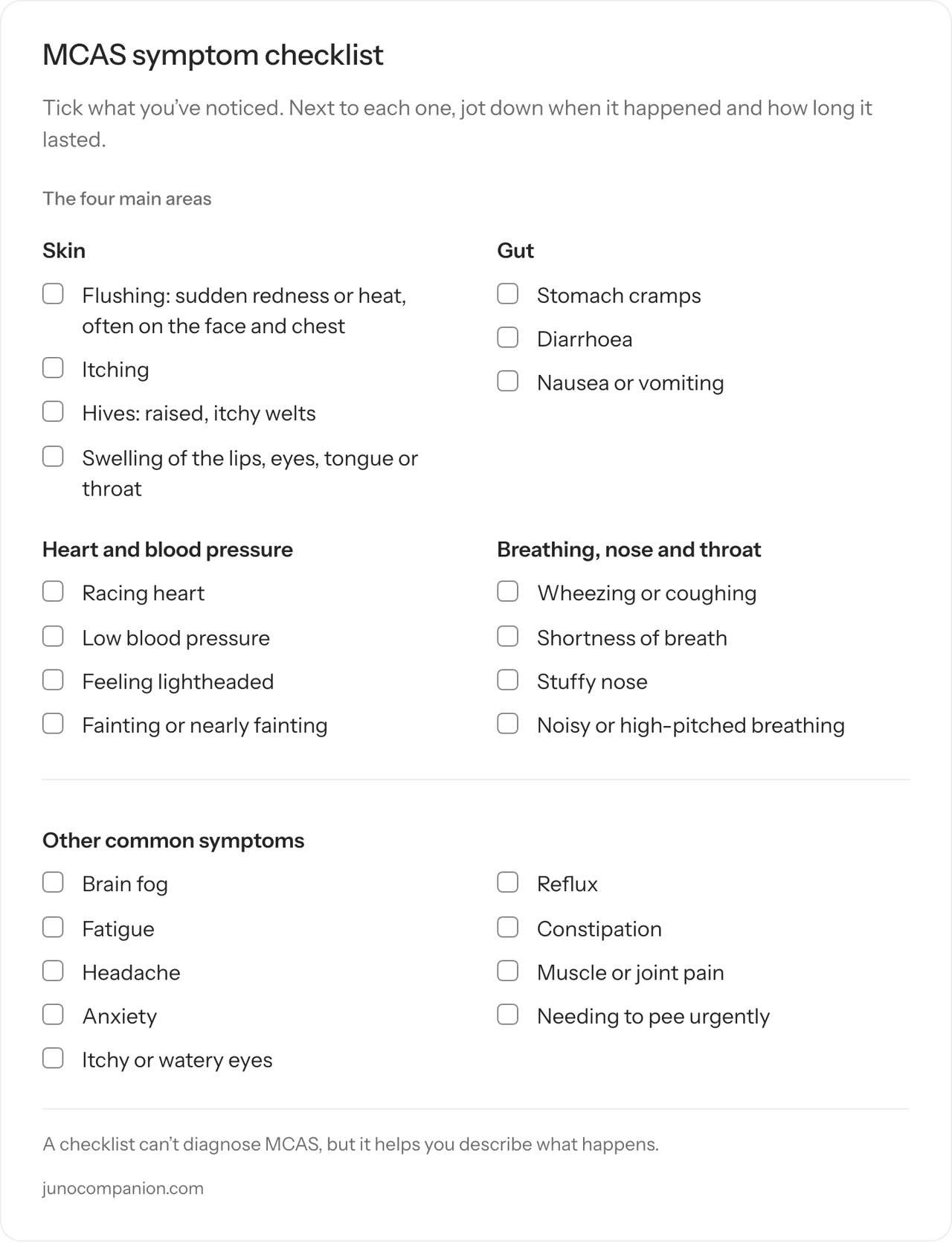
MCAS Symptoms: What a Flare Feels Like, Plus a Checklist to Tick
What an MCAS flare feels like: flushing, hives, stomach cramps, a racing heart. Skin signs, triggers, how it’s diagnosed, and a checklist to tick and print.
High ESR and CRP: What Raised Inflammatory Markers Mean
High ESR and CRP explained: what raised inflammatory markers mean, common causes, why the tests can disagree, and what to track before your next appointment.
Quick answer
A diagnosis, or a suspicion of one, often arrives with more questions than answers. These guides explain conditions, connected conditions, test results and unusual symptoms in plain language, so you know what to look out for and what to ask next. They are general information and never replace advice from a qualified clinician who knows your history.