Juno blog
Practical guides to symptom tracking, pacing, appointments and life with chronic illness.

Ocular Migraine: Symptoms, Causes and When It’s an Emergency
Ocular migraine usually means a visual aura: zigzags or blind spots in both eyes for 5 to 60 minutes. How to tell it from retinal migraine and when to get help.

Types of Headaches: Symptoms, Causes and When to Get Help
The main types of headaches, including tension, migraine, cluster, sinus and medication overuse: how each feels, how long it lasts and when to get help.

Brain Fog: Causes, What Helps and When to Worry
What causes brain fog: poor sleep, ME/CFS, long COVID, POTS, thyroid problems, MCAS, hormones and medicines. What helps, when to see a doctor and what to note.

Headache in the Back of the Head: Causes and When to Worry
A headache in the back of the head is often a tension headache. See other causes, from neck problems to occipital neuralgia, what helps and when to get help.

Scalloped Tongue: Causes, What It Means and When to Get Help
A scalloped tongue has wavy dents along its edges. See what causes it, including sleep apnea, thyroid problems and low vitamins, and when to get help.

Migraine Symptoms: The 4 Phases, Aura and When to Get Help
Migraine symptoms include throbbing pain, nausea and light sensitivity. See what each of the 4 phases feels like, how long attacks last and when to get help.

Dysautonomia Symptoms: Signs, Types and When to Get Help
Dysautonomia symptoms by body system: dizziness and a racing heart on standing, gut, sweating and bladder problems. The main types, tests and when to get help.

POTS Flare-Ups: Triggers, Symptoms and How to Recover
What a POTS flare up looks like, possible triggers (heat, standing, meals, periods), how to get through bad days and how to plan recovery with your clinician.

Hashimoto’s Symptoms: Checklist to Tick, Early Signs and Flares
Tick the Hashimoto’s symptoms you have and print the list for your doctor. Early signs, symptoms in women, flare-ups, and the blood tests that confirm it.

Hashimoto’s Diet: What to Eat, What to Avoid and Why
What to eat and avoid with Hashimoto’s: iodine and kelp, gluten, selenium, soy, and when to take levothyroxine around coffee and food. Plus a free food log.
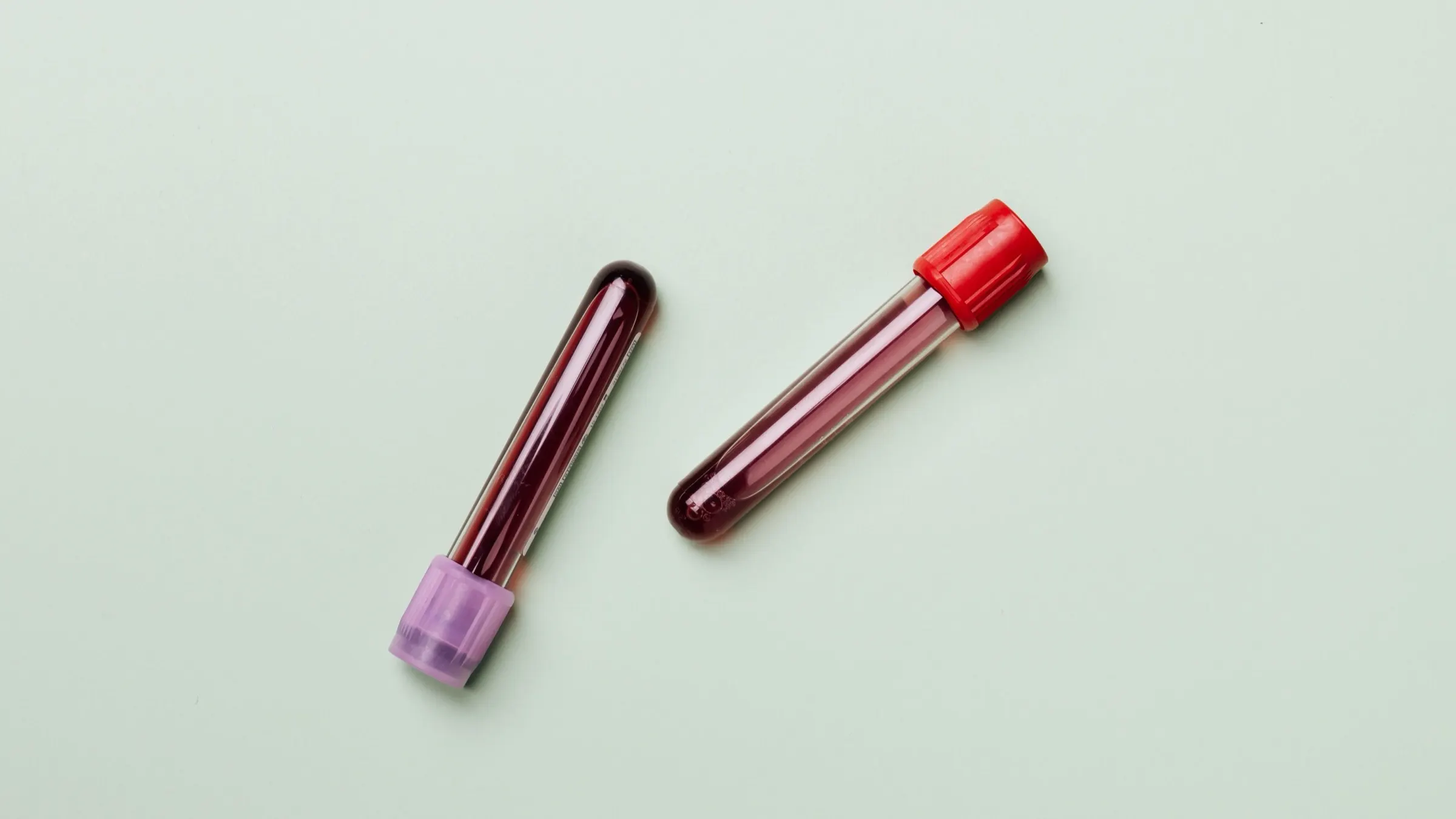
How to Read Blood Test Results: Ranges, Flags and Common Tests
How to read blood test results: what reference ranges, units and H or L flags mean, what common tests check, and what to ask your doctor about them.

Tilt Table Test: What Happens, How to Prepare and What Results Mean
What happens in a tilt table test, how long it takes, how to prepare, whether it hurts, and what the results mean for POTS, fainting and low blood pressure.

Moon Face: Causes, Steroids, How Long It Lasts and What Helps
Moon face is a round, puffy face from steroids or Cushing’s. Why it happens, how long it lasts, what helps, and the facts on “cortisol face” and PCOS.

Tired After Eating: Why It Happens and When to See a Doctor
Feeling sleepy after eating is called postprandial somnolence, or a food coma. It’s common and usually harmless. The causes, what helps and when to see a GP.

The Best Apps for Endometriosis Symptom Tracking (2026)
Juno, Phendo, ENdi, Flo, Clue, Endo45, Bearable, CareClinic and Manage My Pain compared for endometriosis: pain, cycle, doctor reports and price.

The Best Apps for Lupus Symptom Tracking (2026)
Juno, SELF by LFA, Lupus Tracker, Lupus Journey, Lycana, MyTherapy, Bearable and CareClinic compared for lupus: symptoms, medicines, reports, price.

PEM Crash: Symptoms and Why It Hits 24 Hours After Activity
A PEM crash is a flu-like worsening of symptoms 12 to 48 hours after physical or mental effort. It can last days or weeks. What it feels like and what helps.

Multiple Sclerosis (MS) Symptoms: Early Signs and When to Get Help
Multiple sclerosis symptoms explained: the common and early signs, what an MS relapse feels like, how MS is diagnosed and when to get urgent help.

Dizziness: Common Causes and When to Get Help
The common causes of dizziness: inner ear problems like BPPV, low blood pressure, dehydration, migraine, medicines and more. What helps, and when to get help.

How to Get Diagnosed With POTS: Tests, Doctors and What to Bring
How a POTS diagnosis works: the heart rate criteria, the stand and tilt table tests, which doctor to see, why it takes so long, and what to bring.

Crohn’s Disease Symptoms: Early Signs, Flares and When to Get Help
Crohn’s disease symptoms: diarrhoea, belly pain, tiredness and weight loss, early signs that are easy to miss, flares, Crohn’s vs IBS and when to get help.

SIBO Symptoms: Signs, Causes, Tests and When to See a Doctor
SIBO symptoms: bloating, gas, tummy pain, diarrhoea or constipation. What causes SIBO, how the breath test works, how it is treated and when to see a doctor.
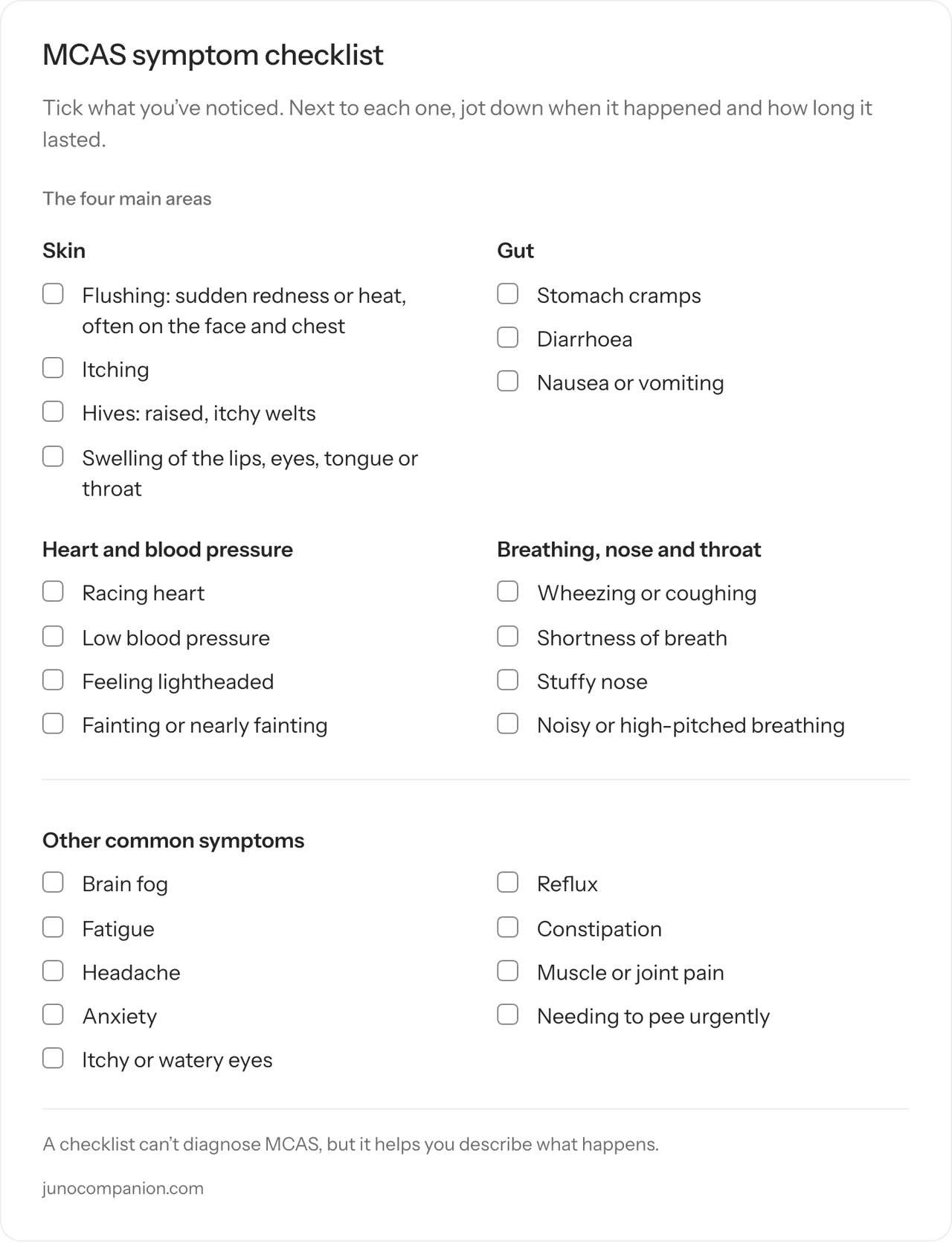
MCAS Symptoms: What a Flare Feels Like, Plus a Checklist to Tick
What an MCAS flare feels like: flushing, hives, stomach cramps, a racing heart. Skin signs, triggers, how it’s diagnosed, and a checklist to tick and print.
Lupus Flare-Ups: Symptoms, Triggers and How Long They Last
What a lupus flare feels like, early signs including a face rash, common triggers such as sun and stress, how long flares last and when to get help.

Spoon Theory: What It Means and How to Use It
Spoon theory explains limited energy: you start each day with a set number of spoons and every task costs some. Where it came from and how to use it.

Dizzy When Standing Up: Causes, What Helps and When to Get Help
Why you get dizzy or see black when you stand up: head rush, low blood pressure, POTS, dehydration or medicines. What helps, and when to see a doctor.

Endometriosis Flare-Ups: Symptoms, Triggers and What Helps
What an endometriosis flare up feels like, how long it can last, possible triggers, what can ease the pain, when to get urgent help and what to log.

Fibromyalgia Flare-Ups: Signs, Triggers and Recovery
What a fibromyalgia flare up feels like, how long flares last, the most-reported triggers, and how to pace through one without stopping your life.
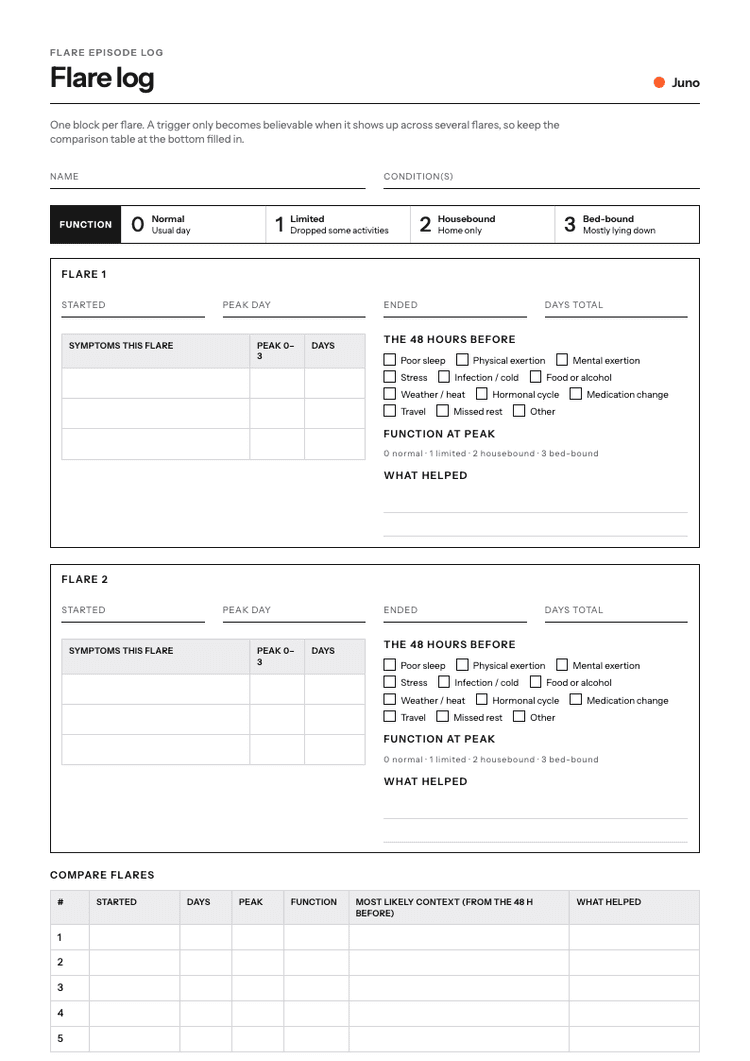
MCAS Symptom Diary: How to Track Flares and Possible Triggers
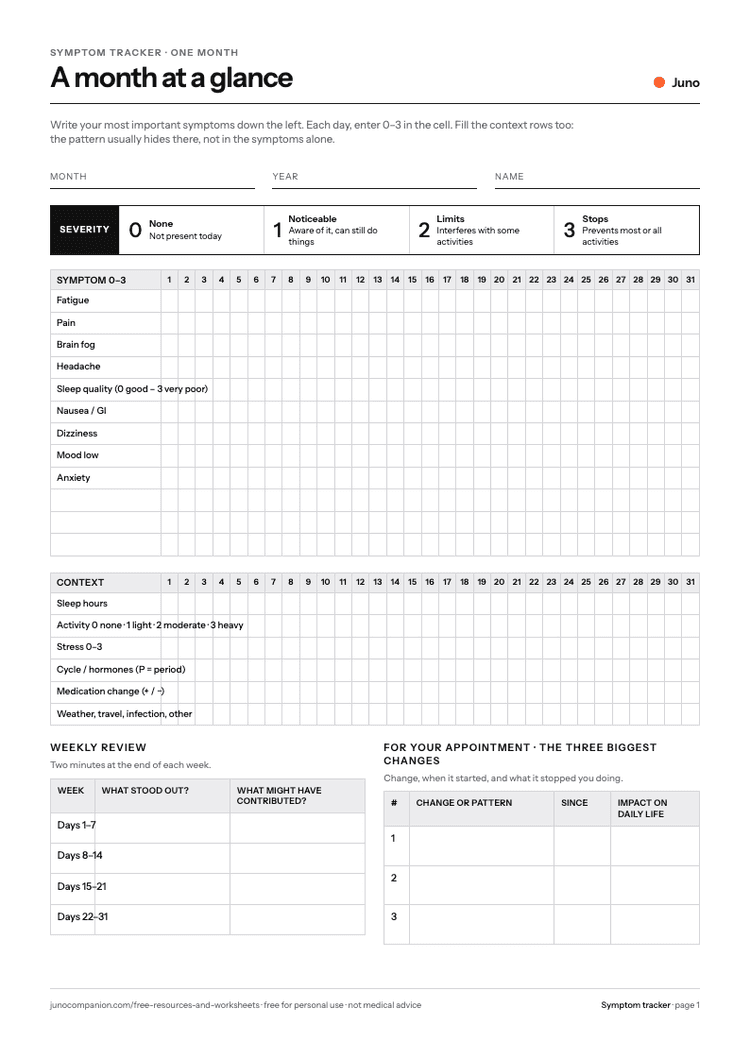
Keep a simple MCAS symptom diary with a copyable template, fictional flare and ordinary-day examples, and a clear summary to discuss with your clinician.

The Best Pacing Apps for Chronic Illness (2026)
The best pacing apps for ME/CFS, long COVID and chronic illness in 2026: Visible, Juno, Welltory, Pacely, Pacing Guard and more, with prices checked.
The Best Apps for Fibromyalgia (2026)
Juno, Manage My Pain, Bearable, CareClinic and Visible compared for fibromyalgia: pain and fatigue logging, flare patterns, doctor reports and price.

The Best Apps for POTS (2026)
The best apps for POTS in 2026: Juno, Visible, TachyMon, Bearable, Guava and CareClinic compared on heart rate, symptom logging, doctor reports and price.

The Best Symptom Tracker Apps for Chronic Illness (2026)
Juno, Bearable, Visible, Guava, CareClinic, mySymptoms and Human Health compared for chronic illness: how you log, doctor reports, price and ratings.
The Best Apps for ME/CFS and Long COVID (2026)
Visible, Juno, Bearable and Guava compared for ME/CFS and long COVID: heart-rate pacing, low-energy logging, doctor reports and prices, as of October 2026.

Juno vs Human Health (2026): Symptom Tracking Compared
Compare Juno and Human Health for conversational symptom tracking, energy pacing, wearable data, patterns, appointment reports and free features.

Juno vs Guava (2026): Symptom Tracking Compared
Compare Juno and Guava for chronic illness support, symptom tracking, energy pacing, health records, international use, pricing and appointment preparation.
How Juno Uses Medical Knowledge and Your Health History
Learn how Juno combines curated health information with your symptom history, keeps evidence separate from experience, and helps you prepare better questions.

Symptom Patterns with Juno: Turn Daily Notes into Useful Clues
See how Juno brings symptoms, sleep and daily context together. Learn to spot useful patterns, check the evidence and prepare clearer questions for your doctor.

Track Symptoms by Voice with Juno: Your Words, a Clearer History
Track symptoms by voice or text with Juno. Capture timing, daily impact and context in your own words, then build a clearer history for medical appointments.
Energy Pacing with Juno: Plan Around the Day You Have
Use Juno to plan daily activities around limited energy, understand spoon estimates and keep symptom context together, with practical pacing examples to try.

Visible vs Juno (2026): Pacing and Symptom Tracking
Juno is your 24/7 personal health assistant for chronic illness. Compare condition support, pattern analysis, band requirements and importing Visible symptoms.

Juno vs Bearable (2026): Symptom Tracking Compared
Compare Juno and Bearable for symptom logging, voice, health patterns, appointment reports and pricing. Choose the app that fits your energy and routine.

Delayed Post-Exertional Malaise: How to Spot Your PEM Window
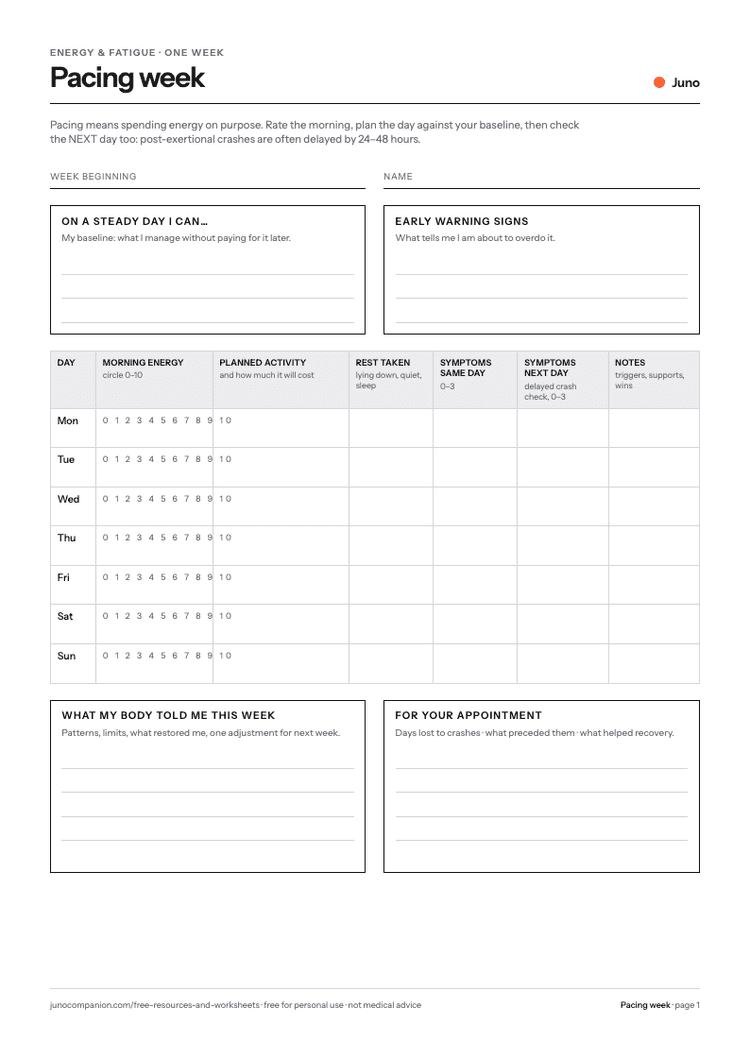
Learn how delayed post-exertional malaise can follow activity by 12 to 48 hours, how to spot your PEM window, and how activity notes can support pacing.

How To Navigate Medical Gaslighting
Feeling dismissed by a doctor? Learn how to describe symptoms, ask about clinical reasoning, document next steps, and prepare a clear appointment summary.
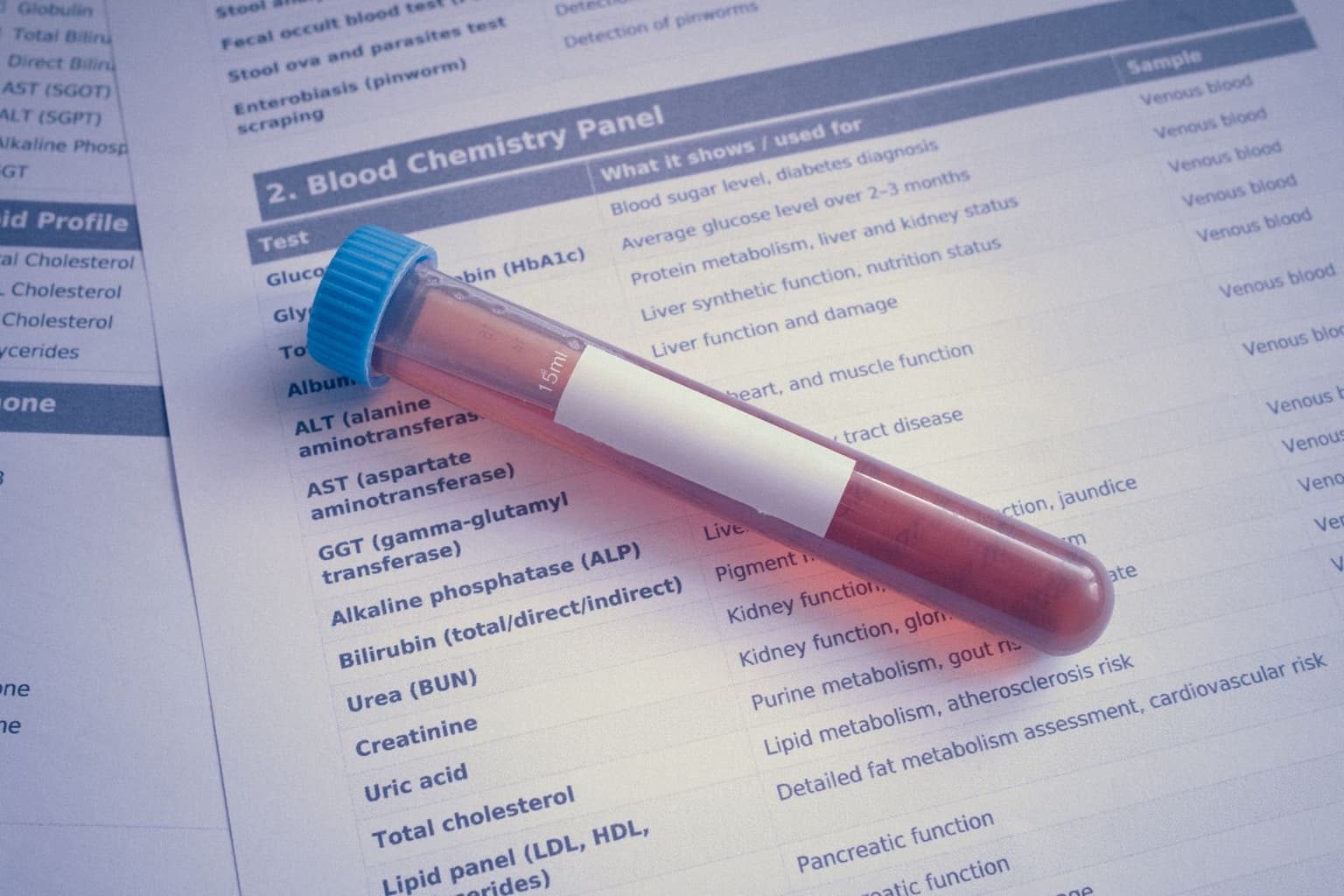
High ESR and CRP: What Raised Inflammatory Markers Mean
High ESR and CRP explained: what raised inflammatory markers mean, common causes, why the tests can disagree, and what to track before your next appointment.
How to Present Your Case to a New Specialist
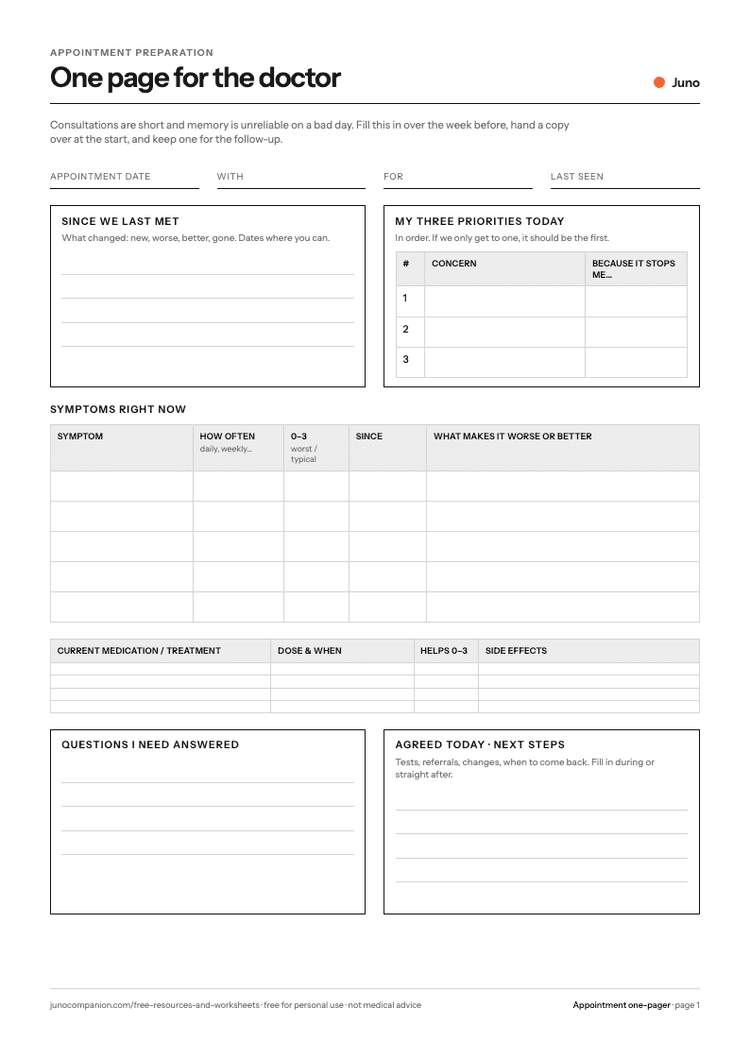
How to prepare for a first specialist appointment with a chronic illness: a one-page summary, six symptom dimensions, flare patterns and prioritised questions.

Illness Flare Up or Side Effect to Medication? How to Differentiate Your Symptoms
How to tell a chronic illness flare from a medication side effect using onset timing, symptom domains and daily impact, then bring the evidence to your doctor.

Lupus Triggers: What Can Cause a Flare and How to Track Them
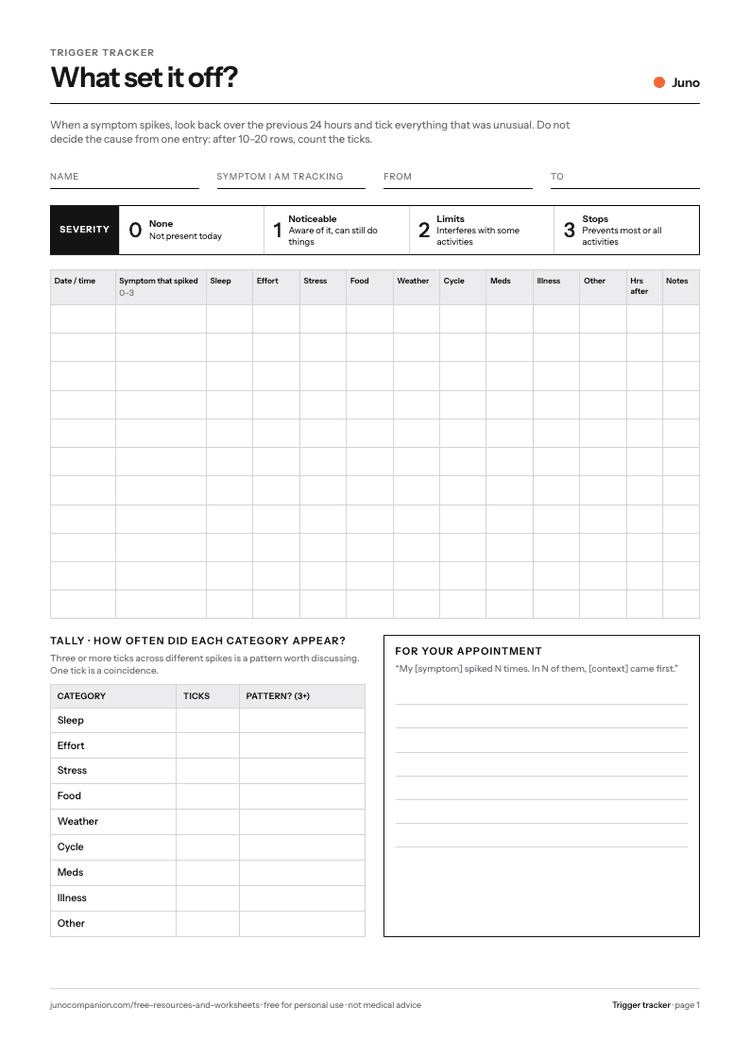
Common lupus triggers, from sun and UV light to stress, infections and some medicines, and how to track them when a flare arrives days later.
How to Track Symptoms Without Making It a Full-Time Job
Learn how to track chronic symptoms without the cognitive fatigue. Discover low-burden methods, quick check-ins, and doctor-ready summaries with Juno.

Preparing for a Medical Appointment When You Have Brain Fog
Prepare for doctor visits when dealing with chronic illness brain fog. Use our practical checklist to reduce cognitive load and advocate with confidence.
Energy Pacing for Chronic Illness: How to Manage Your Energy and Prevent Crashes
Learn how to use energy pacing to manage chronic illness, budget your energy levels daily, avoid post-exertional malaise, and prevent symptom flares.

Why Are My Blood Tests Normal When I Feel So Sick?
Discover why routine blood tests look normal when you feel sick, and learn how tracking functional impact can help you advocate for a proper diagnosis.
Also from Juno: how Juno thinks about AI and the environment.