Quick answer
What is the best way to track Myalgic Encephalomyelitis symptoms?
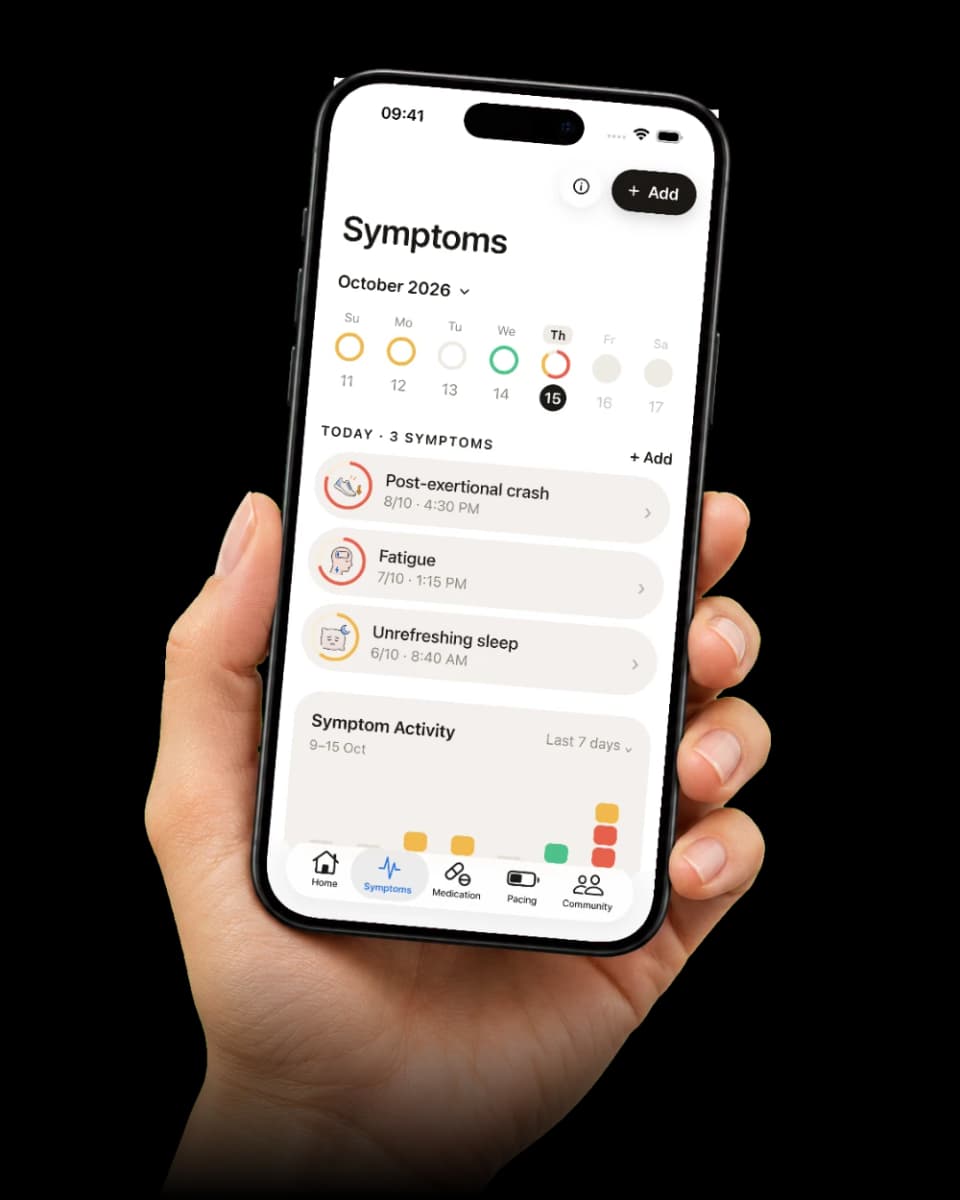
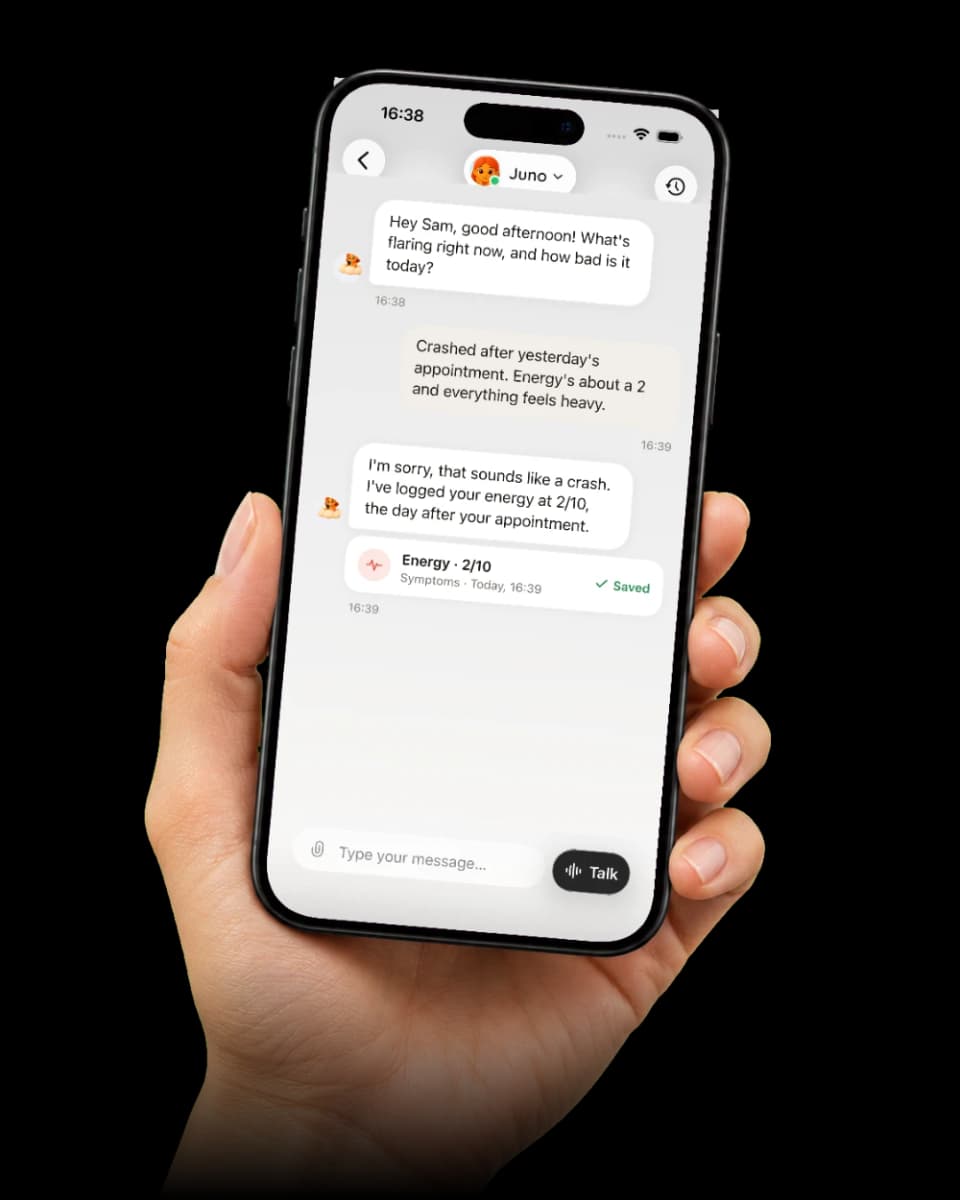
The best way to track ME/CFS is to separate symptoms by domain, log what changed when it happened, and connect each entry to triggers, treatment, and daily impact. Juno turns low-effort voice or text check-ins into a timeline your ME/CFS specialist or GP can review.
On a low-energy day, the free symptom tracker takes a few taps and keeps entries on your device.
Crashing a day or two after doing too much? Read why you crash 24 hours after activity.
Planning around limited energy? Compare the best pacing apps, or print the free Spoon Diary.
Foggy a day after a busy day? Read what causes brain fog and how to pace thinking work.
Curious what your HRV means? Use our HRV by age checker to compare your number with healthy adults.
What should your Myalgic Encephalomyelitis symptom tracker record?
A strong ME/CFS tracker records separate symptom domains, timing, triggers, treatment context, and functional impact. For ME/CFS, the most useful entries are energy levels (morning vs evening), pem episodes (onset, severity, duration), sleep continuity and refreshment, cognitive load, physical activity.
How does tracking ME/CFS help at appointments?
Tracking gives your ME/CFS specialist or GP a cleaner timeline than memory can provide. It turns scattered day-to-day notes into onset, duration, recovery, possible triggers, medication context, and the questions you need answered.
When should new ME/CFS symptoms be escalated?
New, sudden, severe, or worsening symptoms should be shared with your clinical team promptly, especially when they affect daily safety, function, medication response, or a body system your care team is already monitoring. Juno helps you record what changed, but your clinician decides what needs urgent care.
What should you log?
- Energy levels (morning vs evening)
- PEM episodes (onset, severity, duration)
- Sleep continuity and refreshment
- Cognitive load
- Physical activity
- Crash recovery time
- Emotional load
- Symptom flares
What patterns matter?
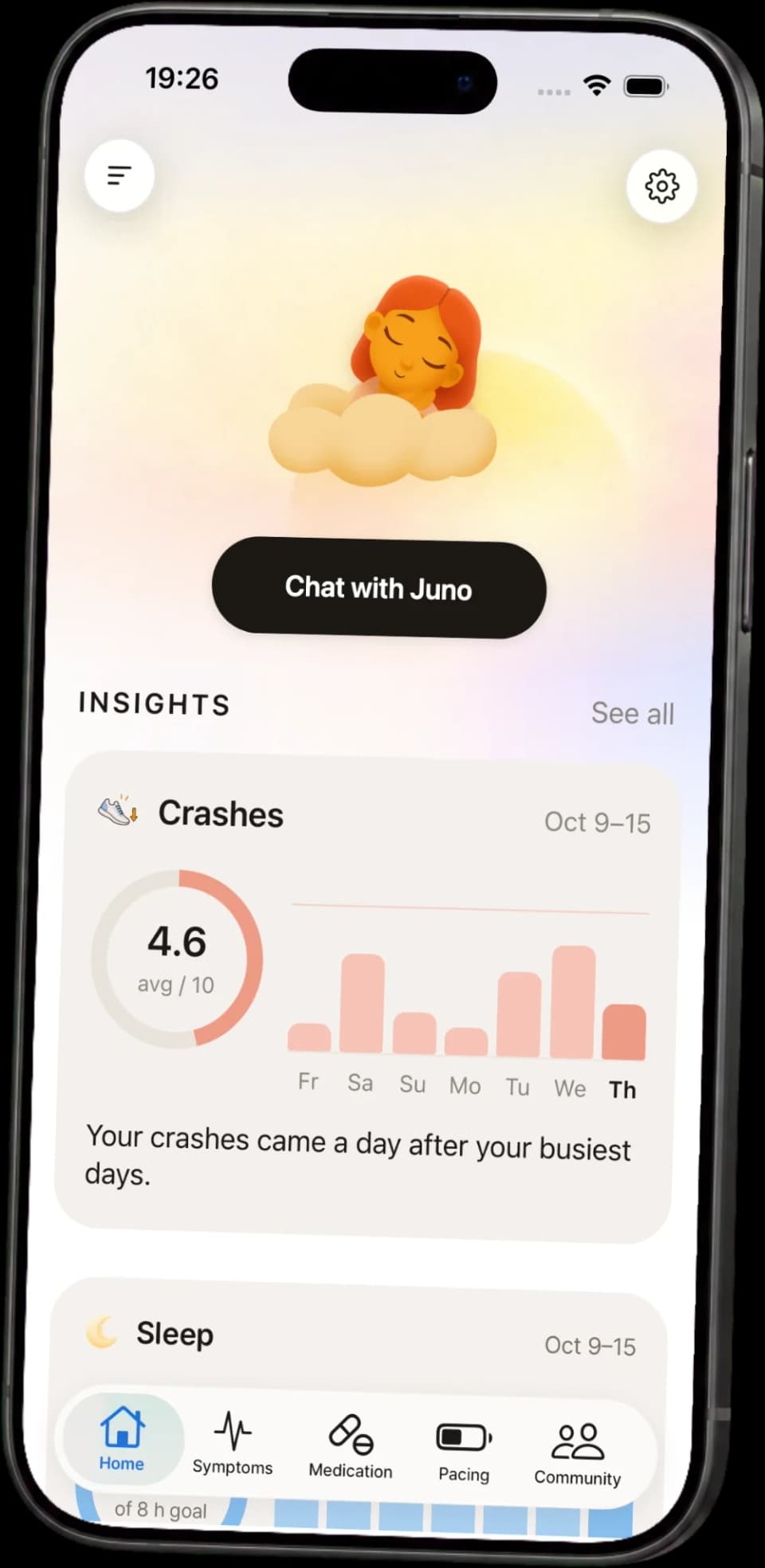
- Activity load in the 24–72 hours before PEM
- Sleep refreshment vs daytime energy
- Recovery time after physical, cognitive, or emotional load
- Triggers stacking inside the same week
What should you bring?
- Energy and PEM trends since the last visit
- Pacing data with adherence notes
- A crash log with duration and recovery markers
- Medication and supplement responses
- Questions on pacing, comorbidities, or accommodations
Tracker comparison
What makes Juno different from a generic tracker?
Generic trackers often flatten complex symptoms into one daily score. Juno keeps the details separate enough for pattern recognition and clear enough for appointments.
| Need | Generic tracker | Juno |
|---|
| PEM-aware logging | No PEM concept at all | Onset, severity, and 24–72h delayed-trigger view |
|---|
| Energy envelope | Step counts you can't sustain | Your sustainable load, in your own units |
|---|
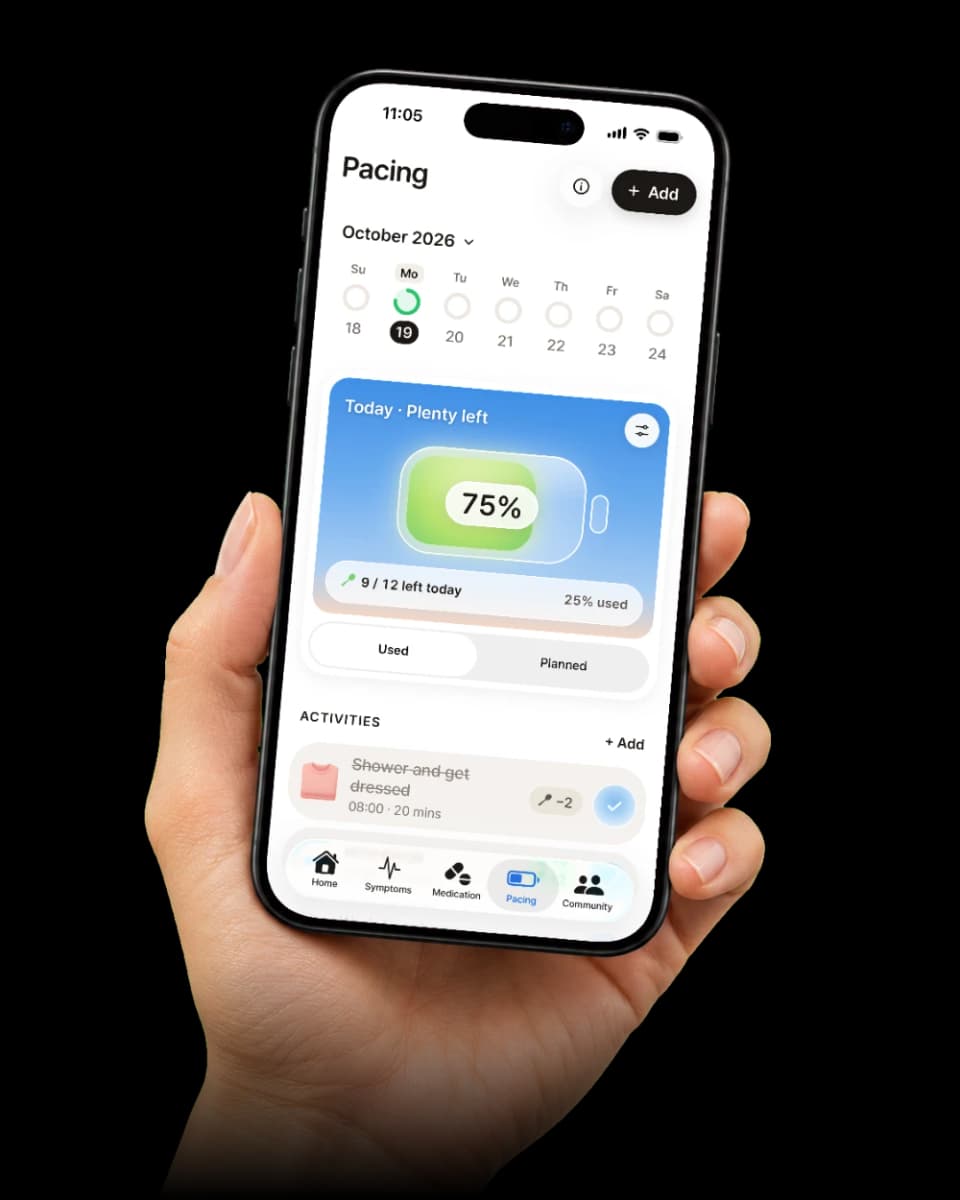
| Pacing without spreadsheets | Manual graphs you build yourself | Plain-language summaries of activity vs recovery |
|---|
| Cognitive crashes | Lumped under 'fatigue' | Cognitive vs physical PEM tracked separately |
|---|
| Bad-day friendly | Punishes you for skipping | One-tap check-ins, skippable |
|---|
Key benefits
Four ways Juno makes life with Myalgic Encephalomyelitis a little easier.
Spot ME/CFS flare patterns sooner
Track shifts in energy levels (morning vs evening), pem episodes (onset, severity, duration), sleep continuity and refreshment, cognitive load before they blur together by the next appointment.
Track symptoms automatically
Tell Juno what happened in plain language and it turns that into a clear symptom timeline without extra admin.
Protect your energy
See what tends to push you past baseline so you can pace the week with less guesswork around me/cfs.
Show up prepared
Turn daily notes, symptom changes, and context into something your ME/CFS specialist or GP can actually use.
Privacy policy
Private and secure.
Health conversations are personal. Juno is built so your notes, symptoms, and timeline stay yours.
Your health data should not feel exposed.
Conversations are encrypted and kept private.
We do not sell your personal health information.
You can review, export, or delete your data at any time.
Read the privacy policy →


 PEM
 Fatigue
 Brain fog
 Poor sleep
 Muscle pain

 Juno