

4.8 on App Store
    Private and secure

    Your Personal Postural Orthostatic Tachycardia Syndrome Assistant

    Feel more in control of your POTS.

    Track what happens when you stand. Hydration, salt, heat, heart rate, and the days posture decides everything.

    Download on the App StoreGet it on Google Play
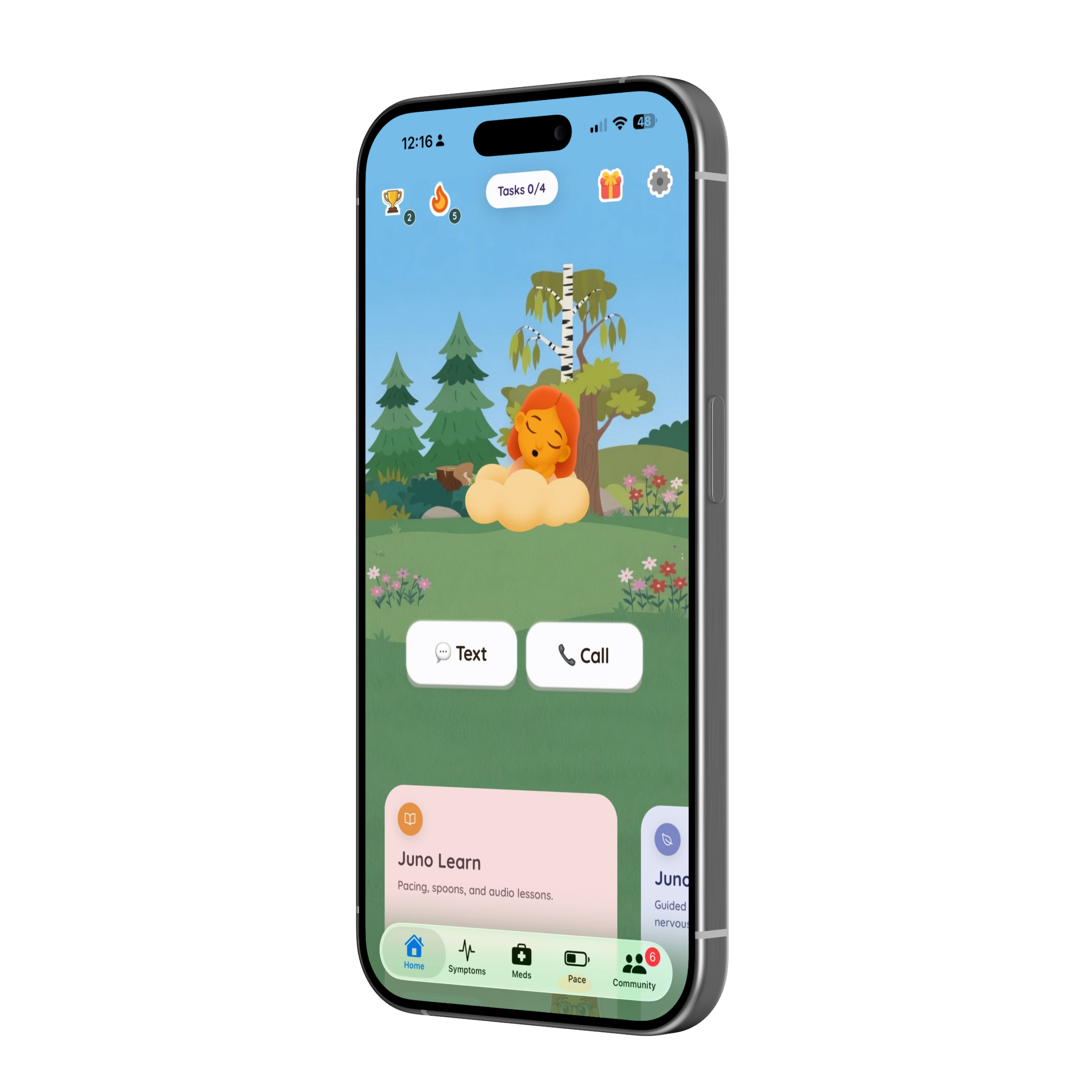
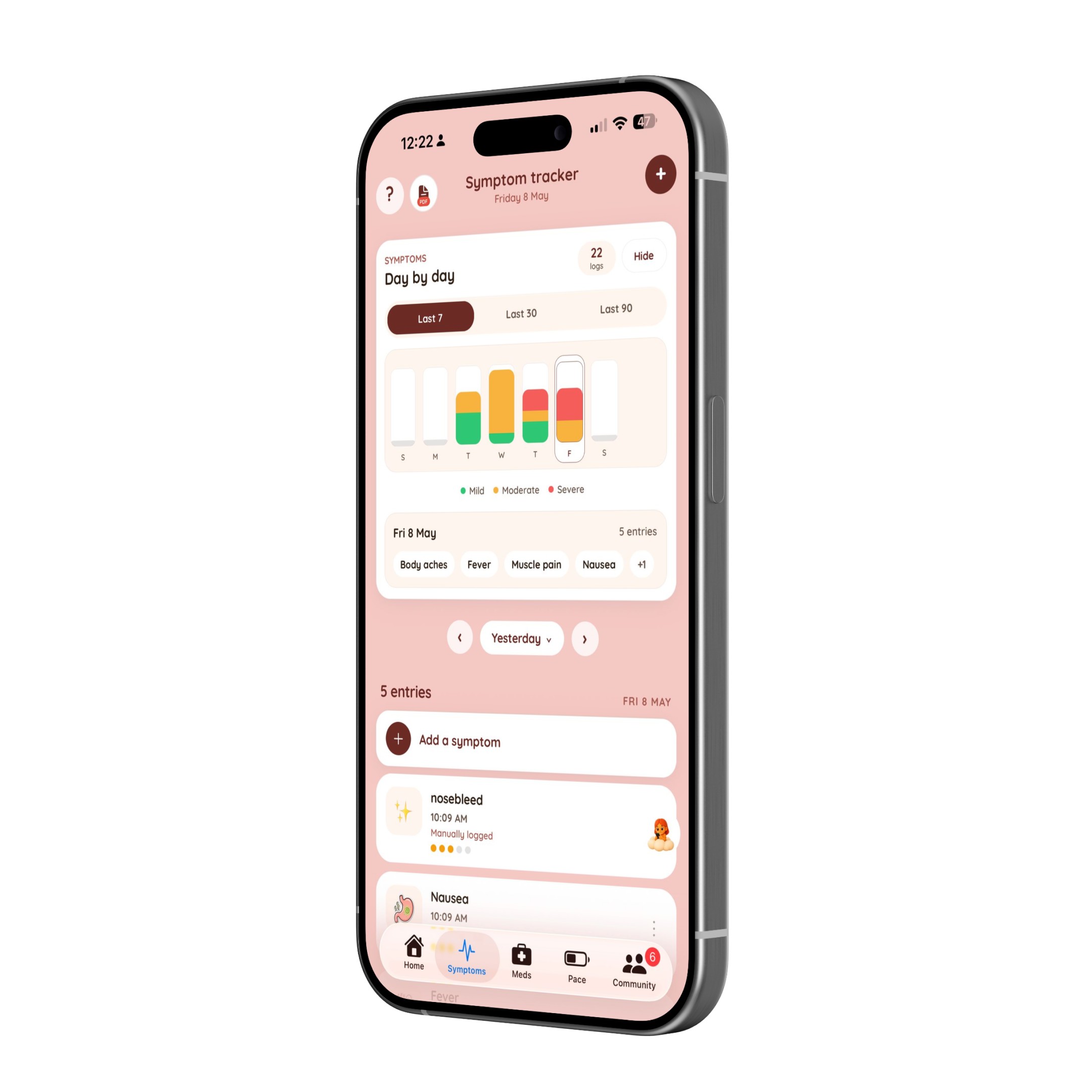
    Juno app shown on an iPhone for POTS

    Quick answer

    What is the best way to track Postural Orthostatic Tachycardia Syndrome symptoms?

    The best way to track POTS is to separate symptoms by domain, log what changed when it happened, and connect each entry to triggers, treatment, and daily impact. Juno turns low-effort voice or text check-ins into a timeline your cardiologist or autonomic specialist can review.

    Symptom timing
    Possible triggers
    Treatment response
    Appointment questions
    What should your Postural Orthostatic Tachycardia Syndrome symptom tracker record?

    A strong POTS tracker records separate symptom domains, timing, triggers, treatment context, and functional impact. For POTS, the most useful entries are dizziness and pre-syncope episodes, resting and standing heart rate notes, hydration intake, sodium intake, compression wear adherence.

    How does tracking POTS help at appointments?

    Tracking gives your cardiologist or autonomic specialist a cleaner timeline than memory can provide. It turns scattered day-to-day notes into onset, duration, recovery, possible triggers, medication context, and the questions you need answered.

    When should new POTS symptoms be escalated?

    New, sudden, severe, or worsening symptoms should be shared with your clinical team promptly, especially when they affect daily safety, function, medication response, or a body system your care team is already monitoring. Juno helps you record what changed, but your clinician decides what needs urgent care.

    What should you log?

    • Dizziness and pre-syncope episodes
    • Resting and standing heart rate notes
    • Hydration intake
    • Sodium intake
    • Compression wear adherence
    • Heat exposure
    • Standing tolerance (minutes)
    • Brain fog and exercise intolerance

    What patterns matter?

    • Hydration and sodium against same-day symptom severity
    • Heat-wave days and standing tolerance
    • Sleep loss preceding worse-symptom mornings
    • Compression wear adherence vs pre-syncope episodes

    What should you bring?

    • Resting and standing heart rate notes from home monitoring
    • Symptom log organised by posture (lying, sitting, standing, walking)
    • Hydration, salt, and compression adherence
    • Medication and supplement notes (with timing)
    • Specific questions for your cardiologist or autonomic specialist

    Tracker comparison

    What makes Juno different from a generic tracker?

    Generic trackers often flatten complex symptoms into one daily score. Juno keeps the details separate enough for pattern recognition and clear enough for appointments.

    NeedGeneric trackerJuno
    Posture-aware symptomsOne symptom log, no posture contextSymptoms tagged by lying / sitting / standing / walking
    Heart rate notesJust an average step counterStanding-vs-resting deltas you can show your cardiologist
    Salt + hydrationGeneric water remindersAdherence tied to symptom severity, day by day
    Heat trackingNot tracked at allHeat days flagged against same-day symptoms
    Pre-syncope logBuried in free-text notesEpisodes captured with the context that preceded them

    Key benefits

    Four ways Juno makes life with Postural Orthostatic Tachycardia Syndrome a little easier.

    Spot POTS flare patterns sooner

    Track shifts in dizziness and pre-syncope episodes, resting and standing heart rate notes, hydration intake, sodium intake before they blur together by the next appointment.

    Track symptoms automatically

    Tell Juno what happened in plain language and it turns that into a clear symptom timeline without extra admin.

    Protect your energy

    See what tends to push you past baseline so you can pace the week with less guesswork around pots.

    Show up prepared

    Turn daily notes, symptom changes, and context into something your cardiologist or autonomic specialist can actually use.

    Features

    Built for the everyday reality of managing Postural Orthostatic Tachycardia Syndrome.

    Juno is designed to take some of the admin load off with calmer check-ins, clearer pattern tracking, and support that stays useful between appointments.

    Flare support

    Manage flares

    Keep one calm place for what changed, what felt worse, and what might have triggered it so pots flare days do not blur together.

    Track what changed and when
    Keep notes in plain language
    Spot context around tougher days
    Juno flare tracker for POTS
    Low-effort tracking

    Track symptoms automatically

    Voice or text check-ins turn dizziness and pre-syncope episodes, resting and standing heart rate notes, hydration intake into a structured timeline, so you do less manual logging on already hard days.

    Turn check-ins into clear logs
    Keep details without filling forms
    Build a timeline for appointments
    Juno home screen for POTS
    Community

    Join a community of 60,000

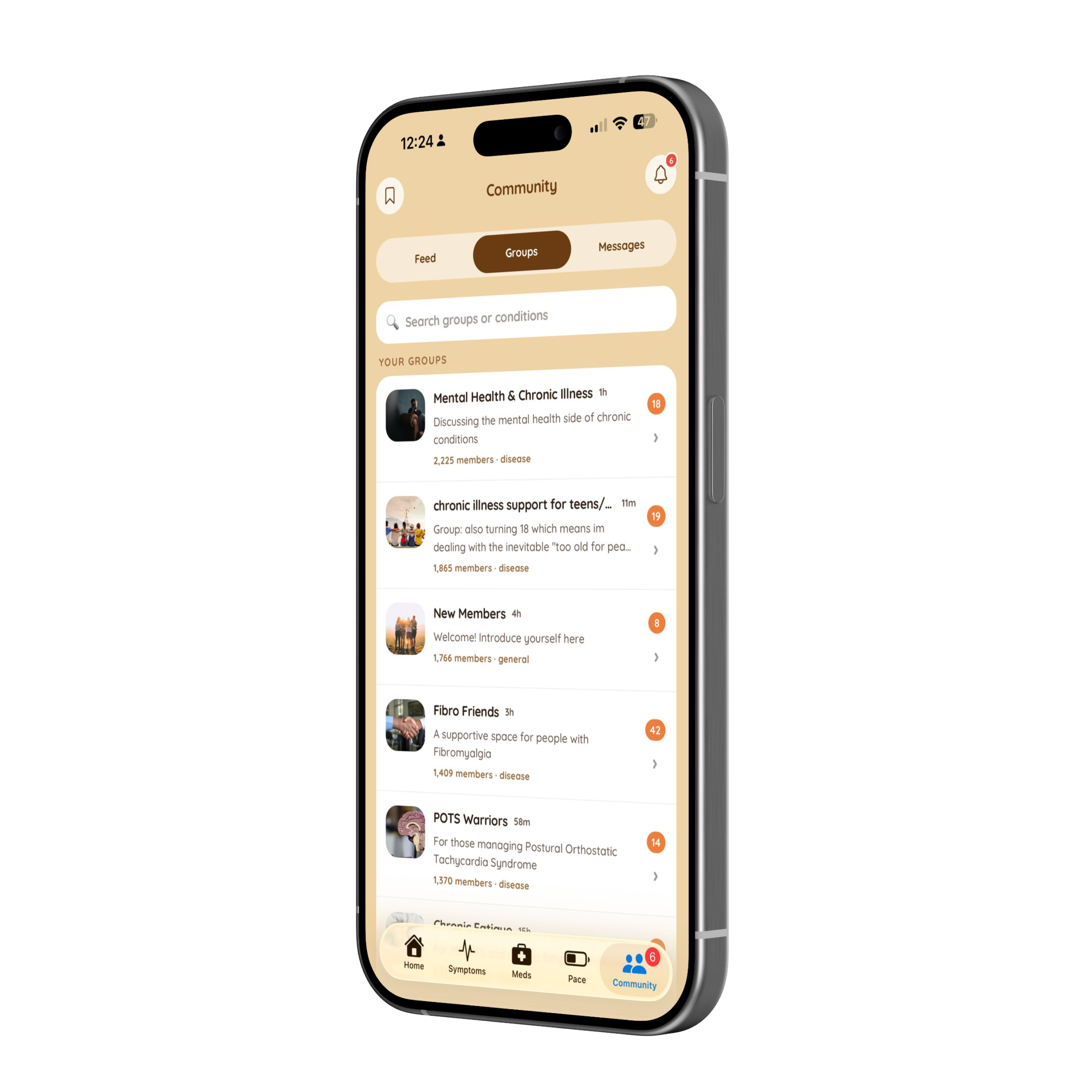
    Find people who understand the day-to-day reality of pots and feel less alone between appointments.

    Feel less alone between visits
    Read what helps other people cope
    Stay connected on lower-energy days
    Juno community groups screen
    Energy pacing

    Manage your energy

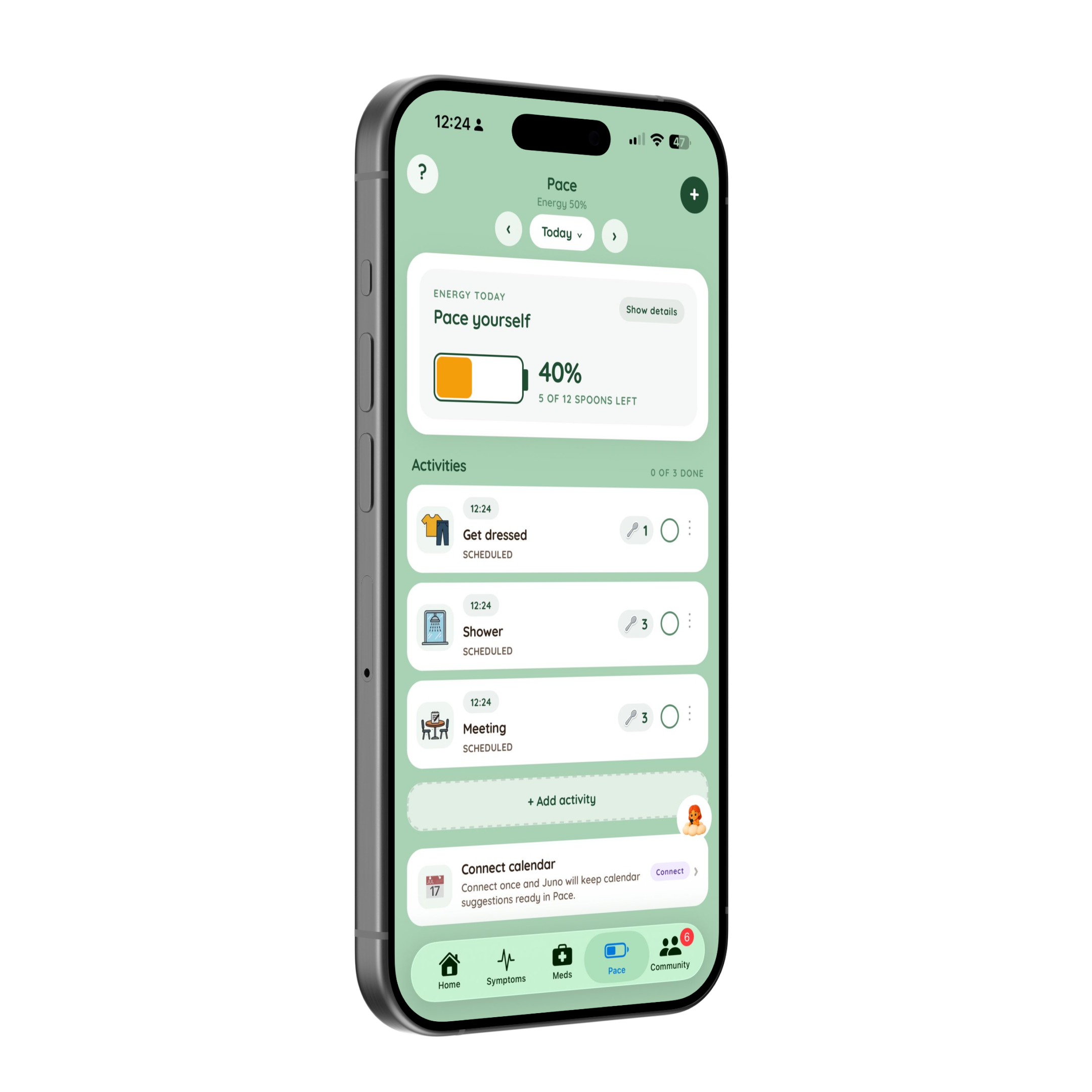
    See what is draining you and pace the week more gently around pots, especially when triggers start to stack up.

    Protect tomorrow before it crashes
    Notice patterns around triggers
    Plan the week around your baseline
    Juno pace screen showing remaining energy

    From people living with Postural Orthostatic Tachycardia Syndrome

    Such an incredible help

    I was recently diagnosed with MS, and Juno has been a lifesaver. It helps me track everything from sleep to pain and remember what to tell my doctor.

    Lvhb

    Anxiety killer

    Facing a doctor and needing to be assertive is hard. Juno helps me put questions into words and think more clearly about pacing.

    Ginmail

    Game changer

    It feels like having someone who understands chronic illness with me all the time. Juno logs symptoms, remembers what helped before, and keeps cheering me on.

    Jay-B23

    Really great app

    I can talk naturally while Juno quietly logs symptoms, mood, pain, and what I need to raise with my doctor. Tracking everything finally feels easy.

    HnAWhite

    Complex illness support

    This is the first app that has been able to juggle all of my chronic illnesses. It helps with symptom logging, spotting correlations, and preparing for appointments.

    Old ink fan

    Genuinely helpful

    It has actually helped me log things and understand the data myself. Sometimes Juno makes connections in my symptoms that I would have missed.

    greencarnationwitch

    Less alone

    I have Multiple Sclerosis, and Juno has genuinely changed how I manage my days. It helps me pace my energy, track symptoms, and feel heard when I'm struggling.

    kbreault421

    Amazing for pacing

    I had been desperate for something to track symptoms, activities, medications, and mood. Juno gives me clearer data to bring into my doctor appointments.

    Lpopp3

    Reviews are excerpts from published App Store reviews, lightly trimmed for length; we verify each quote against its source review and do not display incentivised reviews. Individual experiences — results vary, and Juno does not provide medical care or diagnose, treat, or prevent any condition.

    Privacy policy

    Private and secure.

    Health conversations are personal. Juno is built so your notes, symptoms, and timeline stay yours.

    Your health data should not feel exposed.

    Conversations are encrypted and kept private.

    We do not sell your personal health information.

    You can review, export, or delete your data at any time.

    Read the privacy policy

    FAQs

    A few common questions.

    What is POTS?

    POTS is a form of dysautonomia diagnosed when standing causes a sustained heart rate increase (commonly ≥30 bpm in adults, ≥40 bpm in adolescents) without a significant drop in blood pressure, alongside orthostatic symptoms such as dizziness, brain fog, and fatigue.

    Should I tag every dizzy moment?

    You don't have to. Even a few tagged episodes per week — with what you were doing, hydration, and recent sleep — give a clearer picture than a flood of partial entries.

    Does Juno read my smartwatch heart rate?

    You can add heart rate notes manually as part of your check-in. Juno is designed to work whether or not you have a wearable.

    Can it tell my cardiologist if it's POTS?

    No. Diagnosis is your specialist's call (often via a tilt-table test or active stand test). Juno helps you walk in with a tidy log of what your body is actually doing.

    How does it help on heat-wave days?

    Heat is a known POTS trigger. Tagging heat exposure surfaces whether your worst weeks line up with hot days — and helps your team plan around it.

    Get started with Juno.

    Download the app to track symptoms, spot patterns, and feel more supported between appointments.

    Download on the App StoreGet it on Google Play