Quick answer
What is the best way to track Chronic migraine symptoms?
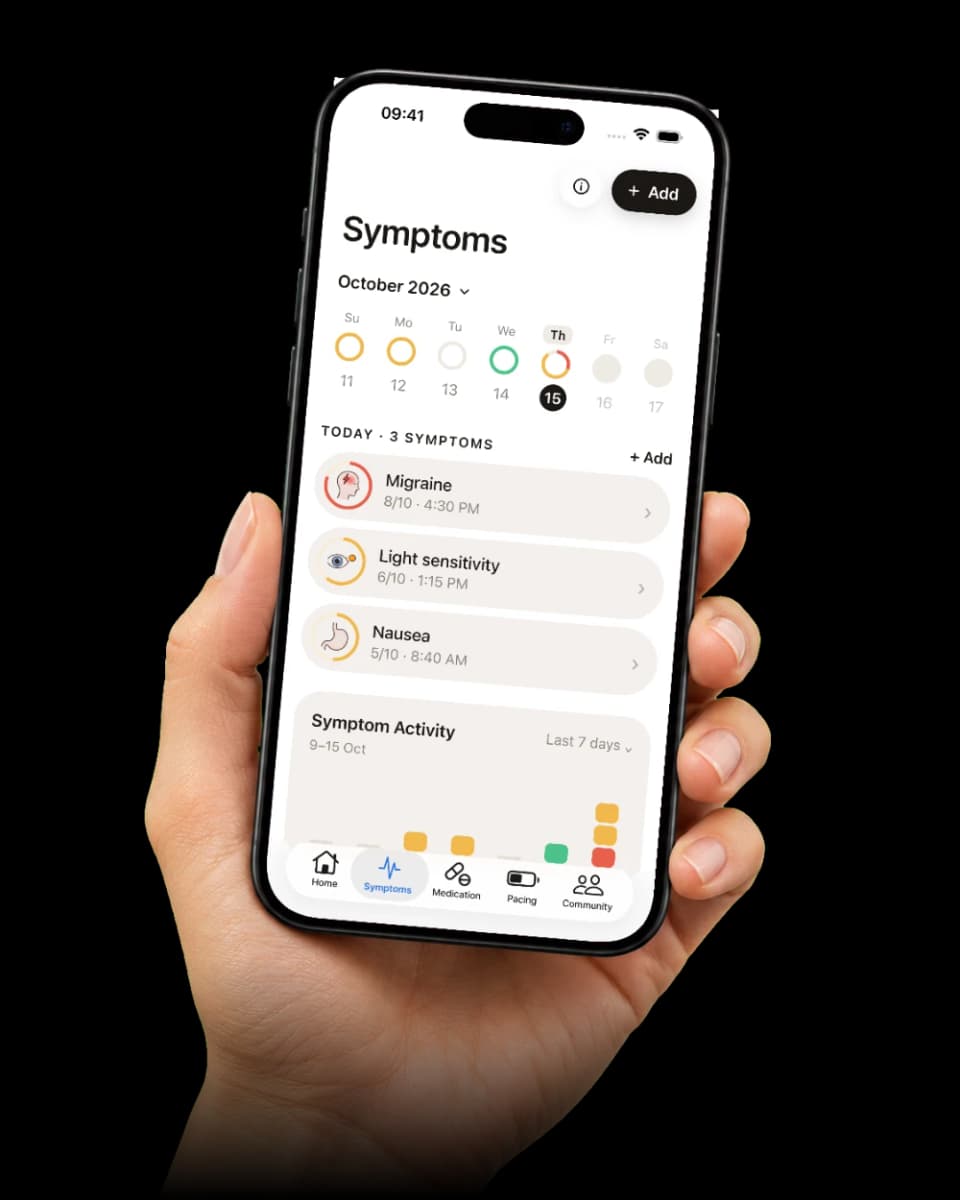
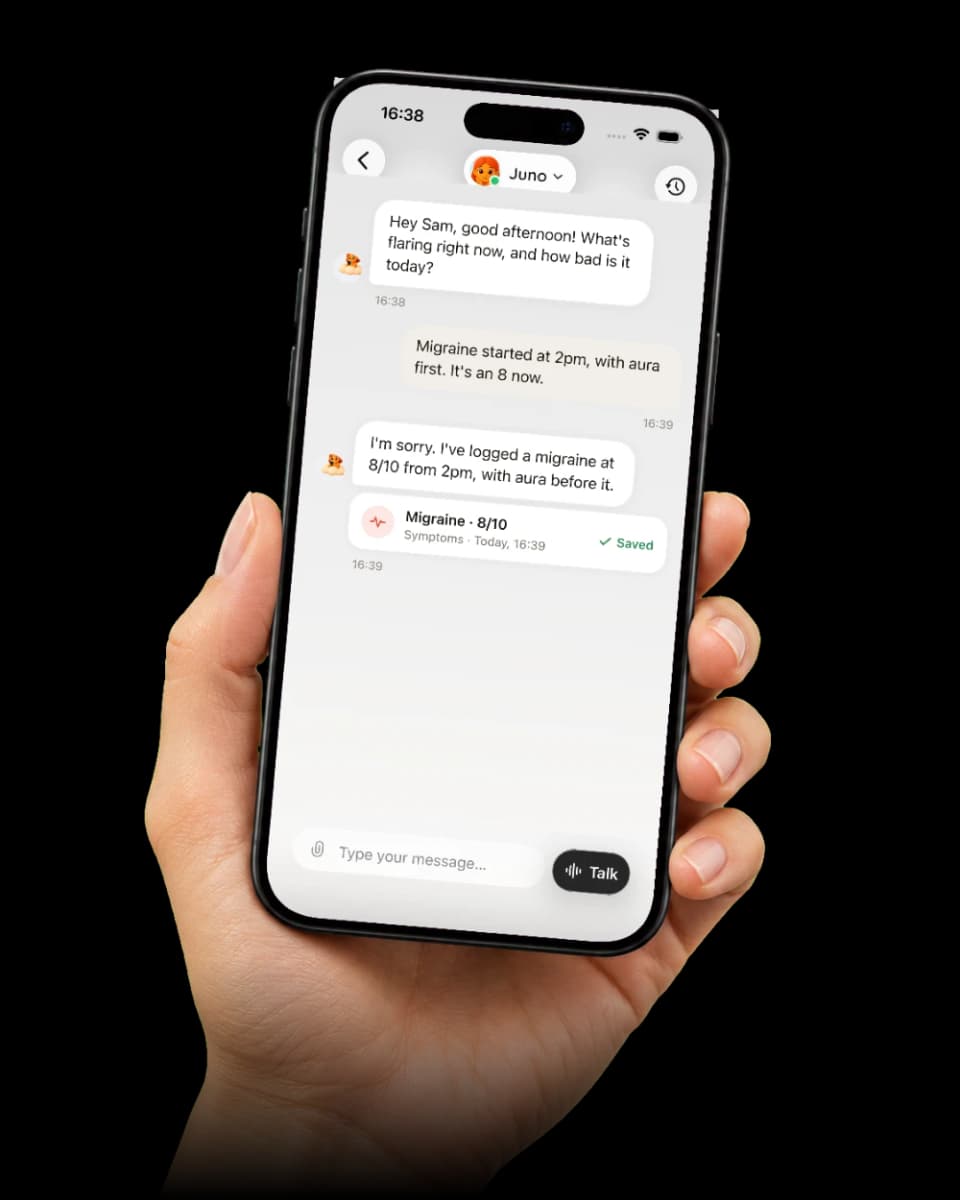
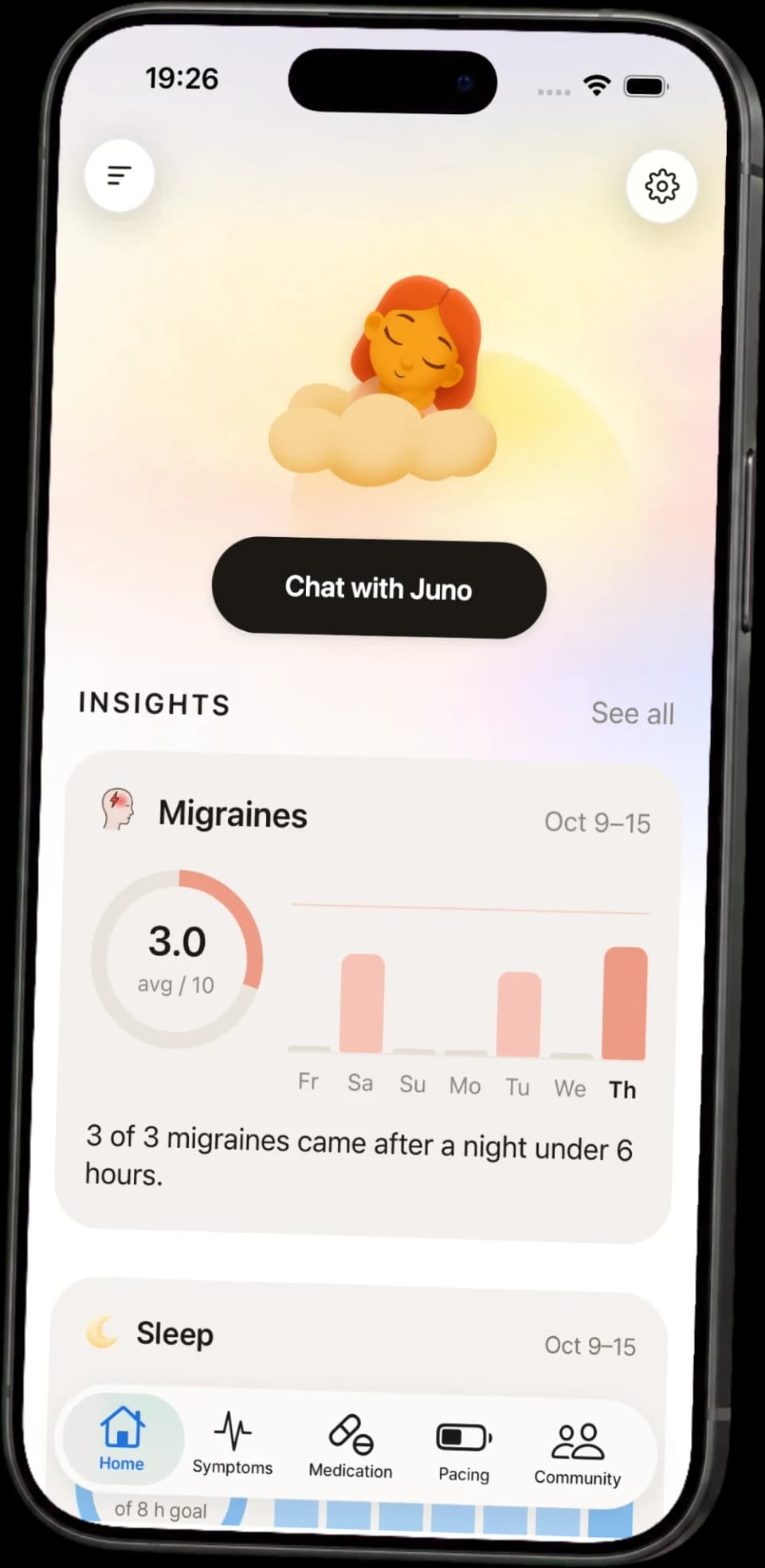
The best way to track Migraine is to separate symptoms by domain, log what changed when it happened, and connect each entry to triggers, treatment, and daily impact. Juno turns low-effort voice or text check-ins into a timeline your neurologist or headache specialist can review.
Starting today? Log attacks in the free symptom tracker, with severity and possible triggers.
Not sure it’s migraine? Read about the types of headaches and how each one feels.
See what happens in each phase of an attack in our guide to migraine symptoms.
Pain at the back of your head? Read about headache in the back of the head and what can cause it.
Seeing zigzags or blind spots? See what an ocular migraine is, and when a change in sight is an emergency.
What should your Chronic migraine symptom tracker record?
A strong Migraine tracker records separate symptom domains, timing, triggers, treatment context, and functional impact. For Migraine, the most useful entries are migraine attacks (frequency, duration), aura type and duration, pain intensity and location, suspected triggers, sleep.
How does tracking Migraine help at appointments?
Tracking gives your neurologist or headache specialist a cleaner timeline than memory can provide. It turns scattered day-to-day notes into onset, duration, recovery, possible triggers, medication context, and the questions you need answered.
When should new Migraine symptoms be escalated?
New, sudden, severe, or worsening symptoms should be shared with your clinical team promptly, especially when they affect daily safety, function, medication response, or a body system your care team is already monitoring. Juno helps you record what changed, but your clinician decides what needs urgent care.
What should you log?
- Migraine attacks (frequency, duration)
- Aura type and duration
- Pain intensity and location
- Suspected triggers
- Sleep
- Food and meal timing
- Stress and post-stress let-down
- Acute and preventive medication response
What patterns matter?
- Food or skipped-meal triggers across multiple attacks
- Sleep loss or oversleep preceding attacks
- Stress let-down attacks after busy weeks
- Hormonal cycle correlation in menstrual migraine
What should you bring?
- Attack frequency, duration, and severity since last visit
- Acute and preventive medication response
- Identified triggers vs reliably-not-triggers
- Functional impact on work, school, family
- Specific questions for your neurologist or headache specialist
Tracker comparison
What makes Juno different from a generic tracker?
Generic trackers often flatten complex symptoms into one daily score. Juno keeps the details separate enough for pattern recognition and clear enough for appointments.
| Need | Generic tracker | Juno |
|---|
| Attack log | Generic 'headache' notes | Attacks, aura, severity, and recovery side by side |
|---|
| Trigger testing | A long list of guesses | Trigger candidates surfaced against actual attacks |
|---|
| Hormonal pattern | Not tracked | Cycle-linked attacks visible to you and your clinician |
|---|
| Preventive response | Vague 'better/worse' | Frequency change tracked across the trial period |
|---|
| Headache clinic prep | Recall in the appointment | Attack log already on the page |
|---|
Key benefits
Four ways Juno makes life with Chronic migraine a little easier.
Spot Migraine flare patterns sooner
Track shifts in migraine attacks (frequency, duration), aura type and duration, pain intensity and location, suspected triggers before they blur together by the next appointment.
Track symptoms automatically
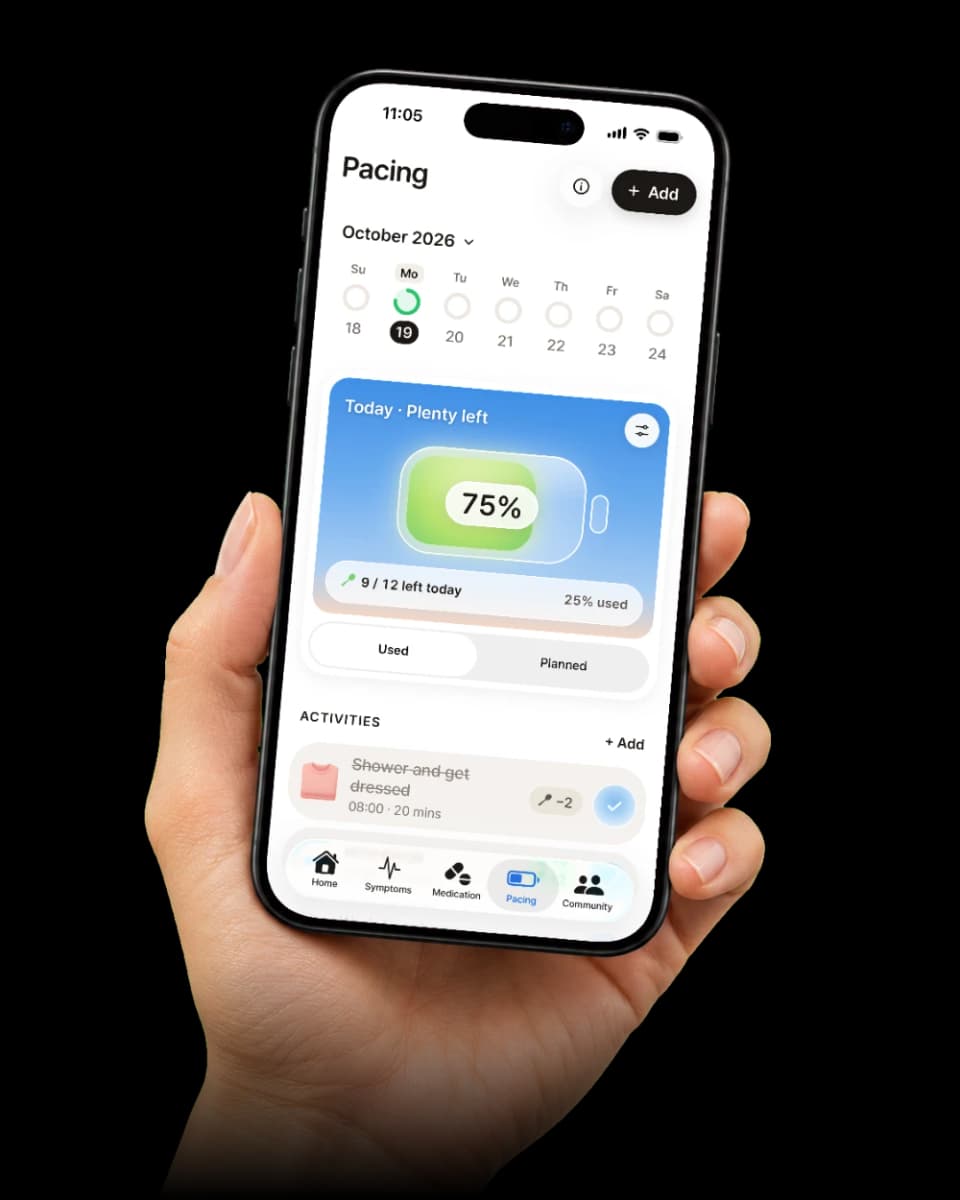
Tell Juno what happened in plain language and it turns that into a clear symptom timeline without extra admin.
Protect your energy
See what tends to push you past baseline so you can pace the week with less guesswork around migraine.
Show up prepared
Turn daily notes, symptom changes, and context into something your neurologist or headache specialist can actually use.
Privacy policy
Private and secure.
Health conversations are personal. Juno is built so your notes, symptoms, and timeline stay yours.
Your health data should not feel exposed.
Conversations are encrypted and kept private.
We do not sell your personal health information.
You can review, export, or delete your data at any time.
Read the privacy policy →


 Migraine
 Light
 Sound
 Nausea
 Neck pain

 Juno