Hashimoto’s Symptoms: Checklist, Early Signs and Flare-Ups
Most Hashimoto’s symptoms are the symptoms of an underactive thyroid. Here is what to look for, why they can change, and what to bring to your doctor.


Quick answer
Hashimoto’s symptoms usually come from an underactive thyroid: tiredness, feeling cold, weight gain, constipation, dry skin and hair, brain fog, low mood, aches, and heavy or irregular periods. Many people have no symptoms at first. A blood test for TSH and free T4, often with thyroid antibodies, is the only way to know.
Hashimoto’s thyroiditis is an autoimmune condition in which the immune system attacks the thyroid gland. Over time it can stop the thyroid making enough hormone, which is called hypothyroidism. Hashimoto’s is the most common cause of hypothyroidism in the US and the UK. [1] [2]
It is 4 to 10 times more common in women than men and usually starts between the ages of 30 and 50, although it can begin at any age. [1] [4] This guide covers the symptoms, why they can come and go, how Hashimoto’s is diagnosed and when to get help. It is general information, not a diagnosis.
What are the symptoms of Hashimoto’s?
Most symptoms appear once thyroid hormone levels fall. They tend to develop slowly, over months or years, so they are easy to put down to stress, age or a busy life. [2] Not everyone gets all of them, and having several does not mean you have Hashimoto’s.
| Symptom | What people often notice |
|---|---|
| Tiredness (fatigue) | Feeling worn out; less stamina for exercise. [1] [3] |
| Feeling cold | Needing more layers than people around you. [1] [2] |
| Weight gain | A gradual gain, usually modest. [1] [8] |
| Constipation | Fewer or harder bowel movements. [1] [2] |
| Dry skin and hair | Dry skin, dry or brittle hair, thinning hair or hair loss. [2] [4] |
| Brain fog | Trouble concentrating, thinking clearly or remembering things. [2] [4] |
| Low mood | Feeling flat, low or depressed. [2] [3] |
| Aches and weakness | Joint and muscle pain, stiffness or muscle weakness. [1] [5] |
| Period changes | Heavy or irregular periods, or difficulty getting pregnant. [1] [2] |
| Hoarse voice | A croaky voice without a cold. [2] |
| Puffy face or eyes | Puffiness, especially around the eyes. [4] |
| Slow heart rate | A lower pulse than usual. [1] [5] |
| Goitre | A swelling at the front of the neck, usually painless. It can feel like pressure or make swallowing uncomfortable. [1] [3] |
Other symptoms include reduced sex drive. [4] Because these symptoms overlap with many other conditions, a blood test is the only way to know whether your thyroid is involved. [15]
What are the early signs of Hashimoto’s?
Many people have no symptoms at first. Hashimoto’s is often found by chance, when a blood test shows thyroid antibodies or a raised TSH, or when a doctor notices a goitre. [1] [3] Cleveland Clinic describes a goitre as a common first sign. [4]
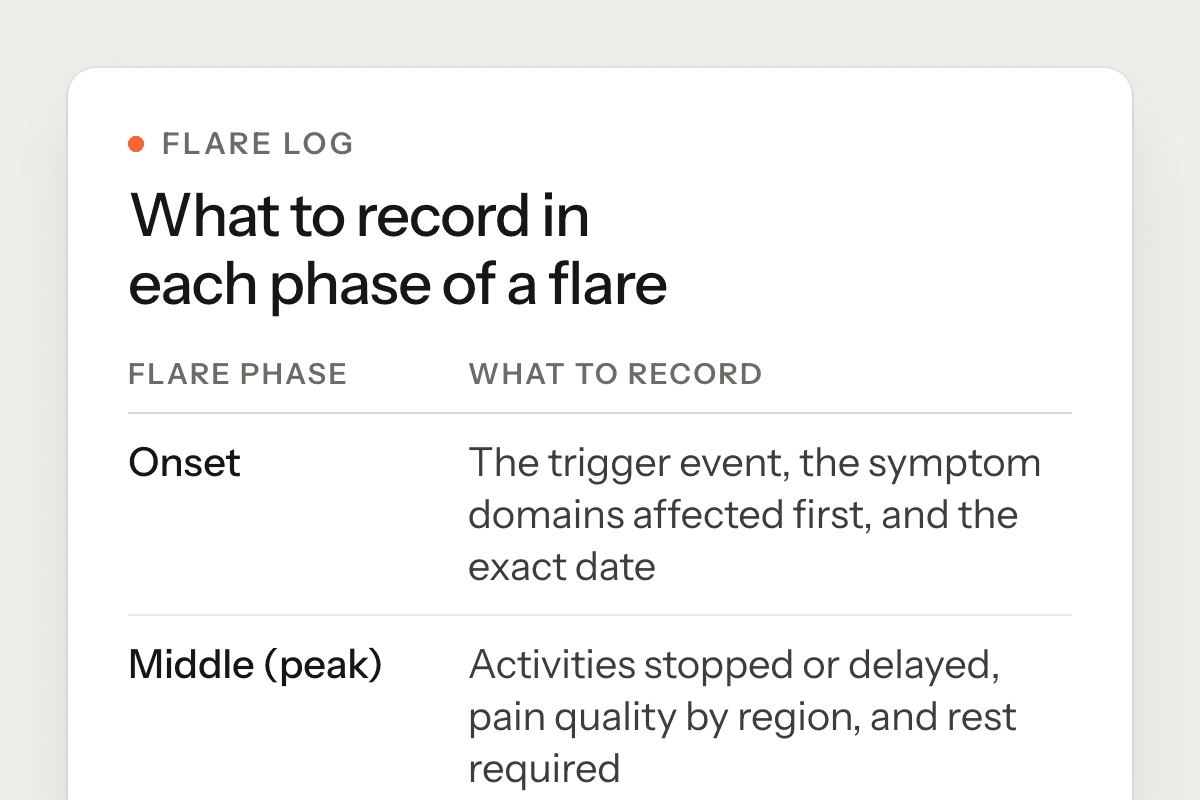
When early symptoms do appear, they are usually vague: being more tired than usual, feeling the cold, drier skin, constipation or heavier periods. Writing down when you first noticed each one helps, because the change is easier to see over months than day to day.
Less often, Hashimoto’s starts with a short overactive phase. As thyroid cells are damaged, stored hormone leaks into the blood. [1] [6] This can cause a racing heart, anxiety, poor sleep, irritability or weight loss for a while before the thyroid becomes underactive. [10]
Is Hashimoto’s the same as hypothyroidism?
No. Hashimoto’s is the cause; hypothyroidism is the result. Hashimoto’s describes the immune attack on the thyroid. Hypothyroidism means the thyroid is not making enough hormone, whatever the reason. [3] [14]
You can have Hashimoto’s with normal thyroid levels, when antibodies are present but the gland still keeps up. You can also have hypothyroidism without Hashimoto’s, for example after thyroid surgery or radioactive iodine, with some medicines, or from iodine deficiency. [14] The symptoms of hypothyroidism are the same whatever the cause.
Hashimoto’s often moves through recognisable phases, although not everyone goes through all of them and there is no official staging system. [3] [6]
| Phase | Blood tests | What it usually means |
|---|---|---|
| Antibodies only | Thyroid antibodies raised; TSH and free T4 normal | Usually no treatment; TSH is checked over time. [3] |
| Subclinical hypothyroidism | TSH raised; free T4 normal | Treatment may or may not be needed; often rechecked once or twice a year. [3] |
| Overt hypothyroidism | TSH raised; free T4 low | Usually treated with levothyroxine, often for life. [3] |
| Short overactive phase (uncommon) | TSH low; free T4 can be high | Stored hormone released from damaged cells; usually temporary. [1] [6] |
The “five stages of Hashimoto’s” you may see online are a version of this picture, starting with genetic risk. In a 20-year UK community study, people who had both a raised TSH and thyroid antibodies were much more likely to develop hypothyroidism than people with either finding alone. [7]
Can Hashimoto’s flare up?
Many people describe stretches of worse symptoms as flares, and those stretches are real. But Hashimoto’s is described as a slow, long-term condition rather than one that switches on and off like rheumatoid arthritis. [3] [4] When symptoms change, it is usually worth asking what has changed with your thyroid levels or your medication.
A “flare” of underactive symptoms often feels like the original symptoms returning: heavier tiredness, feeling cold, brain fog, low mood or aches. Too much thyroid hormone feels different: a fast or pounding heart, anxiety, poor sleep, sweating, headaches or hair loss. [11]
| Possible reason symptoms change | What you can check |
|---|---|
| The thyroid makes less hormone over time, so a dose that was right becomes too low | Ask whether a TSH test is due. [3] |
| A recent dose change | TSH is usually rechecked 6 to 8 weeks after a change, because it takes time to settle. [1] |
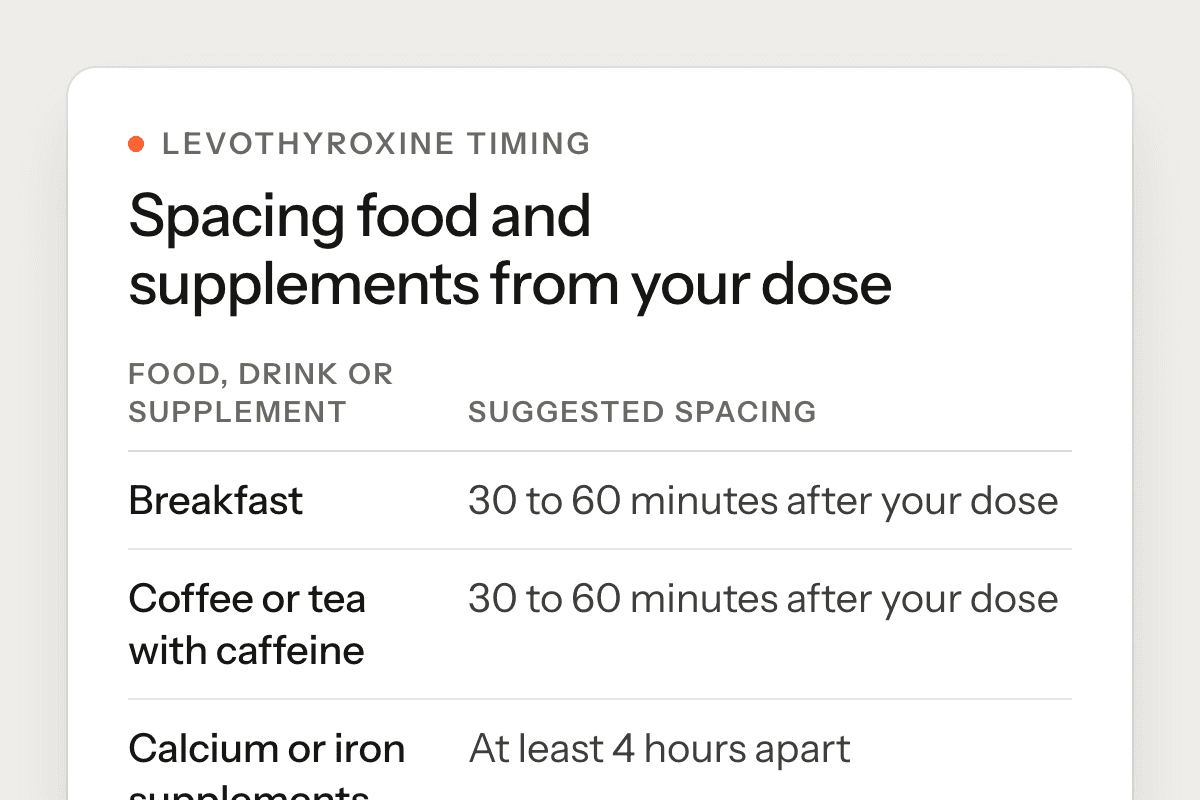
| Coffee, breakfast, calcium, iron or antacids taken close to levothyroxine | Look at what you take in the hours around your dose. [1] [11] |
| A new medicine, including oestrogen or some seizure medicines | Tell your doctor or pharmacist about anything you start or stop. [15] |
| Missed doses | Note them. Take a missed dose when you remember unless the next is nearly due; never double up. [11] |
| Pregnancy or a large change in weight | Both can change how much levothyroxine you need. [5] [6] |
| Something else entirely | Other conditions, poor sleep or stress can cause similar symptoms. Some autoimmune conditions are more common with Hashimoto’s. [1] |
Antibody levels can change over time, but they are not used to set your dose. The American Thyroid Association says repeat antibody tests are not needed; TSH is what gets monitored. [3] If you take biotin, which is common in hair and nail supplements, ask whether to pause it before a blood test, because high doses can make results misleading. [11] [12]
If you are unsure whether a change is the condition or the treatment, our guide to telling a flare from a medication side effect may help you organise what you have noticed.
Weight gain, fatigue, brain fog and anxiety: what is known?
Weight gain
Hypothyroidism can cause some weight gain, but usually less than people expect. The American Thyroid Association says about 5 to 10 pounds is typically thyroid-related, mostly from retained salt and water. Treatment usually brings weight back to where it was before the thyroid slowed down. Once levels are normal, losing weight works the same way as for anyone else. Thyroid hormone should not be used as a weight-loss drug. [8]
Fatigue
Tiredness is one of the most common symptoms. It usually improves with treatment, but it can take several months to feel better and for blood tests to settle. [5] Some people still feel unwell with a TSH in the normal range. If that is you, it is reasonable to ask your doctor to look for other causes as well. [5] [6] Our guide to feeling unwell when your blood tests are normal covers how to raise this.
Brain fog
The NHS lists difficulty concentrating or thinking clearly as a symptom of an underactive thyroid, and Cleveland Clinic lists memory problems. [2] [4] If brain fog makes appointments hard, write your main points down beforehand. Our guide to appointments with brain fog has a simple plan.
Anxiety and low mood
A 2018 review of 19 studies found that depression and anxiety disorders were more common in people with autoimmune thyroiditis than in people without it. [9] The studies varied a lot, so this shows a link, not a cause. Anxiety can also be a sign of too much thyroid hormone, during an early overactive phase or when a dose is too high. [6] [11] If anxiety starts after a dose increase, tell your doctor.
How does Hashimoto’s affect women, pregnancy and the months after birth?
Because Hashimoto’s is far more common in women, its symptoms often overlap with periods, pregnancy and perimenopause. Heavy or irregular periods and difficulty getting pregnant can be signs of an underactive thyroid. [1] [4]
Pregnancy. Tell your doctor as soon as you know you are pregnant, or if you are planning a pregnancy. Many people need a higher levothyroxine dose, often from early pregnancy, and more frequent blood tests. [2] [5] [14] Untreated hypothyroidism raises the risk of problems such as pre-eclampsia, premature birth and miscarriage, and treatment usually helps prevent them. [2] Thyroid antibodies on their own are also linked with a higher risk of miscarriage and preterm birth, which is one reason thyroid care is watched closely in pregnancy. [6]
After birth. Postpartum thyroiditis affects about 5 to 10 in 100 women in the US and is more likely if you have thyroid antibodies. It can cause an overactive phase about 1 to 4 months after birth, with anxiety, poor sleep, a racing heart and irritability, then an underactive phase about 4 to 8 months after birth, with tiredness, low mood and weight gain. Both phases are easy to mistake for life with a new baby. Most women recover within 12 to 18 months, but about 1 in 5 of those with an underactive phase stay hypothyroid. [10]
How is Hashimoto’s diagnosed?
A doctor will ask about your symptoms and family history, check your neck for a goitre and arrange blood tests. [1] [2] An ultrasound may be used if Hashimoto’s is suspected but antibodies are negative. [1]
| Test | What it measures | What results usually mean |
|---|---|---|
| TSH (thyroid-stimulating hormone) | The pituitary signal that tells the thyroid to work | Raised when the thyroid is underactive. The main test for monitoring treatment. [3] [15] |
| Free T4 | The thyroid hormone your body can use | Low in overt hypothyroidism; normal in subclinical hypothyroidism. [3] [15] |
| TPO antibodies | Antibodies against thyroid peroxidase, an enzyme in the thyroid | Present in about 95 in 100 people with Hashimoto’s, but also found in some people whose thyroid works normally. [6] |
| Thyroglobulin antibodies | Antibodies against a thyroid protein | Sometimes tested alongside TPO antibodies. [3] [6] |
| Thyroid ultrasound | The structure of the gland | Can show inflammation when antibodies are negative or check for nodules. [1] [6] |
If you are diagnosed with hypothyroidism, the usual treatment is levothyroxine, a daily tablet that replaces the missing hormone. [2] It works best taken on an empty stomach, 30 to 60 minutes before breakfast, a caffeinated drink or other medicines. [11] What you eat and drink around it matters more than any special diet, which our Hashimoto’s diet guide explains.
When should you see a doctor about Hashimoto’s symptoms?
See a GP or primary care doctor if you have several of the symptoms above, especially if they have built up over months, or if you notice a swelling in your neck. This is usually not urgent. [2] If you already have a diagnosis, contact your care team if symptoms return or change for more than a few weeks, after a new medicine, or if you become pregnant.
What should you ask your doctor?
A few prepared questions make a short appointment more useful. Pick the ones that fit:
- What were my TSH and free T4 results, and what range are we aiming for?
- Were thyroid antibodies tested, and does that change anything for me?
- When is my next blood test, and should I take levothyroxine before it as usual?
- Could any of my other medicines or supplements affect absorption or my results?
- If my levels are in range but I still feel unwell, what else should we look at?
- I am pregnant or planning a pregnancy. What should change, and when?
Our free appointment one-pager gives you space for your main concern, your questions and your medicines on a single page.
How can you track Hashimoto’s symptoms against medication and blood tests?
Hashimoto’s changes slowly, so the most useful record is short and steady rather than detailed. A weekly note is usually enough, with a few extra lines around dose changes and blood tests.
| What to note | Why it helps |
|---|---|
| Your three main symptoms, scored 0 to 10 | Shows whether things are improving after a change, rather than relying on how today feels. |
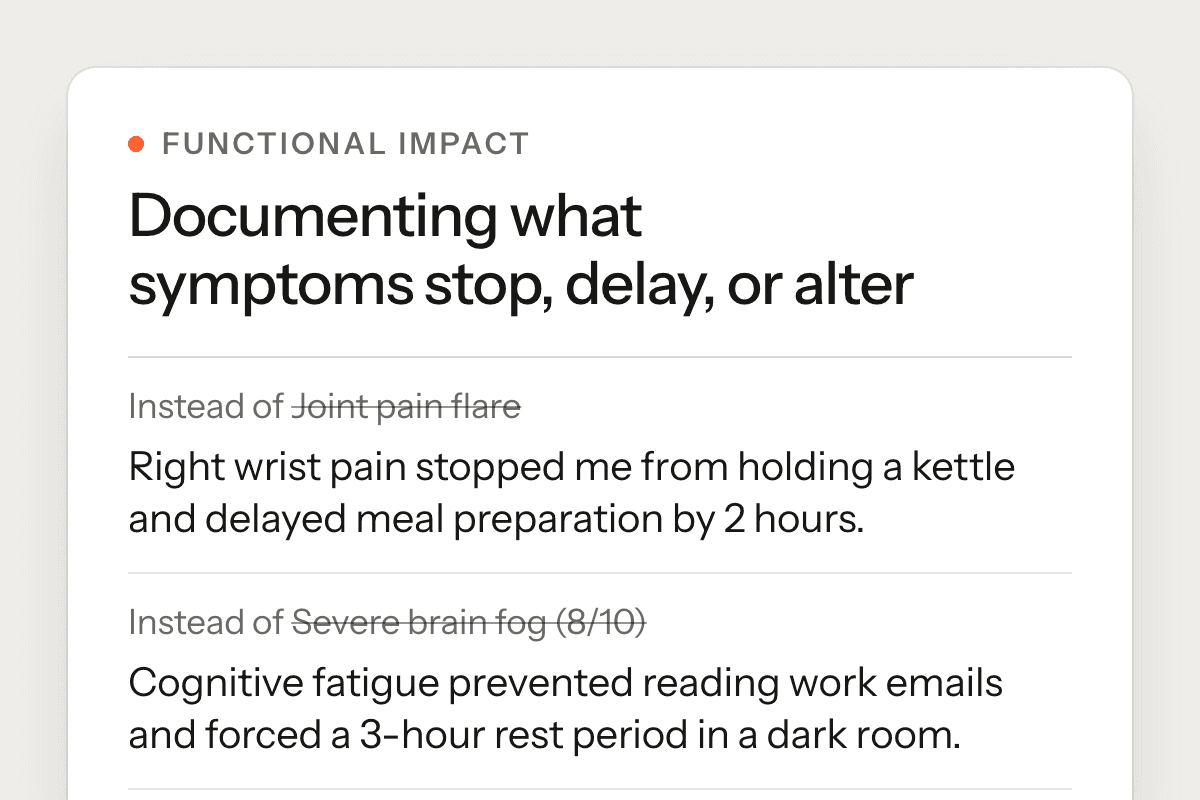
| Dose, time taken and anything within the next hour | Coffee, breakfast, calcium or iron near your dose can affect absorption. |
| Missed or doubled doses | Explains results that do not fit. |
| Blood test dates and results | Lets you compare how you felt with what TSH showed. |
| Dose changes | Symptoms in the 6 to 8 weeks after a change are what your doctor will ask about. |
| Periods, sleep and big life events | Gives context for symptoms that overlap with other causes. |
Fictional example: “Week of 6 October. Tiredness 6/10, cold 5/10, brain fog 4/10. Took 75 mcg at 7 am most days; twice with coffee straight after. TSH test booked for 3 November, seven weeks after my dose went up.” That is enough for a doctor to see the pattern.
Paper works well. You can also use our free symptom tracker in your browser. If writing is hard on tired days, Juno lets you describe how you feel by voice or text and keeps a timeline you can turn into a summary for appointments. The Hashimoto’s tracking page shows how. Juno cannot diagnose or adjust your treatment.
Frequently asked questions
What are the warning signs of Hashimoto’s?
The most common signs are tiredness, feeling cold, gradual weight gain, constipation, dry skin and hair, brain fog, low mood and heavier or irregular periods. A painless swelling at the front of the neck can be an early sign. Many people have no symptoms at first, so a blood test is the only way to know.
What does a Hashimoto’s flare feel like?
People usually describe a return of underactive thyroid symptoms: heavier tiredness, feeling cold, brain fog, low mood and aches. A racing heart, anxiety, sweating and poor sleep can instead point to too much thyroid hormone. Either way, it is worth asking whether a TSH test is due, especially after a dose change.
What are the five stages of Hashimoto’s?
There is no official staging system. The five stages described online roughly follow how Hashimoto’s can progress: genetic risk, then thyroid antibodies with normal thyroid levels, then subclinical hypothyroidism with a raised TSH, then overt hypothyroidism with low free T4. Not everyone moves through every stage.
Can you have Hashimoto’s with normal thyroid levels?
Yes. Many people have raised thyroid antibodies while their TSH and free T4 are still normal. The American Thyroid Association says treatment is not needed at that point, but TSH should be checked over time because the thyroid may become underactive later.
Can Hashimoto’s cause anxiety?
It can be linked. Studies find anxiety and depression are more common in people with autoimmune thyroiditis. Anxiety can also come from too much thyroid hormone, during an early overactive phase or if a levothyroxine dose is too high. Mention new anxiety to your doctor, particularly after a dose change.
Does Hashimoto’s cause weight gain?
It can, but usually modestly. The American Thyroid Association says about 5 to 10 pounds is typically thyroid-related, mostly salt and water. Treatment usually returns weight to where it was before. Once thyroid levels are normal, weight changes the same way as for anyone else.
What is the best diet for Hashimoto’s?
No single diet is proven to treat Hashimoto’s. The best-supported advice is to take levothyroxine on an empty stomach and away from coffee, calcium and iron, avoid high-dose iodine and kelp, and eat a balanced diet. Our Hashimoto’s diet guide covers gluten, selenium and other common questions.
Tools that go with this article
Sources
- NIDDK (National Institutes of Health): Hashimoto’s disease
- NHS: Underactive thyroid (hypothyroidism)
- American Thyroid Association: Hashimoto’s thyroiditis
- Cleveland Clinic: Hashimoto’s disease
- British Thyroid Foundation: Hypothyroidism
- Klubo-Gwiezdzinska J, Wartofsky L. Hashimoto thyroiditis: an evidence-based guide to etiology, diagnosis and treatment. Pol Arch Intern Med. 2022
- Vanderpump MP, et al. The incidence of thyroid disorders in the community: a twenty-year follow-up of the Whickham Survey. Clin Endocrinol. 1995
- American Thyroid Association: Thyroid and weight
- Siegmann EM, et al. Association of depression and anxiety disorders with autoimmune thyroiditis: a systematic review and meta-analysis. JAMA Psychiatry. 2018
- American Thyroid Association: Postpartum thyroiditis
- NHS: Levothyroxine
- British Thyroid Foundation: Diets and supplements for thyroid disorders
- Cleveland Clinic: Myxedema coma
- NIDDK (National Institutes of Health): Hypothyroidism (underactive thyroid)
- American Thyroid Association: Hypothyroidism (underactive)
Turn day-to-day notes into a clearer health story
Juno helps you track symptoms through conversation, notice patterns, and prepare a structured summary for appointments. Explore Juno’s Hashimoto’s symptom tracker. Download Juno on the App Store.
This article is for general information only and does not replace advice from your own clinician. Juno is a health assistant, not a medical provider.
Last updated: 2026-10-11