
Updated 12 August 2026

Discover why routine blood tests look normal when you feel sick, and learn how tracking functional impact can help you advocate for a proper diagnosis.
Quick answer
When routine blood tests come back normal but you still feel sick, it is easy to feel dismissed. Standard labs often miss complex chronic illnesses, but tracking functional impact and multi-system patterns can help you finally show doctors the bigger picture.
Why do normal lab results feel so frustrating?
Sitting in a sterile examination room while a doctor scans your blood work and announces that everything looks completely normal is a profoundly disorienting experience. When your body feels severely compromised - whether you are dealing with crushing exhaustion, brain fog, widespread pain, or sudden heart rate spikes - clear lab reports do not make you feel relieved. Instead, they leave you feeling isolated, confused, and questioning your own sanity. We know this painful disconnect intimately because so many of us in the chronic illness community have sat in those exact chairs, holding test results that contradict our daily reality.
The emotional toll of symptom invalidation
When standard tests fail to reflect severe symptoms, healthcare providers often default to telling patients that nothing is wrong or attributing physical suffering to stress and anxiety. A meta-synthesis in Psychological Bulletin examined 151 qualitative studies representing more than 11,000 individuals with difficult-to-diagnose conditions, and found that symptom invalidation is linked to self-doubt and shame, loss of trust in clinicians, avoidance of medical care, and diagnostic delays that worsen conditions. Having your lived experience dismissed by medical professionals creates an immense psychological strain, forcing patients into a state of continuous hyper-vigilance.
- A deeply isolating sense of medical gaslighting when severe physical symptoms are attributed entirely to anxiety or mood.
- The cognitive fatigue of continuously fighting to be believed by new specialists who rely solely on basic blood panels.
- Healthcare avoidance, where patients stop seeking care even during severe flares because previous appointments caused distress.
- The exhausting administrative burden of managing medical records, appointment schedules, and diagnostic appeals independently.
This relentless fight to validate your illness leads directly to advocacy fatigue. Managing a chronic illness is exhausting enough on its own, but having to constantly defend the reality of your symptoms to the healthcare system doubles that cognitive load. Understanding why routine blood panels come back clear is the first crucial step in reclaiming your narrative and shifting the conversation toward meaningful functional evaluation.
What do standard blood panels actually measure?
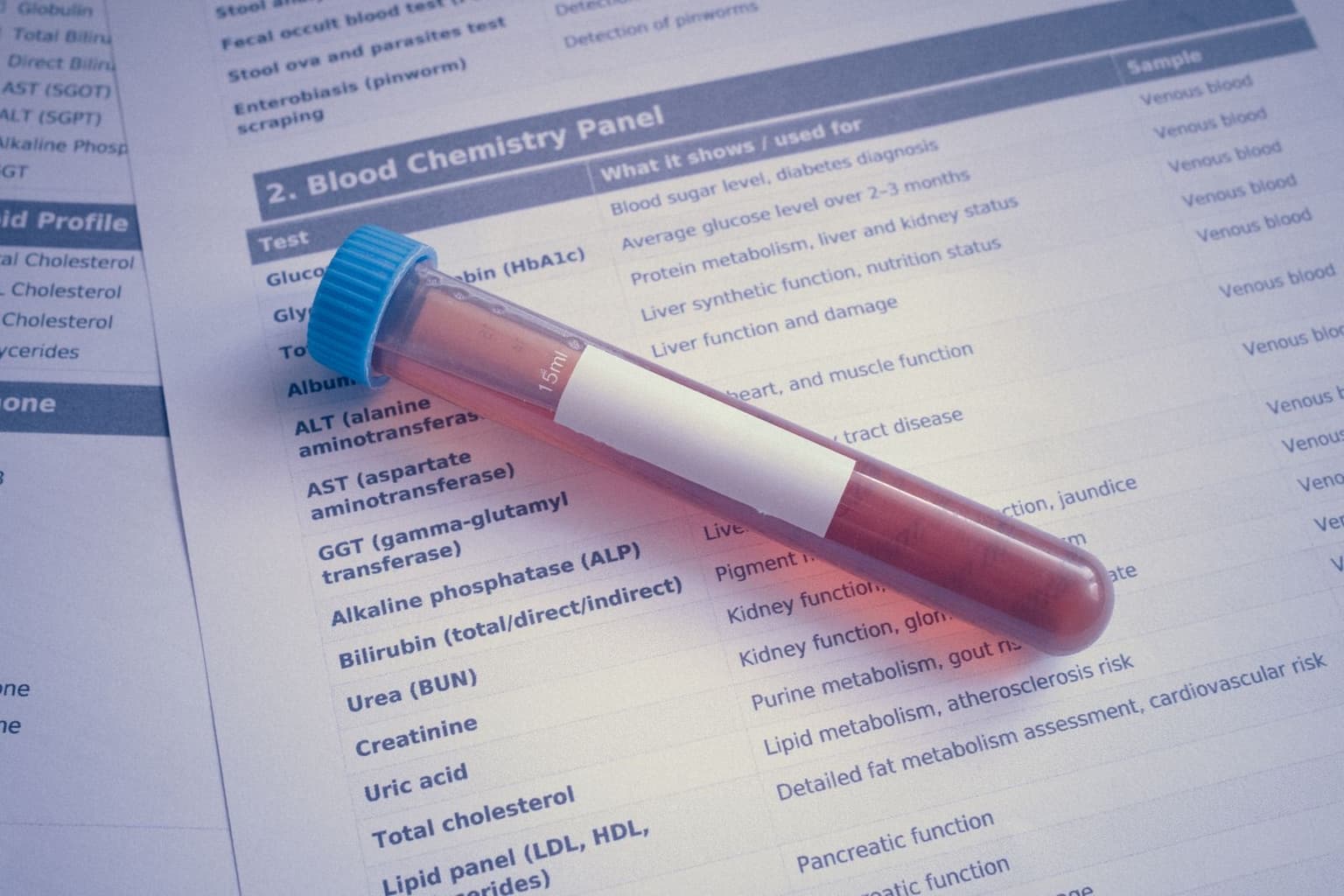
To understand why you feel so sick despite clean lab results, it helps to look at what standard blood panels are clinically designed to catch. The CDC's evaluation guidance for ME/CFS explains that routine tests such as complete blood counts, electrolytes, liver and renal function, and inflammatory markers like C-reactive protein are used mainly to identify and rule out other illnesses, and that most people with ME/CFS have routine laboratory results within normal ranges despite being substantially debilitated. While these tests are exceptional at identifying conditions like severe anemia, liver dysfunction, or active bacterial infection, they are not designed to assess complex systemic dysregulation.
Static snapshots versus dynamic dysfunction
A routine blood draw represents a static snapshot of your peripheral blood taken at a single point in time, usually while sitting quietly in a morning clinic. However, energy-limiting conditions, autonomic dysfunctions, and post-viral neuroinflammation are dynamic disorders. They affect how your body responds to gravity, physical exertion, cognitive stress, or digestive demands throughout the day. A standard blood test cannot measure how your autonomic nervous system regulates blood pressure when standing, nor can it detect mitochondrial strain after mental effort.
| Evaluation Metric | Standard Blood Panel (CBC / CMP) | Dynamic Functional Tracking |
|---|---|---|
| Primary Diagnostic Focus | Identifies acute organ failure, anemia, or infection | Captures fluctuating, real-time physiological shifts |
| Measurement Method | Static blood sample taken at a single rest moment | Continuous logging across daily activity and posture |
| Clinical Sensitivity | High for structural or biochemical pathology | Better suited to functional dysautonomia and fatigue flares |
| Symptom Correlation | Poor correlation with dynamic pain and brain fog | Direct correlation with daily triggers and post-exertional crashes |
When a doctor tells you your blood tests are normal, what they are actually saying is that your major organs are not in acute failure and your basic cell counts are within statistical population averages. A normal result does not mean you are healthy; it simply means the traditional laboratory panel is looking in the wrong place for a non-structural, functional condition.
Which invisible illnesses hide from basic blood work?
Many of the most debilitating energy-limiting conditions are essentially invisible to standard blood draws. Conditions like Myalgic Encephalomyelitis / Chronic Fatigue Syndrome (ME/CFS), Long COVID, and Postural Orthostatic Tachycardia Syndrome (POTS) routinely produce completely normal routine laboratory results. Because these illnesses stem from autonomic nervous system dysfunction, vascular dysregulation, or cellular energy impairment rather than major organ damage, standard pathology tests fail to register them.
Specialized testing reveals what routine labs miss
When clinical research moves beyond basic blood panels and utilizes specialized physiological testing, objective abnormalities become immediately apparent. For instance, a landmark study published in Clinical Neurophysiology Practice demonstrated that 90% of ME/CFS patients exhibit an abnormal reduction in cerebral blood flow during orthostatic stress testing, even when their routine heart rate and blood pressure responses appear normal. This dramatic drop in blood flow to the brain explains severe cognitive fatigue and dizziness, yet a standard blood draw will never reveal it.
- Postural Orthostatic Tachycardia Syndrome (POTS): Marked by posture-dependent heart rate spikes and orthostatic intolerance that do not affect baseline metabolic blood panels.
- Myalgic Encephalomyelitis (ME/CFS): Characterized by a worsening of symptoms after exertion (post-exertional malaise), and routine tests ordered during work-up are frequently normal in these patients.
- Long COVID: Involves persistent neuroinflammation, microvascular changes, and multi-system fatigue that bypass standard inflammatory markers like CRP.
- Ehlers-Danlos Syndrome (EDS) and Hypermobility: Connective tissue fragility that causes joint subluxations and autonomic overlap without altering blood chemistry.
Recognizing that conditions like POTS, ME/CFS, and Long COVID operate through physiological mechanisms that standard labs overlook helps remove the burden of self-doubt. Your symptoms are not imaginary; they are real physiological reactions that require dynamic, multi-system measurement rather than single-point blood draws.
Why is proving you are sick such a heavy cognitive burden?
Living with an invisible chronic illness requires carrying a massive, invisible workload. When routine laboratory tests come back clear, the entire responsibility of proving your illness falls directly onto your shoulders. Researchers reviewing symptom invalidation note how hard it is for patients to be put in a position where they must advocate for themselves so aggressively, and suggest bringing a partner, an adult child, or a friend who can back up your account of your symptoms. That means spending scarce energy trying to convince clinicians that your fatigue, pain, and cognitive dysfunction are not just stress or worry.
The exhausting ritual of rebuilding the story
Every time you see a new specialist, you are forced to rebuild the story of your health from memory. You have to explain when symptoms started, how flares evolve, and what triggers cause your body to crash. Beyond appointment preparation, patients spend hours performing mental 'sleep maths' - constantly calculating every unit of physical or mental energy spent today against the risk of an impending crash tomorrow. Holding this entire complex picture in your mind while experiencing severe brain fog is exhausting.
We firmly reject the clinical detachment that dismisses clear labs as simple anxiety. It is completely reasonable to feel anxious when walking into a medical appointment unprepared, knowing your brief slot might end in dismissal. To break this exhausting cycle, we must change how we present health data to clinicians, moving away from subjective ratings and toward objective functional impact.
How do I shift from pain scores to functional impact?
When doctors ask you to rate your pain or fatigue on a simple scale from 1 to 10, the communication gap widens. Saying your fatigue is an '8 out of 10' is subjective and gives a busy clinician very little actionable context. A doctor cannot easily measure an '8', making it easy for them to gloss over the severity of your condition when your blood work looks pristine.
Documenting what symptoms stop, delay, or alter
To bridge this gap and communicate effectively during short appointments, we guide patients to focus on documenting functional impact: specifically recording what a symptom stopped, delayed, or changed in their daily life. Researchers studying symptom invalidation note that algorithm-driven clinical workflows leave little room for complex stories that do not fit neatly into test panels or insurance codes, which is exactly why a concise, concrete account of impact helps. Functional data turns vague complaints into concrete evidence.
- Instead of logging 'Severe brain fog (8/10)', record: 'Cognitive fatigue prevented reading work emails and forced a 3-hour rest period in a dark room.'
- Instead of logging 'Joint pain flare', record: 'Right wrist pain stopped me from holding a kettle and delayed meal preparation by 2 hours.'
- Instead of logging 'Dizziness', record: 'Orthostatic lightheadedness while standing at the stove forced me to lie down flat on the floor after 4 minutes.'
- Offline tracking alternative: Download free printable worksheets like symptom logs or energy trackers to establish a physical paper trail before appointments.
By presenting functional impact, you ground your symptoms in concrete daily activities that clinicians understand. A doctor cannot easily dismiss a record that demonstrates you lost the ability to stand upright for more than five minutes or were unable to cook dinner for three consecutive days.
How can multi-system tracking uncover what single tests miss?
Chronic complex conditions rarely affect just one organ or system at a time. Illnesses like dysautonomia, MS, or lupus trigger overlapping signals across the autonomic nervous system, immune function, digestive tract, and musculoskeletal system. Tracking a single symptom in isolation fails to capture the true picture of what is happening inside your body.
Connecting related physiological signals
Rather than relying on isolated daily scores, effective self-advocacy requires tracking related signals together, such as symptoms, flares, triggers, treatment changes, sleep, energy, and mood. When you log these factors side by side, hidden patterns emerge that reveal how environmental triggers or physical exertion provoke systemic crashes hours or days later.
- POTS & Dysautonomia: Log posture-aware symptoms tagged by specific position (lying, sitting, standing, or walking) and track resting-versus-standing heart rate deltas rather than daily averages.
- Fatigue Categorization: Separate fatigue into distinct qualitative types, tracking 'wired' (hyper-adrenergic agitation), 'heavy' (physical body weakness), and 'cognitive' (brain fog) fatigue individually.
- ME/CFS Energy Envelope: Monitor your sustainable energy envelope and track physical, cognitive, and emotional post-exertional malaise (PEM) triggers separately to spot delayed 24-to-48-hour crash cycles.
- Environmental & Treatment Triggers: Map weather shifts, heat exposure, barometric pressure changes, and medication adjustments alongside symptom flares.
Connecting these multi-system signals transforms messy daily experiences into a coherent physiological story. Instead of presenting a doctor with disconnected complaints, you present a clear map showing exactly how your body responds to daily demands.
How do I turn messy daily logs into a doctor-ready summary?
When you step into a doctor's office, you usually have fewer than fifteen minutes to explain weeks or months of complex symptoms. Handing a specialist fifty pages of detailed daily notes or scrolling through messy smartphone logs can overwhelm both you and your clinician. To make every minute count, daily health data must be consolidated into a structured, executive summary.
How a companion lightens the tracking burden
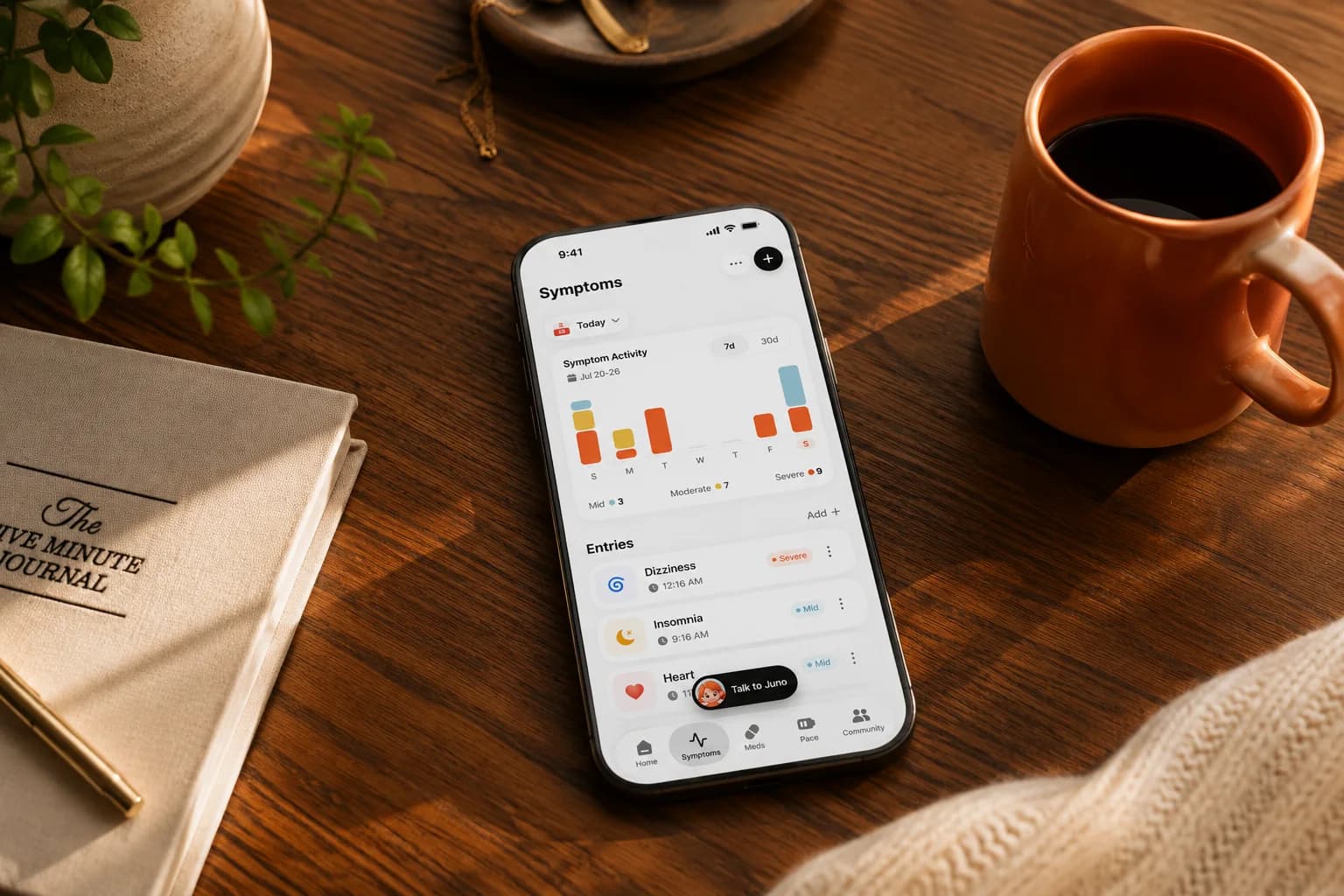
Consolidating daily health logs by hand adds even more weight to your cognitive load. That is where an AI health assistant like Juno lightens the burden. Built on academic research from Oxford and University College London, she is designed to serve as a 24/7 chronic illness companion. Through simple daily text or voice conversations, she quietly logs your symptoms, gently reshapes messy health data, and watches for subtle patterns over time. She removes the mental burden of doing sleep maths on your own, helping you protect tomorrow before today's schedule pushes you too hard.
- Start with high-level summaries: Begin with 'The four lines that matter most' highlighting baseline shifts, primary goals, and major functional limitations.
- Detail symptom trends & flares: Present clean visual trends showing flare frequency, severity duration, and environmental triggers.
- Highlight PEM & biometrics: Outline post-exertional malaise crashes, sleep continuity metrics, and posture-aware heart rate deltas.
- List prioritized clinical questions: Conclude with three prioritized questions to focus the appointment on actionable diagnostic or treatment next steps.
Whether you choose to organize your logs offline using free printable flare sheets or let Juno generate a one-page PDF summary automatically, you no longer have to carry the mental weight of rebuilding your medical story alone. Alongside a wider community of people navigating chronic illness, you can walk into your next appointment equipped with objective evidence, ready to be heard.
This article is for general information only and does not provide medical advice, diagnosis, or treatment. Always talk to a qualified clinician about your own health before changing medication, treatment, or activity levels.
Last reviewed: 2026-08-26
Frequently asked questions
Why do I feel so sick if my CBC and metabolic panel are normal?
Routine panels look for specific acute endpoints, such as infection or major organ failure. They are not designed to detect the subtle nervous system dysregulation, autonomic failure, or energy-limiting characteristics found in complex chronic illnesses.
Can you have an autoimmune disease with normal blood work?
Yes. In the early stages of many connective tissue and autoimmune disorders, inflammatory markers like ANA or ESR may not yet be elevated enough to cross the statistical threshold for a positive result, even when symptoms are severe.
What tests should I ask for if my routine labs are normal?
If your routine labs are clear but you experience fatigue and dizziness, you might need functional or physiological assessments. For example, tilt table or orthostatic stress testing can reveal autonomic issues that basic blood draws miss entirely.
How do I explain my symptoms to a doctor who dismisses me?
Shift your language from subjective feelings to concrete functional impact. Instead of saying you are tired, state exactly how the fatigue stopped you from working, standing, or completing daily tasks over a specific time frame.
Is it common for chronic fatigue syndrome to not show up on tests?
Yes. The CDC confirms that despite profound debilitation, patients with ME/CFS typically have routine lab results that fall completely within normal ranges. Diagnosis relies on clinical history and identifying patterns like post-exertional malaise.
Tools that go with this article
Sources
- https://rutgershealth.org/news/when-doctors-dismiss-symptoms-patients-suffer-lasting-harm
- https://www.cdc.gov/me-cfs/hcp/diagnosis-testing/evaluation-of-me-cfs.html
- https://pubmed.ncbi.nlm.nih.gov/32140630/
- https://mecfscliniciancoalition.org/wp-content/uploads/2021/05/MECFS-Clinician-Coalition-Testing-Recs-V1.pdf
- https://www.rutgers.edu/news/when-doctors-dismiss-symptoms-patients-suffer-lasting-harm
Turn day-to-day notes into a clearer health story
Juno helps you track symptoms through conversation, notice patterns, and prepare a structured summary for appointments. See how Juno works. Download Juno on the App Store.
This article is for general information only and does not replace advice from your own clinician. Juno is a health assistant, not a medical provider.
Last reviewed: 2026-08-12