
One sheet for the doctor.
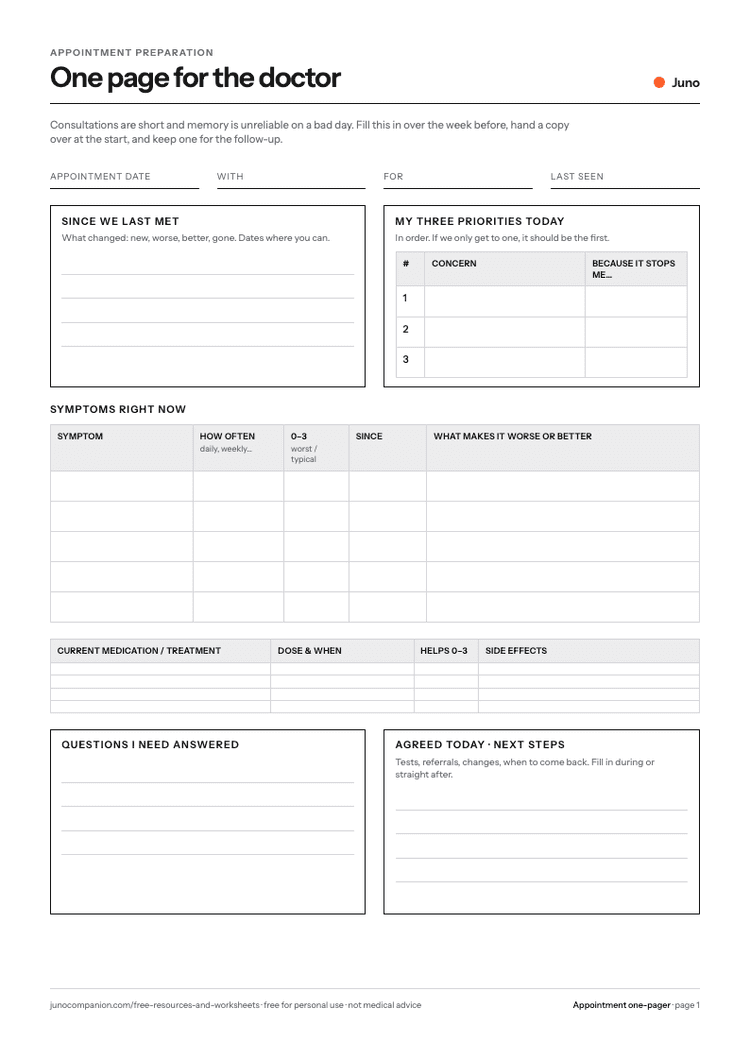
Two sides: what you need help with, and what you take. Fill a few lines a day in the week before.
Consultations are short and memory is unreliable on a bad day. This sheet carries more than twenty minutes of talking, in the order that matters to you, with an example row so you never start from a blank box.
Free · black and white, prints on anything · no email needed
What it helps you do
- Lead with the three things that matter most
- Show how symptoms limit daily life, not just that they exist
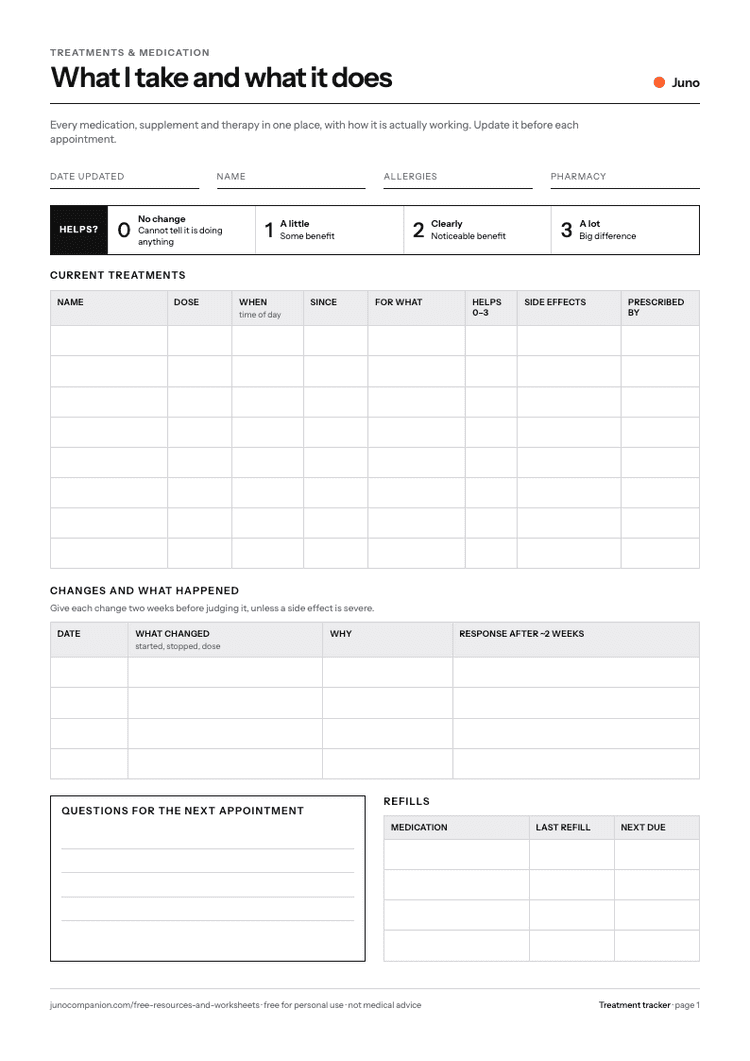
- Give the clinician your medication list without being asked
- Leave with the plan written down
How to use it
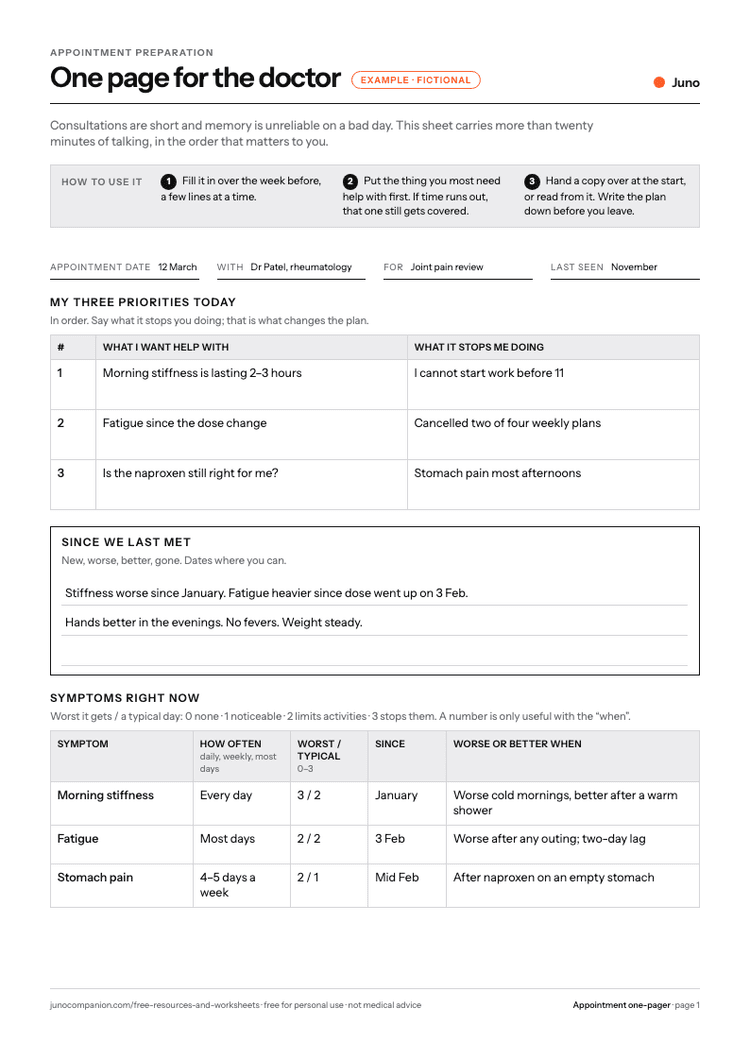
- Fill it in over the week before, a few lines at a time. The grey example row shows how much detail is enough.
- Put the thing you most need help with first. If time runs out, that one still gets covered.
- Hand a copy over at the start, or read from it. Tick what you would like from the visit; it is fine to ask.
- Write the agreed plan down before you leave, then tick off the after-appointment list.
What is on the sheet
- How to use it, in three lines
- My three priorities, and what each one stops me doing
- Since we last met
- Symptoms right now, with worst and typical 0–3
- What I take now and whether it helps
- Questions I need answered
- What I would like from today
- Agreed today and after the appointment

Prefer not to use paper?
Tell Juno what happened in a sentence and it goes onto your timeline, ready to review before an appointment.


Free to download. Juno is a health assistant, not a medical provider, and never replaces advice from your own clinician.
What a finished sheet looks like
A fictional example, filled in the way a clinician can read in under a minute. Yours does not need to be this tidy.
Questions
Should I really hand this to my doctor?
Yes, most clinicians welcome a short, ordered summary. It saves time and means the important points are covered even if you tire or lose your thread.
What if I have more than three concerns?
List them elsewhere and bring the sheet for the next visit. Three ordered priorities are more likely to be addressed properly than eight competing ones.
Can I use it for a new specialist?
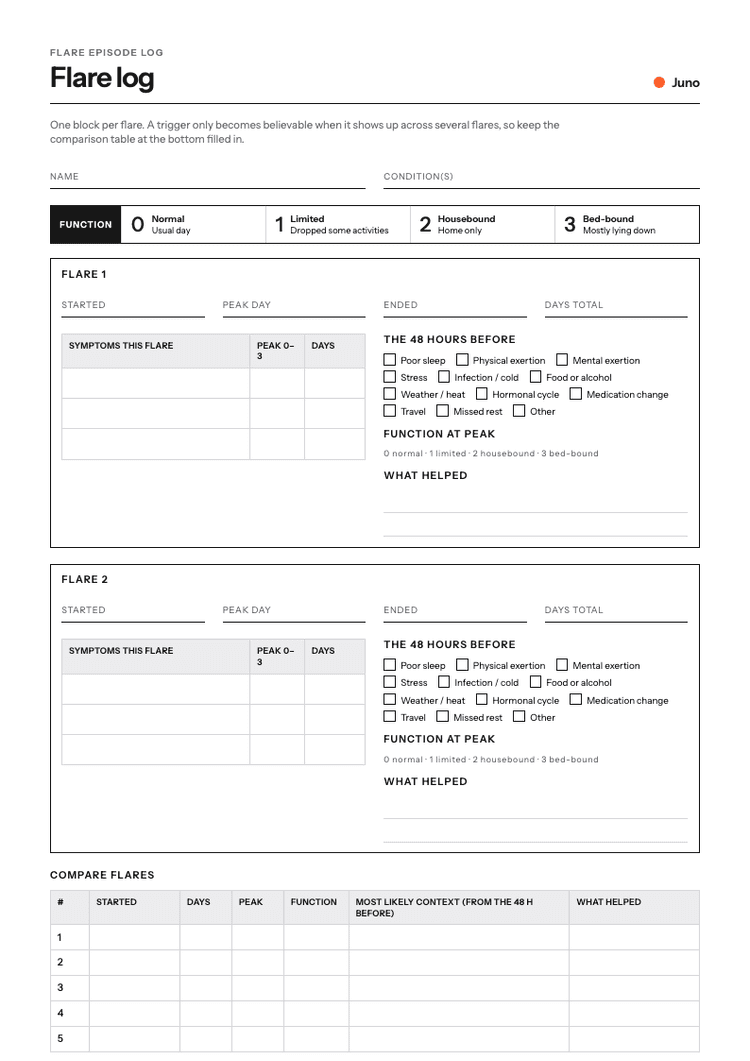
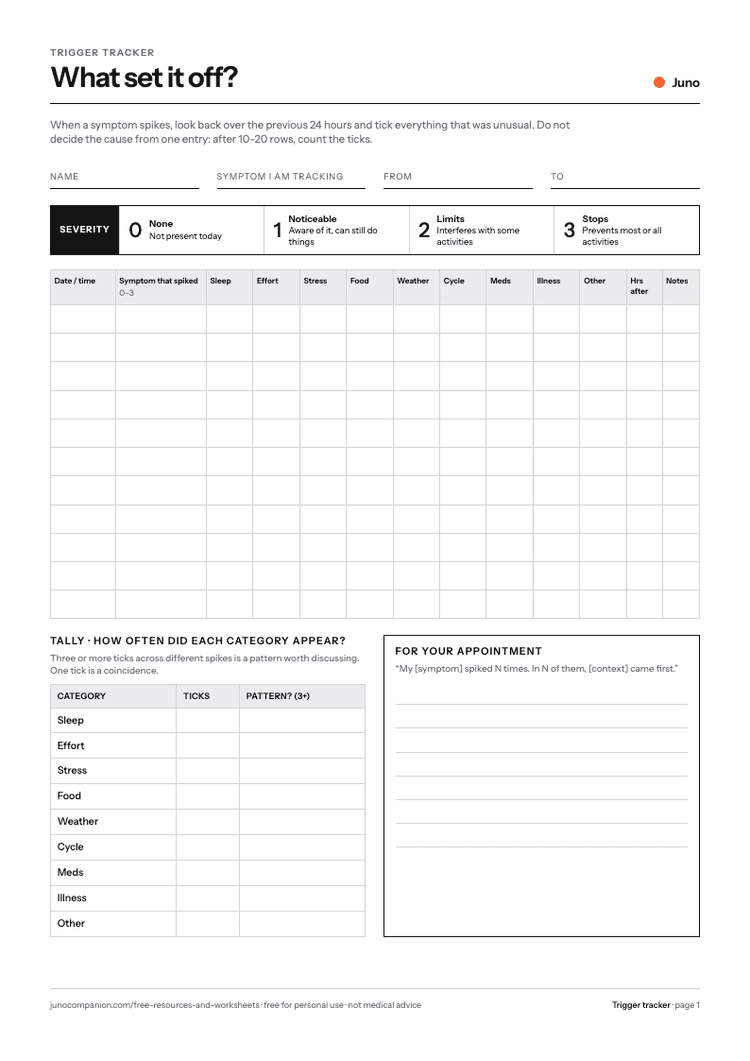
Yes. Pair it with the symptom tracker or flare log so the specialist sees the pattern, not just the summary.
Is this medical advice?
No. It is a preparation tool. Decisions about tests and treatment belong in the conversation with your clinician.



More free worksheets
See all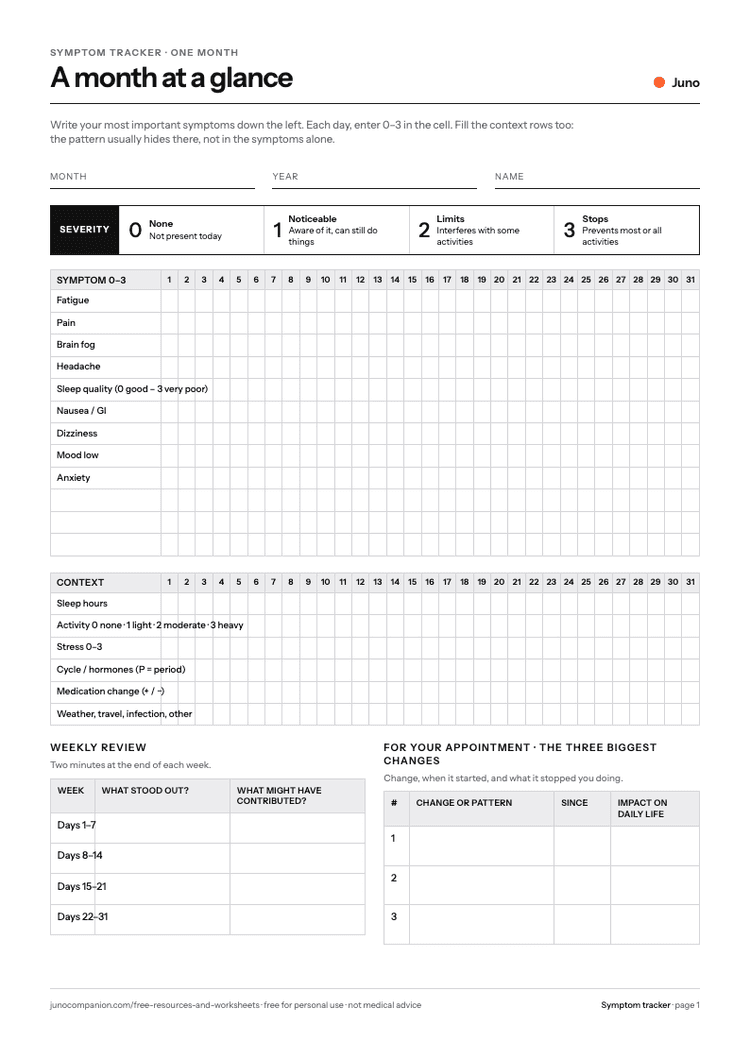
Juno, your 24/7 health assistant
- Free to download
- Syncs with 20+ wearables
- Doctor-ready summaries
Free to download. Juno is a health assistant, not a medical provider, and never replaces advice from your own clinician.