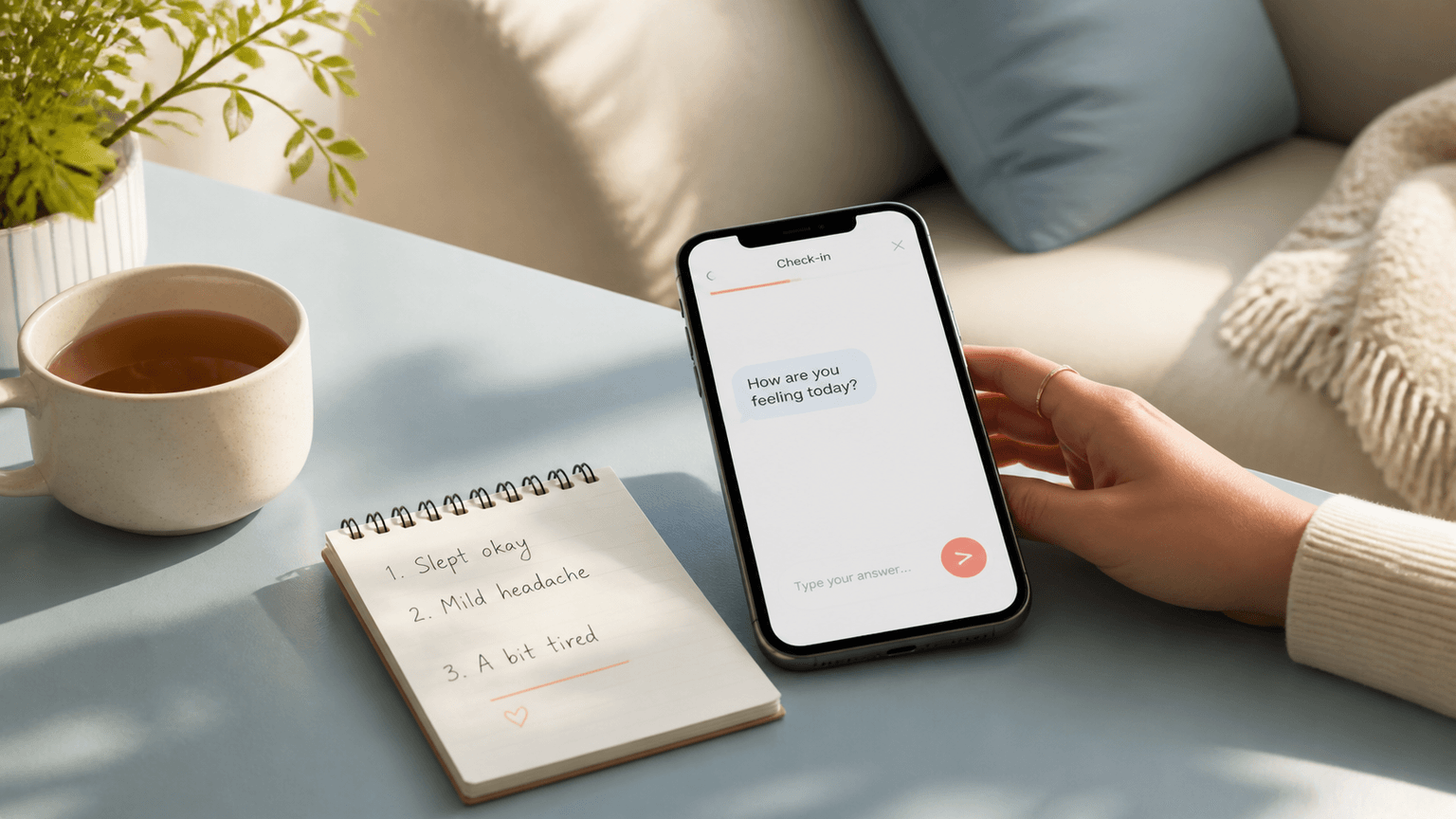


Reliable information matters. So does remembering what you have already been through.
Quick answer
Juno pairs a curated health knowledge base with the context you choose to share, like your symptom history and what your days have been like. Medical evidence, your own notes and other people’s experiences each do a different job. Use Juno to make sense of information and prepare better questions, then check sources and keep care decisions with your clinician.
Where does Juno’s health information come from?
A useful health conversation needs two things: information you can trust, and some understanding of what is actually going on in your life. Maybe you need a medical term explained, help making sense of an appointment letter, or a way to describe a change you have noticed over the last few weeks.
Juno works from a curated knowledge base of medical journals and trusted sources, including Mayo Clinic and Mount Sinai, with doctors helping shape how information is presented. [1] Alongside that, she uses the personal context you have shared, so the answer fits your question rather than a generic one.
Those organisations are sources, not partners, and naming them is not an endorsement. An answer informed by good sources is also not the same as one a clinician has checked for you personally. Keeping that straight helps you decide what to use, what to double-check, and what to take to your care team.
What is each kind of information useful for?
| Kind of information | What it can give you | What it cannot settle |
|---|---|---|
| Medical evidence | General explanations and questions to ask about your care | Which diagnosis or treatment is right for you without a clinical assessment |
| Patient experience | Practical ideas and questions worth exploring | Whether an approach is effective or safe for everyone |
| Your own notes | Dates, symptoms, daily impact and context | A diagnosis or a proven cause on their own |
Someone else’s account of cooking while exhausted might give you an idea worth borrowing. It does not tell you whether a medicine suits you. Your own notes might show a change after starting a treatment, but your prescriber or pharmacist is the one to help work out what that change means.
How does your own history help?
“How do I explain this at my appointment?” is a much better question when you can attach dates and examples. How the fatigue changed, what you could no longer manage, which question went unanswered last time.
Juno is built for continuity: symptoms, treatments and day-to-day context kept together, so there is less to rebuild from memory every time. [1] Instead of starting from “I’ve been exhausted lately”, you can start from the dates, changes and practical examples already in your notes. That makes the next question sharper.
Missing information is still missing. If an answer assumes something you did not say, correct it. If it suggests a connection, ask which notes support it. A suggestion about your history should stay separate from what you actually recorded.
You could try: “Help me summarise how my fatigue has changed and give me three questions for my appointment. Keep what I recorded separate from possible explanations.” Check the dates and details, then choose what to share. Our fictional example report shows what a summary can look like.
How can you check an AI health answer?
Start with the claim that would change what you do. MedlinePlus suggests checking who runs a health information source, where its information comes from, how it is reviewed and when it was last updated. [2] The same questions work for an AI answer.
- Ask whether a statement is general evidence, a detail from your records, or an interpretation.
- Ask for the source and its date, then check the source really says that.
- Look for the uncertainty: what is unknown, and what else could explain it?
- Take decisions about medicines, tests or treatment to the clinician responsible for your care.
A familiar name or a link is not enough by itself. AI can misread a source, drop an important caveat, or cite something that does not back up its answer. If you cannot verify a claim that would change what you do, pause before acting on it.
For a question about a medicine, the sensible next step is usually asking your prescriber or pharmacist whether the information applies to your dose, your other treatments and your history. Use Juno to get that question ready. A confident explanation on its own is never a reason to change treatment.
What happens to the information you share?
Juno never sells your health data, and its agreements with AI providers prohibit using your conversations to train their models. [1] Your saved history is there for a different reason: so you can come back to your notes and carry on a conversation with context. Storage and provider retention are separate questions.
Eligible AI-provider requests use zero data retention, depending on the feature and endpoint. That is not a promise that every part of the service stores nothing. Chat history, files, memory, backups and diagnostics have their own retention arrangements. The privacy policy and consumer health data information have the current details and your choices.
Where does your care team fit?
Juno is a general wellness app and health assistant, not a medical provider. She can help you organise your notes and prepare questions. She cannot diagnose you or stand in for the clinician who knows your care. For urgent symptoms or an emergency, get medical help rather than waiting on an app.
Try taking one focused question into an appointment: “These symptoms have changed over the last two weeks. What should we consider, and what would be useful to record?” A symptom tracker helps you gather a few examples without turning preparation into a project.
You can explore Juno when you want help turning information into a clearer conversation. Start with the thing you want to understand, or use our voice and text tracking guide to capture the experience you are trying to explain.
Frequently asked questions
Where does Juno get its medical information?
From a curated knowledge base of medical journals and trusted sources, including Mayo Clinic and Mount Sinai, with doctors helping shape the information and responses. That is not an endorsement by those institutions, and it does not mean every answer is individually reviewed. Check the source behind anything that could affect your care.
How does Juno use my symptom history?
Juno uses the context you share, like the symptoms, dates and daily impact in your notes, to make conversations more relevant. That helps when you are preparing an appointment summary or a more specific question. Review the details, and keep what you recorded separate from possible explanations.
Are patient stories medical evidence?
No, though they are valuable. Patient experience helps you understand daily life and find practical questions to ask. It does not show that a treatment works or is safe for someone else, and Juno keeps the two apart.
Are my chats used to train AI models?
Juno’s agreements with its AI providers prohibit training models on your conversations. That does not mean everything is deleted straight away or never stored. Check the privacy policy for retention, processing and feature-specific details.
Can Juno help me decide which medicine to take?
Juno can help you organise information and prepare questions about medicines. Starting, stopping or changing treatment, including interactions and side effects, is a conversation for your prescriber or pharmacist. Do not change prescribed treatment on the strength of an AI answer.
Tools that go with this article
Sources
Turn day-to-day notes into a clearer health story
Juno helps you track symptoms through conversation, notice patterns, and prepare a structured summary for appointments. See how Juno works. Download Juno on the App Store.
This article is for general information only and does not replace advice from your own clinician. Juno is a health assistant, not a medical provider.
Last updated: 2026-09-28