
“I had to stop cooking because I felt dizzy.” That is already a useful place to start.
Quick answer
Tell Juno what happened in your own words, by text or voice, and she keeps it as part of your history. Say when it happened and what it stopped you doing if you can. Then glance at the saved entry: dates and severity are the details most worth checking, and a symptom note is never a diagnosis.
What can you say when you want to log a symptom?
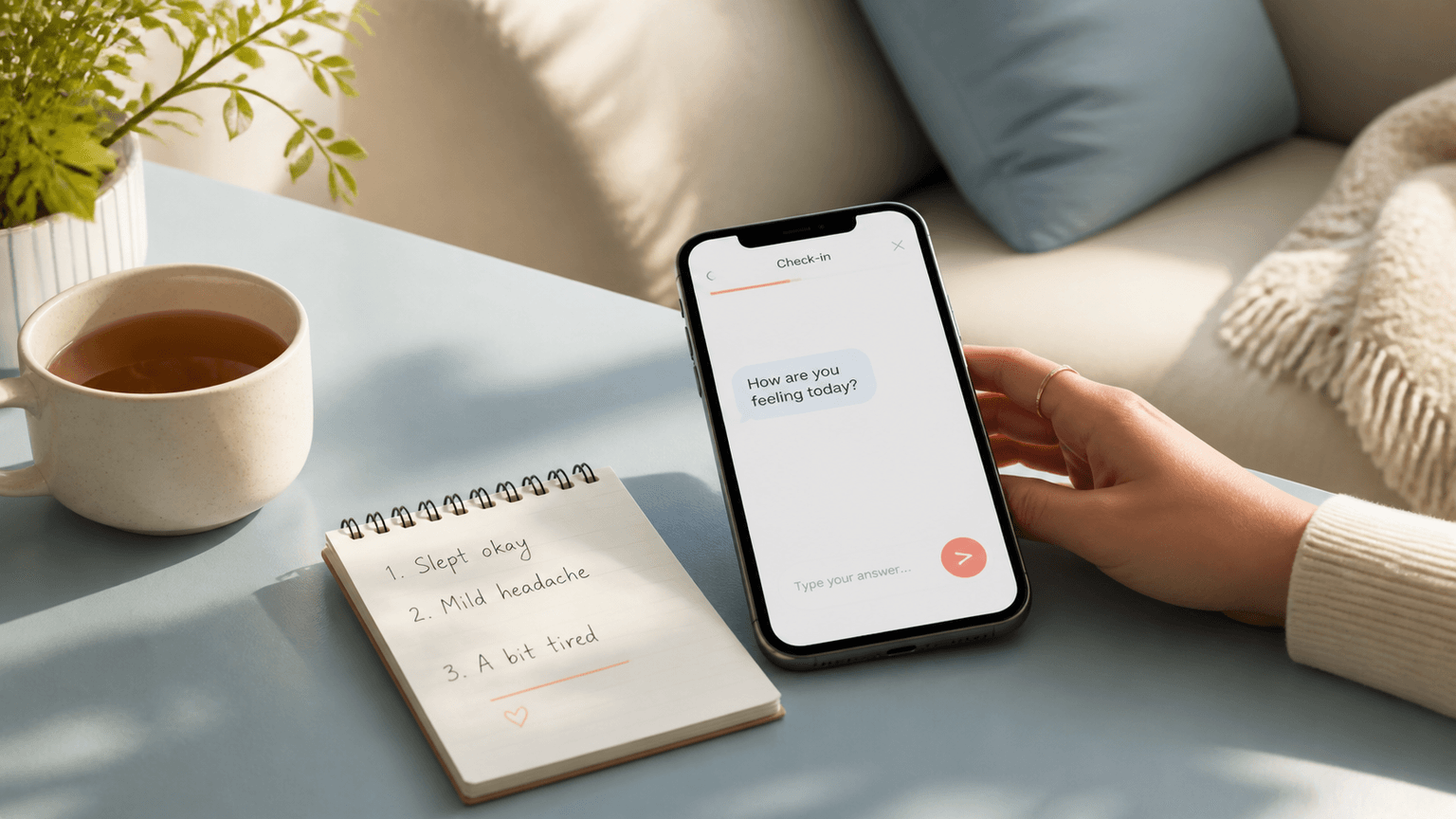
“My head hurts and I had to leave the call early.” That is a perfectly good symptom note. So is “I felt dizzy yesterday when I stood up.” Neither needs translating into clinical language before it counts.
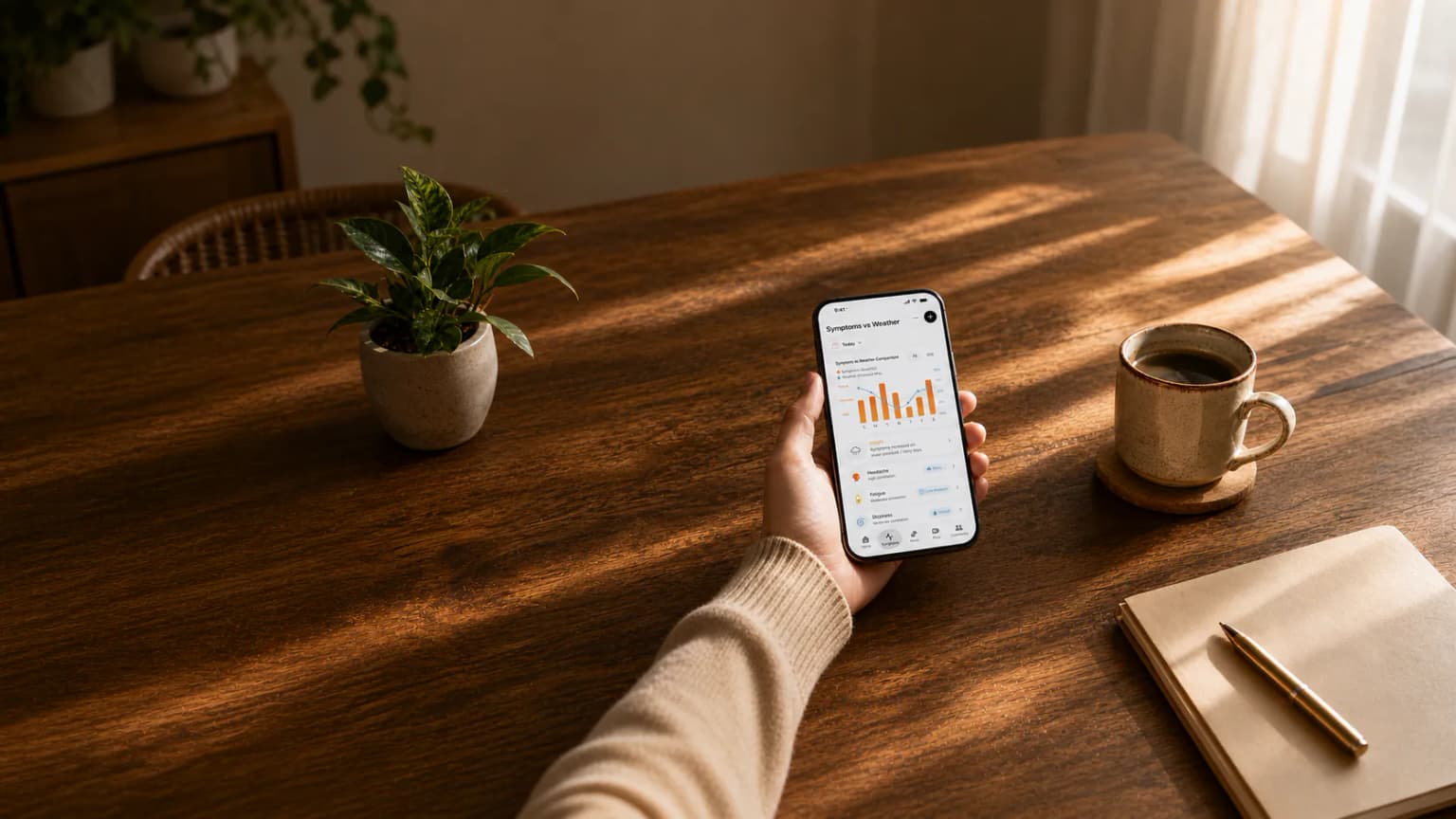
That is the whole idea behind Juno. You talk to her by text or voice, in whatever words come out, and she takes what you say about a symptom, how bad it was and what was going on around it, and quietly adds it to your history. [1] On a day when a form feels like too much, a sentence is enough.
One small habit helps: say when you want something recorded. “Please log yesterday’s headache. It started after lunch and lasted until the evening” is clear. If you are only asking a question, say that instead. A chat can hold both, and it is worth a quick look to make sure she kept them apart.
Which details help preserve what you mean?
Add the details that matter to you, not a checklist. One line about what changed in your day usually tells the story better than a number on its own.
| Detail | How you might say it | What to glance at later |
|---|---|---|
| Timing | Yesterday evening, not today | The note landed on the right date |
| What it felt like | My heart felt like it was pounding | A feeling has not turned into a made-up pulse reading |
| Severity | About a six out of ten | The number is the one you gave |
| Impact on your day | I couldn’t finish cooking | The practical effect is still there |
| Uncertainty | I’m not sure how long it lasted | An unknown has not become a definite duration |
These are the places where meaning most often slips, so they are worth a look. They are not a promise that every interpretation will be perfect. And if you never gave a score, you do not need to invent one afterwards just to fill a gap.
If the effort of tracking is the problem, our guide to tracking without burnout is about keeping it small.
Why do timing and context matter?
“No headache today” and “I have a headache” are opposites. “Could this medicine cause dizziness?” is a question, while “I felt dizzy after taking it” is something that happened to you. And even that second one does not prove the medicine was the cause.
Sometimes you are talking about someone else, remembering something from a while back, or describing a symptom that has already passed. Say so when you can. A past event still belongs in your history, pinned to the day it happened, rather than quietly becoming a symptom today.
For those of us living with ME/CFS, the payback for effort can arrive a day or two later. [2] A short note about how the following days went helps explain that. Feeling wiped out on its own does not establish post-exertional malaise or a diagnosis, but the timeline is what makes the conversation possible.
How can you check that the record is right?
After an entry that matters, open the history itself when you have the energy. A reassuring reply in the chat is nice, but it is not the thing you are going to hand to a doctor.
- Check which symptoms were saved, especially if you mentioned several in one breath.
- Check the date and time, including anything you described after the fact.
- Check severity, how long it lasted and what it did to your day against what you actually meant.
- Look for missing details, duplicates, or a guess written down as if it were a fact.
If something is wrong, use the correction controls or just tell Juno to fix it, then check the result. If the error is still there, contact support and flag it before you rely on the record in an appointment. Do not assume a correction went through just because the conversation moved on.
The goal is a record you recognise as yours. Medical terms can be handy in a clinic, but they should never make your account sound more certain than you were.
How do notes become useful at an appointment?
Pick the few examples that answer the question you want help with. “The dizziness happened on four mornings and I had to sit down to get dressed” gives your clinician timing and daily impact in one sentence, without you having to rebuild the whole month from memory in the waiting room.
Juno can turn your history into a summary or a doctor letter to share, or a PDF to print. There is no direct doctor portal yet. [3] Read the summary before you share it and choose what goes in.
Our example report uses made-up details to show the format. It is an illustration of what a summary looks like, not a real patient record and not a promise that every detail will be picked up automatically.
What if a full entry is too much today?
One sentence is a real entry. You can add to it later, or not. A gap in your notes does not mean you were fine that day, and tracking is not a test you can fail.
If a screen is too much, our free printable symptom tracker is a pen-and-paper option. If talking is easier than writing, you can explore Juno’s text and voice tracking. Whichever asks the least of you while keeping the details you need is the right one.
Frequently asked questions
Do I need to know the medical name for a symptom?
No. Start with the words that describe it, like “my head feels foggy” or “my legs ache”. Add when it happened and what it stopped you doing if you can. A medical label is never a requirement for a useful note.
Can I record something that happened yesterday?
Yes. Describe it and ask for it to be logged, with the date or timing as clearly as you can manage. Then check where it landed in your history, so a note about yesterday is not sitting there as a symptom today.
What if Juno misunderstands me?
Open the saved history and correct the detail, either with the controls or by asking Juno directly. Check the result before you rely on it. If the mistake is still there, contact support and flag it before sharing the record.
Does recording a symptom establish a diagnosis?
No. A symptom note records what you experienced and the context around it. It does not say what caused it. Your clinician puts your history together with an examination, tests and everything else they know about you.
Do I have to give a severity score?
Only if a number helps you say how you feel. You can just as well describe what changed, like having to stop reading or ask for help with dinner. There is no need to invent precision you do not have.
Tools that go with this article
Sources
Turn day-to-day notes into a clearer health story
Juno helps you track symptoms through conversation, notice patterns, and prepare a structured summary for appointments. See how Juno works. Download Juno on the App Store.
This article is for general information only and does not replace advice from your own clinician. Juno is a health assistant, not a medical provider.
Last updated: 2026-09-28