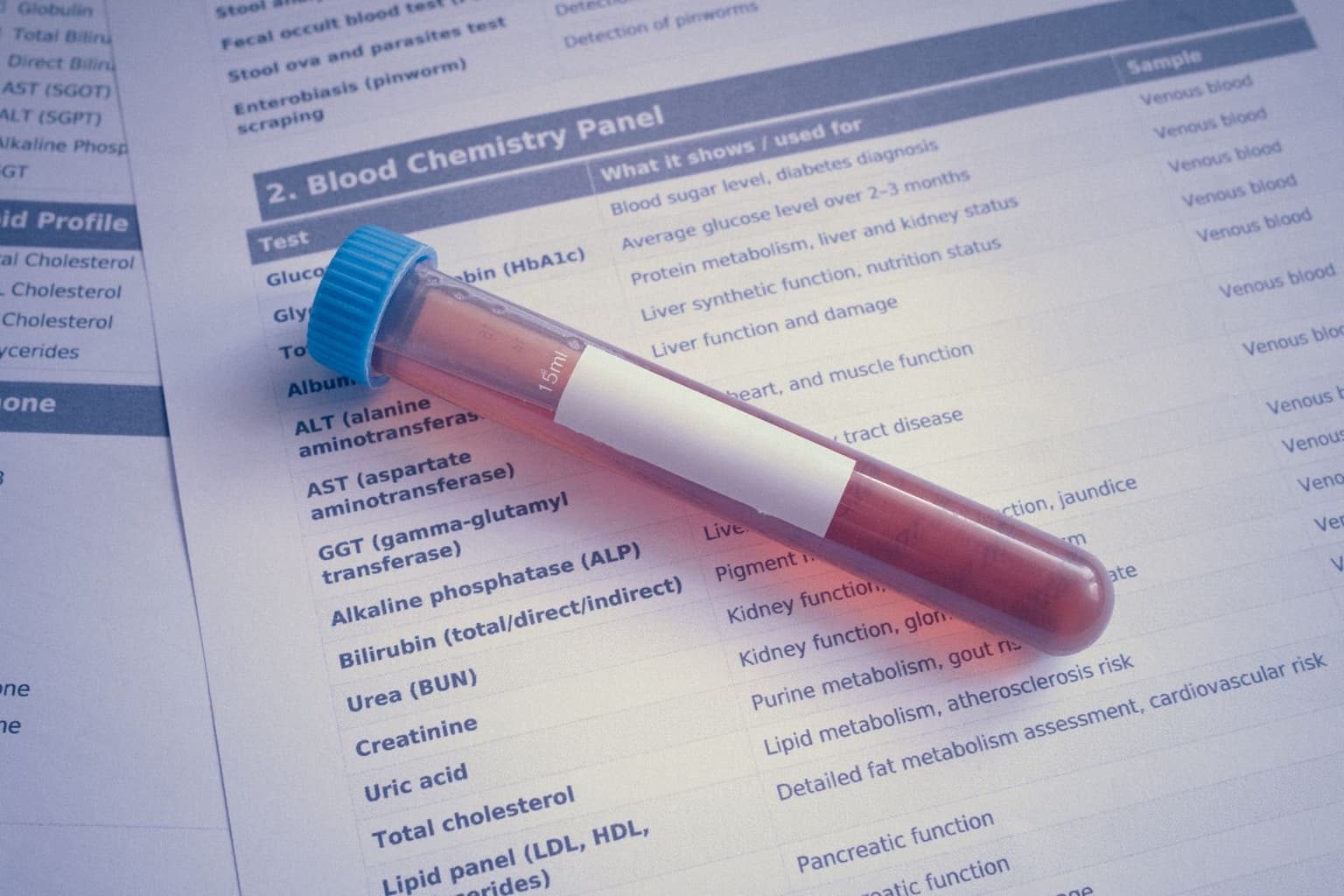
How to Read Blood Test Results: Ranges, Flags and Common Tests
Your results sheet lists each test, your number, its units and a reference range. Here is how to read those parts, what common tests check, and why a result just outside the range is not always a problem.

Quick answer
Find each test name, your result, its units and the reference range printed on your report. H usually means above the range and L below it. Ranges often cover the middle 95% of healthy people, so a result slightly outside can still be normal for you. Ask your doctor what your results mean.
How do you read a blood test results sheet?
Lab reports look different from place to place, but most show the same parts for each test. [3] This is what each part tells you:
| Part of the report | What it tells you |
|---|---|
| Test name | Often shortened, such as FBC for full blood count or TSH for thyroid stimulating hormone [1] [3] |
| Result | Often a number. Some tests give a positive or negative result instead [2] [3] |
| Units | How the result is measured, such as mmol/L. Units can differ from lab to lab [2] [3] |
| Reference range | The range of results the lab expects in healthy people. Use the range printed on your own report [2] [4] |
| Flag | H usually means higher than the range, L means lower, and WNL means within normal limits [3] |
| Critical result marker | A result that may be life-threatening is often marked, for example with an asterisk (*), with the time the lab told the person who ordered the test [3] |
| Date and time taken | Some results change with the time of day the blood was taken [3] |
| Comments | Notes about the sample, for example if it was not collected or stored in the best conditions [3] |
A simple way to work through it:
- Check it is your name, and note the date the blood was taken
- Look for flagged results first: H, L or an asterisk
- For each flagged result, check the units and the range on your report, not a range you find online [2]
- Note how far outside the range it is [4]
- Compare it with your past results, ideally from the same lab [2]
- Write down your questions for your doctor
Your GP, nurse or specialist should talk to you about your results and what happens next. The NHS says results may come back after a few days, and usually within a few weeks. Some GP surgeries only contact you if they need to discuss them. If you hear nothing after a few weeks, contact the GP surgery or specialist. You may also be able to see your results in the NHS App. [1]
What does the reference range mean?
A reference range, sometimes called the normal range, is the set of results expected in healthy people. It is based on test results from large groups of healthy people. [2] For many tests, the range covers the middle 95% of results from that group. That means about 5 in 100 healthy people will have a result outside it. [4]
Ranges are not the same everywhere:
- Each lab sets or checks its own ranges, because labs use different equipment, chemicals and methods [4]
- Age and sex are the most common reasons ranges differ. Creatinine, a kidney test, has a higher range for men, because men have more muscle mass [4]
- Children have different ranges from adults [2] [4]
- Pregnancy has its own ranges for many tests [4]
- For some tests, the time of day, fasting or the stage of your menstrual cycle can matter [4]
So always use the range printed on your own report. MedlinePlus, from the US National Library of Medicine, says you cannot compare your results with ranges you find elsewhere, or compare results from different labs. [2]
A few tests use fixed cut-offs instead of a range. These come from years of research and are used to decide whether someone is healthy or needs treatment. Blood sugar tests for diabetes are an example. [4]
Why can a result be slightly high or low and still be normal?
MedlinePlus says it is common for healthy people to sometimes have results outside the reference range. [2] Testing.com gives three reasons: [4]
- Statistics: the range leaves out about 5% of healthy people, and you may be one of them
- Your body changes: age, diet, hormones, exercise, alcohol and even the season can shift results. If the same test is done several times, there is a good chance one result will fall outside the range even if you are well
- Your own normal: some healthy people have results that are typical for them but sit outside the usual range
Short-term things can also change a result:
- eating or drinking certain things, or not fasting when you were asked to [2]
- exercising hard before the test [2]
- having a period at the time of the test [2]
- medicines and supplements [2]. Biotin, found in many supplements including ones for hair, skin and nails, can make some results falsely high or low, including thyroid and vitamin D tests [23] [24]
- problems with how the sample was handled or transported [4]
For a full blood count, Lab Tests Online UK says many results slightly outside the normal range do not need treatment, and your doctor may simply repeat the test after a short time. [5] Liver tests can also come back abnormal without liver disease, for example after muscle damage from severe exercise, with a severe infection or in pregnancy. [11]
Small changes are not always harmless, though. For some tests, such as creatinine, a result even slightly out of range can matter. How far outside the range it is, and whether it stays there on a repeat test, both count. [4] Your doctor reads your results together with your examination, your health history and your family history. [2]
What do common blood tests check?
Some tests have different names in the UK and the US. A full blood count (FBC) is also called a complete blood count (CBC). [6] The UK’s urea and electrolytes (U&E) test, also called a renal panel, covers many of the same tests as the US basic metabolic panel (BMP). Both usually include sodium, potassium and creatinine, and often urea (BUN in the US). [1] [7] [8] [9] This table gives a general guide. It cannot tell you what your own result means.
| Test | What it checks | What a high or low result can point to |
|---|---|---|
| Full blood count (FBC), or complete blood count (CBC) | Red cells, haemoglobin, white cells and platelets [5] [6] | Low haemoglobin means anaemia. A high white cell count can point to infection or inflammation. A low platelet count has causes including some medicines, liver disease and immune conditions such as lupus [5] |
| Urea and electrolytes (U&E), renal panel or basic metabolic panel (BMP) | Electrolytes such as sodium and potassium, and urea and creatinine, which show how well the kidneys are working. eGFR is worked out from creatinine. A BMP also includes glucose and calcium [7] [8] [9] | High urea or creatinine can suggest the kidneys are not working well, or less blood flow to them, for example from dehydration. One abnormal result can have causes other than kidney disease [8] |
| Liver function tests (LFTs) | Liver enzymes (ALT, AST and ALP), bilirubin and albumin [11] | Raised ALT and AST show enzymes leaking from cells, because of inflammation or cell death. ALP can rise when bile ducts are blocked, and with bone disease [11] |
| Thyroid function tests (TFTs) | TSH (thyroid stimulating hormone) and free T4, and sometimes free T3 [12] | High TSH with low T4 points to an underactive thyroid. Low TSH with a high T4 or T3 points to an overactive thyroid. High TSH with normal T4 is called mild (subclinical) hypothyroidism [12] |
| HbA1c (A1C in the US) | Your average blood sugar over the last 2 to 3 months [13] [14] | High results can mean prediabetes or diabetes. Anaemia, iron deficiency or an unusual type of haemoglobin can make results less accurate [13] [14] |
| Ferritin | How much iron your body has stored [17] | Low ferritin means low iron stores. High ferritin can come from too much iron, but also from inflammation, infection or liver disease [17] |
| Vitamin B12 and folate | How much of these B vitamins is in your blood [18] | Low levels can cause anaemia with large red blood cells. Low B12 can also cause nerve damage, such as tingling or numbness. A low result does not always mean a true deficiency [18] |
| Vitamin D (25-hydroxyvitamin D) | The form of vitamin D that best shows your overall vitamin D level [19] | Very low levels are linked to bone disease. Very high levels almost always come from taking too many supplements [19] |
| CRP and ESR | Signs of inflammation in the body [21] [22] | A high result shows inflammation or infection somewhere, but not where it is or what is causing it [21] [22] |
In the US, a comprehensive metabolic panel (CMP) adds liver tests and blood proteins to the basic panel, 14 tests in all. [9] [10]
Doctors look at results together, not one at a time. [5] [8] Ferritin is a good example. It can be raised by organ damage even when total iron is normal, so it is less useful for judging iron in people with liver disease, long-term infections, cancer or autoimmune diseases. [17]
Inflammation markers have their own quirks. Our guide to high ESR and CRP results explains what they can and cannot tell you. If you have Hashimoto’s, our Hashimoto’s page covers TSH, free T4 and thyroid antibody results.
Why are blood test results in different units?
Labs can report the same test in different units, so the units on your report may not match what you read online. [2] [3] UK labs report HbA1c in mmol/mol, while US sources such as MedlinePlus use a percentage. [13] [14] Here are some common examples:
| Test | Units you may see | The same level in both units |
|---|---|---|
| HbA1c | mmol/mol or % [13] [14] | 48 mmol/mol is 6.5%. At or above this level points to diabetes [13] [14] [15] |
| Fasting blood glucose | mmol/L or mg/dL [4] [16] | 7.0 mmol/L is 126 mg/dL. At or above this on more than one test points to diabetes [4] [16] |
| Vitamin D | nmol/L or ng/mL [19] [20] | 50 nmol/L is 20 ng/mL. 1 nmol/L is 0.4 ng/mL [20] |
Even when the units match, the cut-offs can differ. Lab Tests Online UK calls an HbA1c of 42 to 47 mmol/mol prediabetes. [13] MedlinePlus uses 5.7% to 6.4%. [14] Diabetes UK puts 42 mmol/mol at 6%, so the UK starting point is higher. [15]
Vitamin D is similar. Lab Tests Online UK calls a level below 25 nmol/L deficient, 25 to 50 nmol/L possibly not enough for some people, and above 50 nmol/L enough for almost everyone. [19] The US Office of Dietary Supplements links levels below 30 nmol/L (12 ng/mL) with deficiency, and calls 50 nmol/L (20 ng/mL) or more generally adequate. [20] These are general guides. Your lab and doctor may use different cut-offs.
Why compare results with your past results?
One result is a snapshot. A change over time can tell your doctor more. Testing.com notes that a rise or drop in an important result can mean something even while it is still within normal limits. [4]
Monitoring medicines is a clear example. For people taking methotrexate, guidance from the NHS Specialist Pharmacy Service says a falling blood count or neutrophil count, or rising liver enzymes, could be a sign of toxicity from the medicine, even if the levels are still normal. [25]
Trends are easier to read when your tests are done by the same lab, because ranges and methods differ between labs. [2] To keep track:
- ask for a copy of your results, or check them in the NHS App if you can [1]
- keep them in date order, with the date the blood was taken
- note when any medicine was started, stopped or changed
- add a line about how you felt around the time of each test
The free treatment tracker worksheet has space to note medicine changes and what happened. Do not stop or change a medicine because of a result unless your doctor or prescriber tells you to.
What if your results are normal but you still feel unwell?
A normal result is a good sign, but it is not a guarantee. Some people with health problems have results in the normal range, especially early in an illness. [2] [4] MedlinePlus says you may still need more tests, especially if you have symptoms. [2] Lab Tests Online UK notes that liver tests can be normal even in serious liver disease, and that you can have a normal ESR and still have a problem. [11] [22]
So a normal result does not prove nothing is wrong. It means these tests have not found a cause. Our guide to why blood tests can be normal when you feel sick covers this in more detail. If you feel brushed off, our guide to handling medical gaslighting has tips for being heard.
What should you ask your doctor about your results?
It is fine to ask your doctor to go through your results with you. These questions are based on ones suggested by Lab Tests Online UK and Testing.com. [4] [5] [19]
Questions to ask about your blood test results
Tick the ones you want to ask. Print it and take it with you.
About the results
- Which results are outside the range, and by how much?
- What do you think is causing them?
- How do they compare with my last results?
- Could my medicines or supplements be affecting them?
Next steps
- Do I need a repeat test or any other tests?
- Do I need to do anything before the next test, such as fasting?
- How will we keep an eye on this, and how often?
- How and when will I get the results?
About my symptoms
- If my results are normal, what else could explain my symptoms?
- What should I do if my symptoms get worse?
This list cannot tell you what your results mean. It helps you get clear answers from your doctor.
Bring a list of every medicine and supplement you take, including ones you buy yourself, because they can affect results. [2] [23] The free appointment one-pager puts your questions and main symptoms on one page.
Juno can help with the symptom side. You tell Juno how you feel by voice or text, and before an appointment it turns the last few months into a one-page summary you can show on your phone or print. See a sample report.
What if a doctor contacts you urgently about a result?
Most results are not urgent. But labs treat some results as critical: far outside the range and a sign of an immediately dangerous state. UK guidance from the Royal College of Pathologists says labs should pass these on quickly to the team that asked for the test, most often by phone or in person. [26] In the US, labs must also alert the person who ordered the test straight away. [3]
Frequently asked questions
How do I read my blood test results?
Look at each test’s name, your result, its units and the reference range printed on the report. Flags such as H (high) or L (low) mark results outside the range. Use the range on your own report, because ranges vary by lab, age and sex. Then ask your doctor what the results mean for you.
What do H and L mean on a blood test?
H usually means your result is higher than the lab’s reference range, and L means lower. WNL means within normal limits. An asterisk can mark a critical result that the lab passed on urgently. A flag means the result needs a closer look. It does not mean something is definitely wrong.
Is a blood test result slightly out of range a problem?
Not always. Reference ranges often cover the middle 95% of healthy people, so about 5 in 100 healthy people fall outside them. Food, hard exercise, medicines and supplements can also shift results. Your doctor may repeat the test. For a few tests, such as creatinine, even a small change can matter.
Is a full blood count the same as a CBC?
Yes. Full blood count (FBC) is the usual UK name and complete blood count (CBC) is the usual US name. Both measure your red cells, white cells, platelets and haemoglobin. Doctors use it to check for things like anaemia, infection and some blood conditions.
Why are my results in different units from what I read online?
Labs can use different units for the same test. UK labs report HbA1c in mmol/mol, while US sources use a percentage: 48 mmol/mol is the same as 6.5%. Glucose can be in mmol/L or mg/dL, and vitamin D in nmol/L or ng/mL. Always use the units and range on your own report.
How long do blood test results take?
The NHS says results may come back after a few days, and usually within a few weeks. Some GP surgeries only contact you if they need to discuss the results. If you hear nothing after a few weeks, contact your GP surgery or specialist. You may be able to see your results in the NHS App.
Can blood tests be normal if I am ill?
Yes. A normal result is a good sign but not a guarantee. Some people with health problems have normal results, especially early in an illness. If your symptoms have not gone away, tell your doctor. You may need other tests, and a dated record of your symptoms can help.
Tools that go with this article
Sources
- NHS: Blood tests
- MedlinePlus: How to understand your lab results
- Testing.com: Deciphering your lab report
- Testing.com: Reference ranges and what they mean
- Lab Tests Online UK: Full blood count (FBC)
- MedlinePlus: Complete blood count (CBC)
- Lab Tests Online UK: U&E
- Lab Tests Online UK: Renal panel
- MedlinePlus: Basic metabolic panel (BMP)
- MedlinePlus: Comprehensive metabolic panel (CMP)
- Lab Tests Online UK: Liver blood tests
- Lab Tests Online UK: Thyroid function tests
- Lab Tests Online UK: HbA1c test
- MedlinePlus: Hemoglobin A1C (HbA1c) test
- Diabetes UK: What is HbA1c?
- Lab Tests Online UK: Glucose tests
- Lab Tests Online UK: Ferritin
- Lab Tests Online UK: Vitamin B12 and folate
- Lab Tests Online UK: Vitamin D
- NIH Office of Dietary Supplements: Vitamin D fact sheet for health professionals
- Lab Tests Online UK: C-reactive protein (CRP)
- Lab Tests Online UK: Erythrocyte sedimentation rate (ESR)
- Testing.com: Biotin affects some blood test results
- US Food and Drug Administration: Biotin interference with troponin lab tests
- NHS Specialist Pharmacy Service: Methotrexate monitoring
- Royal College of Pathologists: The communication of critical and unexpected pathology results (G158, May 2026)
- NHS: When to use 111
Turn day-to-day notes into a clearer health story
Juno helps you track symptoms through conversation, notice patterns, and prepare a structured summary for appointments. See a sample Juno doctor report. Download Juno on the App Store.
This article is for general information only and does not replace advice from your own clinician. Juno is a health assistant, not a medical provider.
Last updated 31 October 2026