Free worksheets and resources
Quick answer: Free printable chronic illness worksheets for symptom logs, flares, mood, energy, food, trigger tracking, treatment notes, and mental health check-ins.
Juno exists to make life with chronic illness feel less like a full-time job. Alongside the free app, we create printable worksheets you can use on paper, on a bad day, or before an appointment. Every sheet is free, condition-agnostic, and reviewed by people who live with chronic illness.
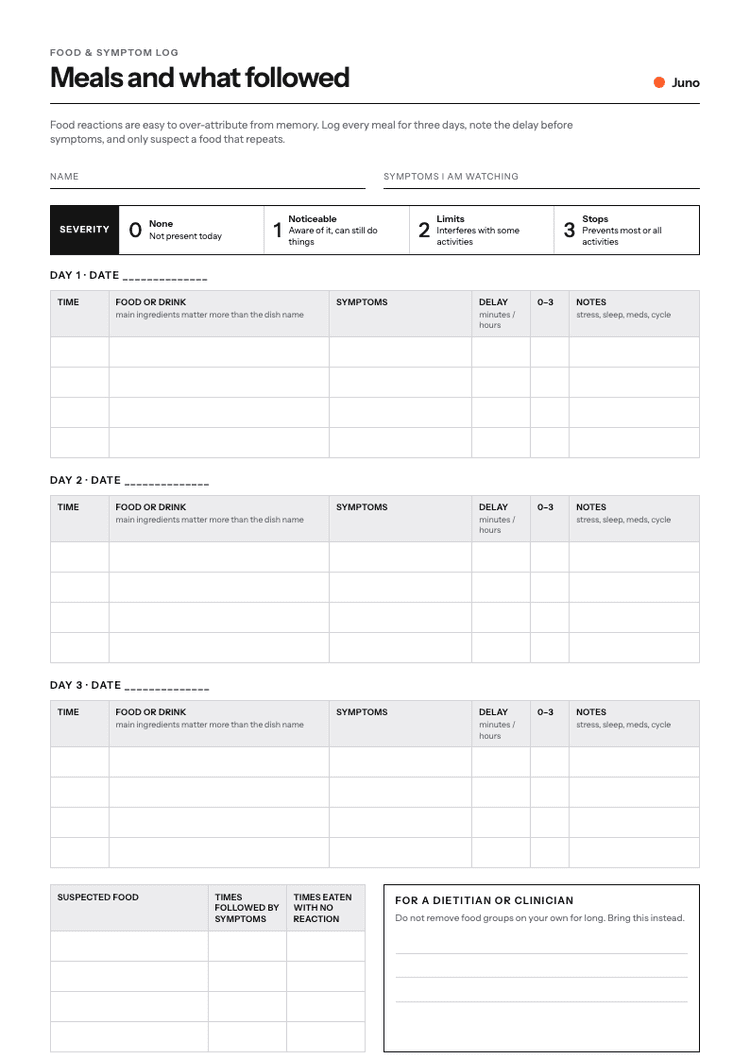
Appointment One-Pager [PDF]
Prepare over the week before, hand a copy over at the start, keep one for the follow-up.
Consultations are short and memory is unreliable on a bad day. A single well-ordered page carries more than twenty minutes of talking. This worksheet makes it easy to:
- Lead with the three things that matter most
- Show how symptoms limit daily life, not just that they exist
- Give the clinician your medication list without being asked
- Leave with the plan written down
Symptom Tracker [PDF]
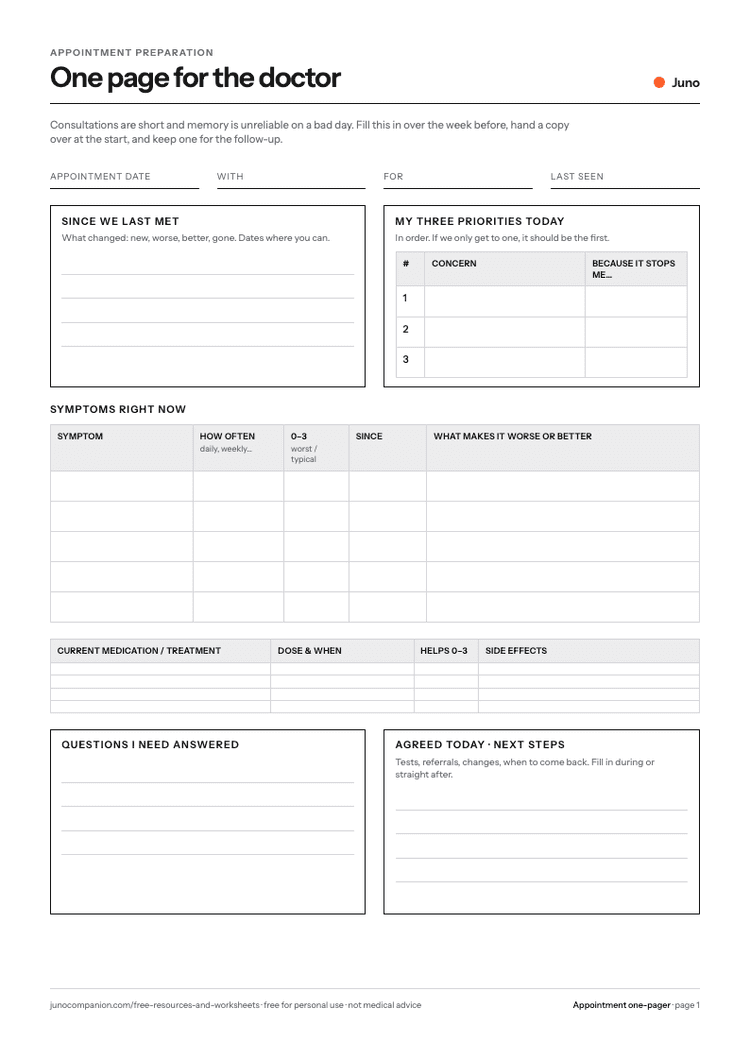
Use a printable symptom tracker to record what changed, how severe it felt, and what patterns repeat over time.
A symptom tracker helps turn scattered daily experiences into a clearer timeline you can review yourself or bring to appointments. This worksheet makes it easy to:
- See a whole month on one page
- Rate symptoms by what they stop you doing, not by how they feel
- Keep the context that explains the pattern next to the symptoms
- Walk into an appointment with three clear changes
Flare Episode Log [PDF]
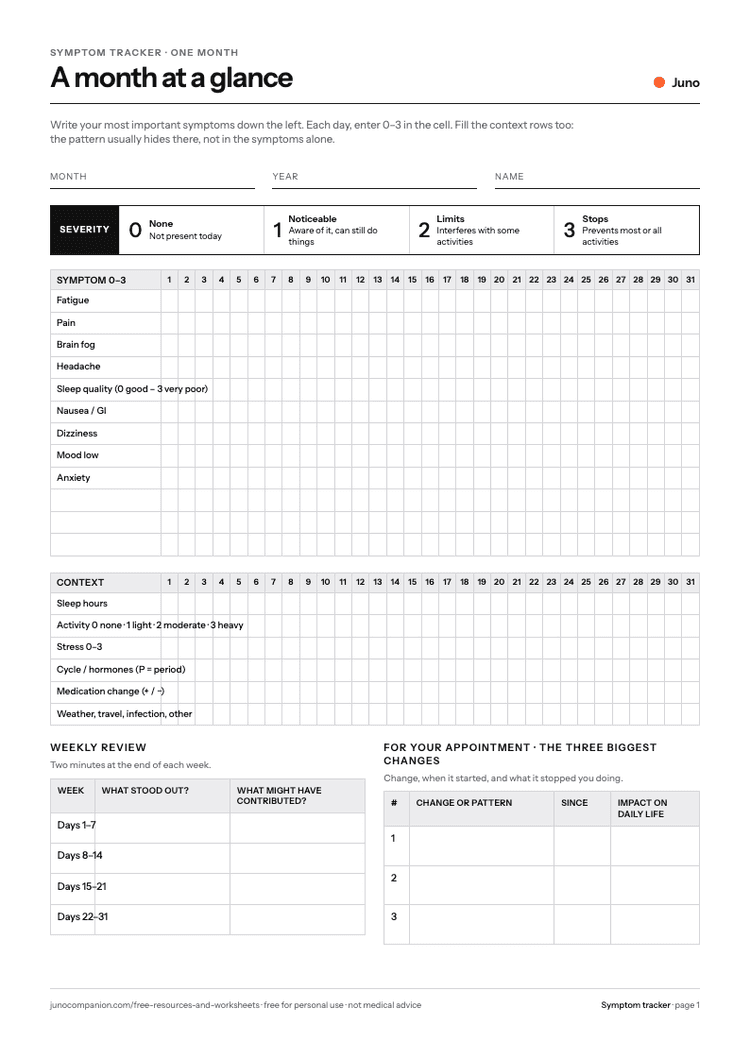
Track what happened before, during, and after a flare so the episode does not blur together.
A flare log gives each episode a clear beginning, middle, and recovery story. This worksheet makes it easy to:
- Give each flare a clear beginning, peak and end
- Tick what happened in the 48 hours before instead of guessing
- Compare five or six flares before naming a trigger
- Show function loss, not just pain, to a clinician
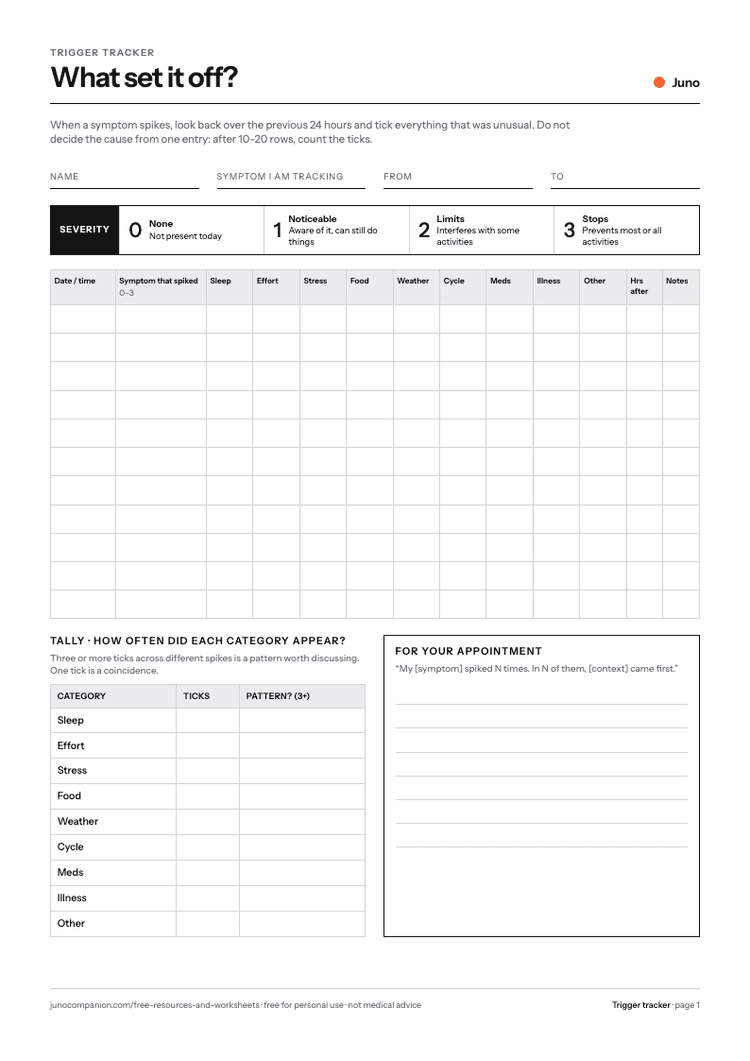
Trigger Tracker [PDF]
Track what happened before symptom spikes and uncover the patterns behind them.
Triggers are rarely obvious from one event. Logging context consistently helps patterns emerge over time. This worksheet makes it easy to:
- Log each spike with a 24-hour look-back
- Tick categories rather than writing essays
- Count ticks so one coincidence never becomes a rule
- Turn 10–20 entries into one sentence for your doctor
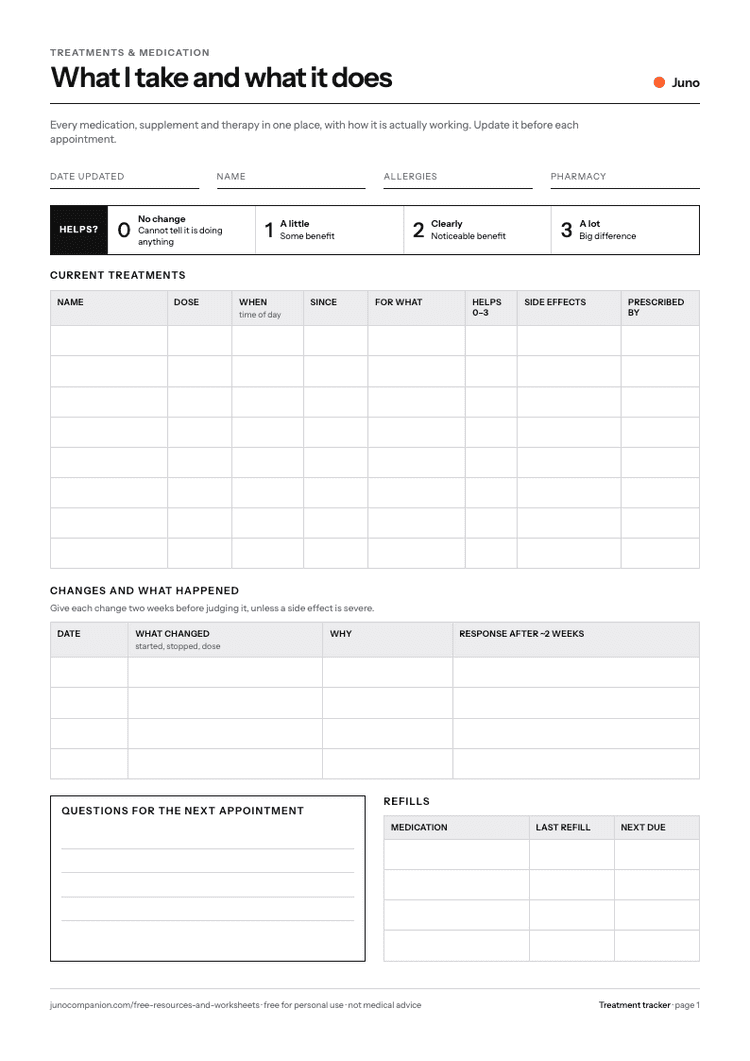
Treatment Tracker [PDF]
Record treatments, response, timing, and side effects so changes are easier to discuss.
Treatment decisions are easier to review when response and side effects are logged in one place. This worksheet makes it easy to:
- Keep every medication, supplement and therapy on one page
- Rate what each one actually does with a 0–3 anchor
- Judge changes after two weeks, not two days
- Arrive with questions already written
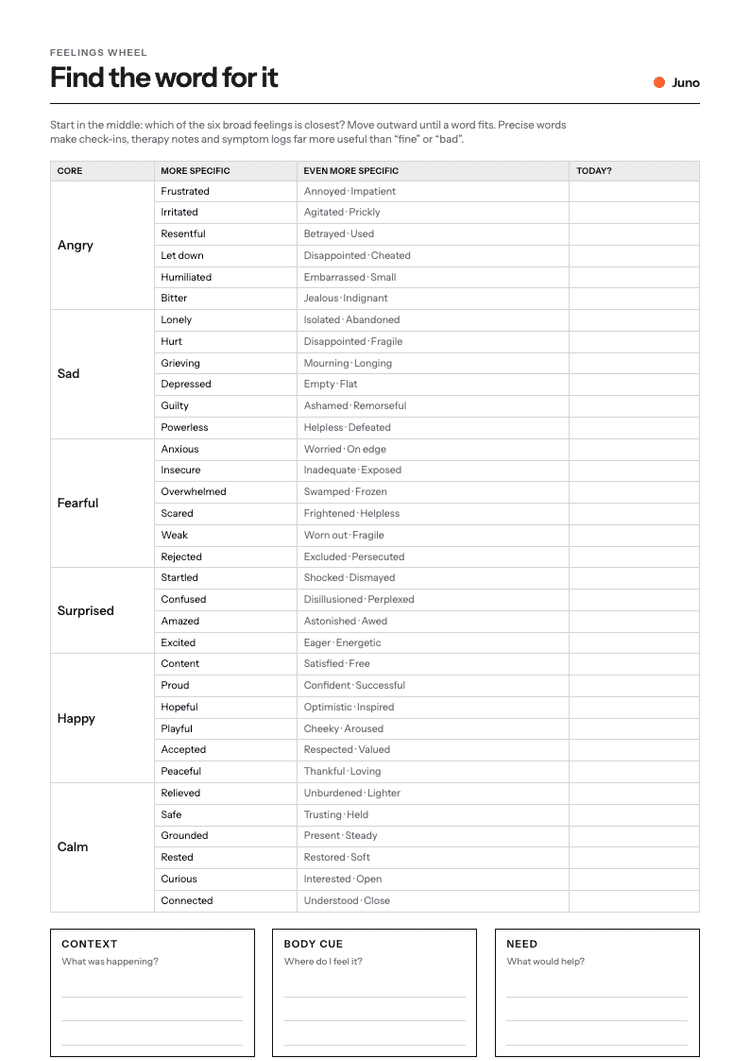
Feelings Wheel [PDF]
Use the feelings wheel to move from broad emotions to more specific language.
Naming emotions more precisely can make check-ins, therapy notes, and symptom journals clearer. This worksheet makes it easy to:
- Move from "bad" to a word you can act on
- Give check-ins and therapy notes precise language
- Connect the feeling to a body cue and a need
- Tick the words that fit today
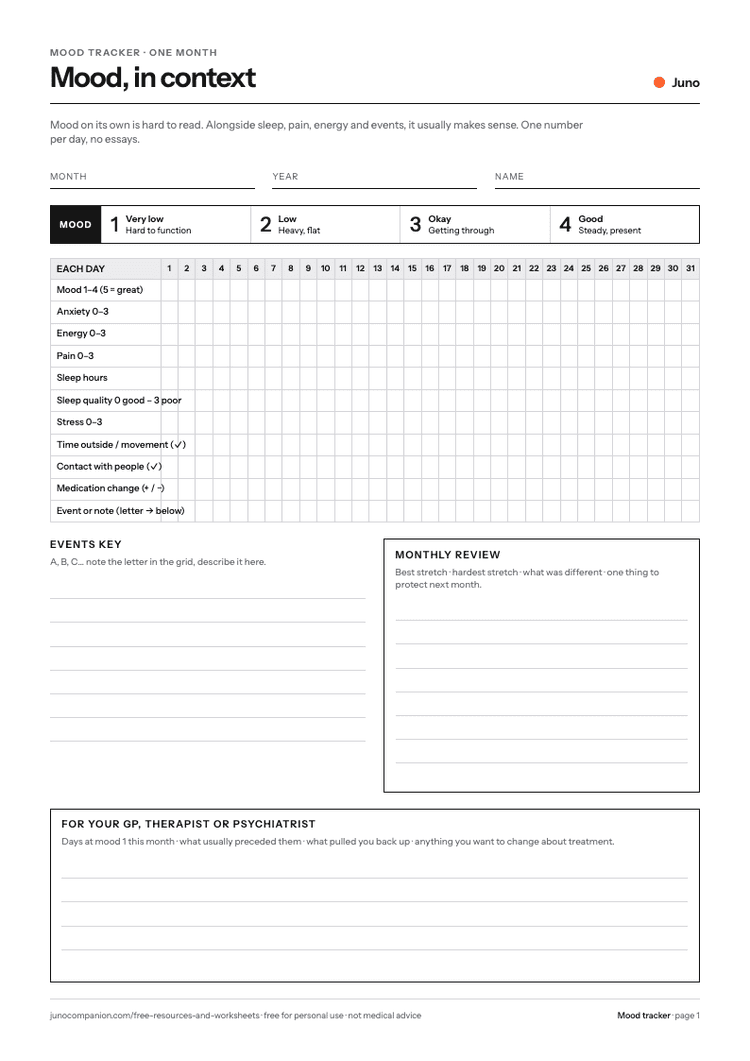
Mood Tracker [PDF]
Record mood alongside sleep, stress, energy, and symptoms so patterns are easier to see.
Mood is easier to understand when it is tracked with the context around it. This worksheet makes it easy to:
- Read mood next to sleep, pain and energy
- Notice the best and hardest stretches of the month
- Link dips to events without writing a diary
- Protect one thing that clearly helped
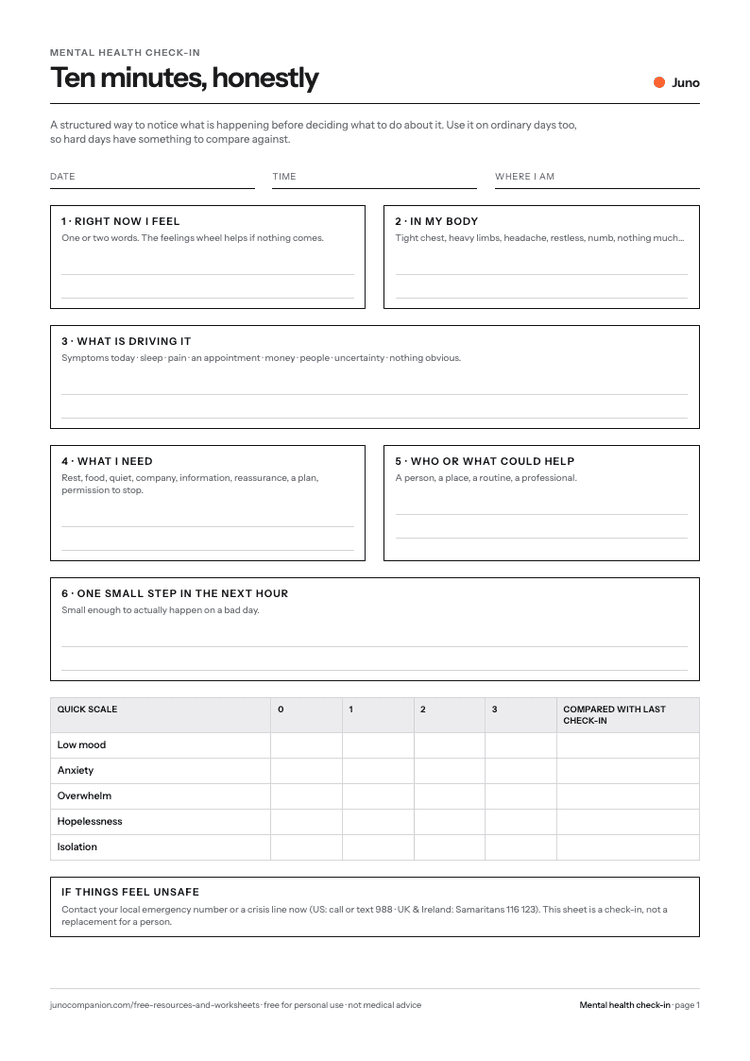
Mental Health Check-Ins [PDF]
Use a structured mental health check-in to name what is happening and what support might help.
A check-in gives you a calm way to notice mood, needs, support, and next steps. This worksheet makes it easy to:
- Notice what is happening before deciding what to do
- Separate the feeling from the body sensation and the cause
- Name a need and a source of support
- Leave with one small, realistic step
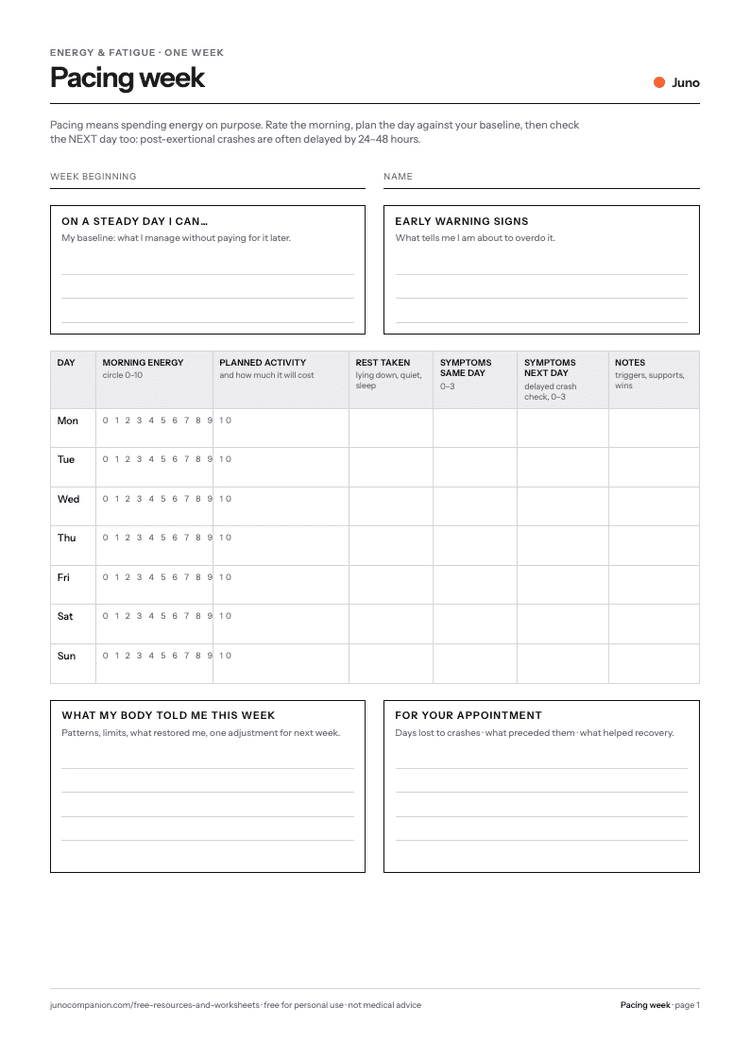
Pacing Week [PDF]
A one-week pacing sheet that checks the next day too, because crashes are often delayed by 24–48 hours.
Pacing only works if you can see the bill arrive. This sheet puts the delayed crash check next to the plan. This worksheet makes it easy to:
- Plan each day against a baseline instead of against yesterday
- Catch post-exertional crashes that arrive a day late
- See which rest actually restores you
- Show a clinician how many days were lost and why
Food Symptom Log [PDF]
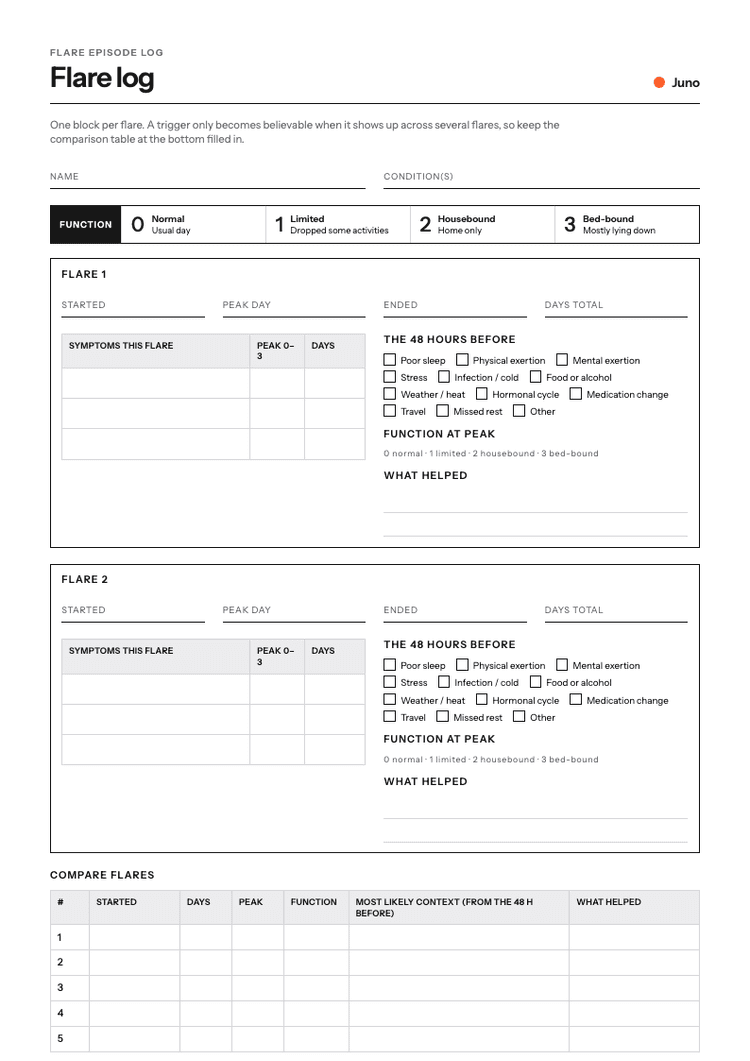
Log meals, timing, symptoms, and notes so food-related patterns can be reviewed more clearly.
Food symptoms are easy to over-attribute from memory. A structured log helps separate patterns from single events. This worksheet makes it easy to:
- Log every meal for three days, not just the suspicious ones
- Record the delay before symptoms appear
- Count how often a food is eaten without any reaction
- Avoid cutting out food groups on a hunch