What triggered your symptoms?
Track what happened before symptom spikes and uncover the patterns behind them.
Triggers are rarely obvious from one event. Logging context consistently helps patterns emerge over time.
What it helps you do
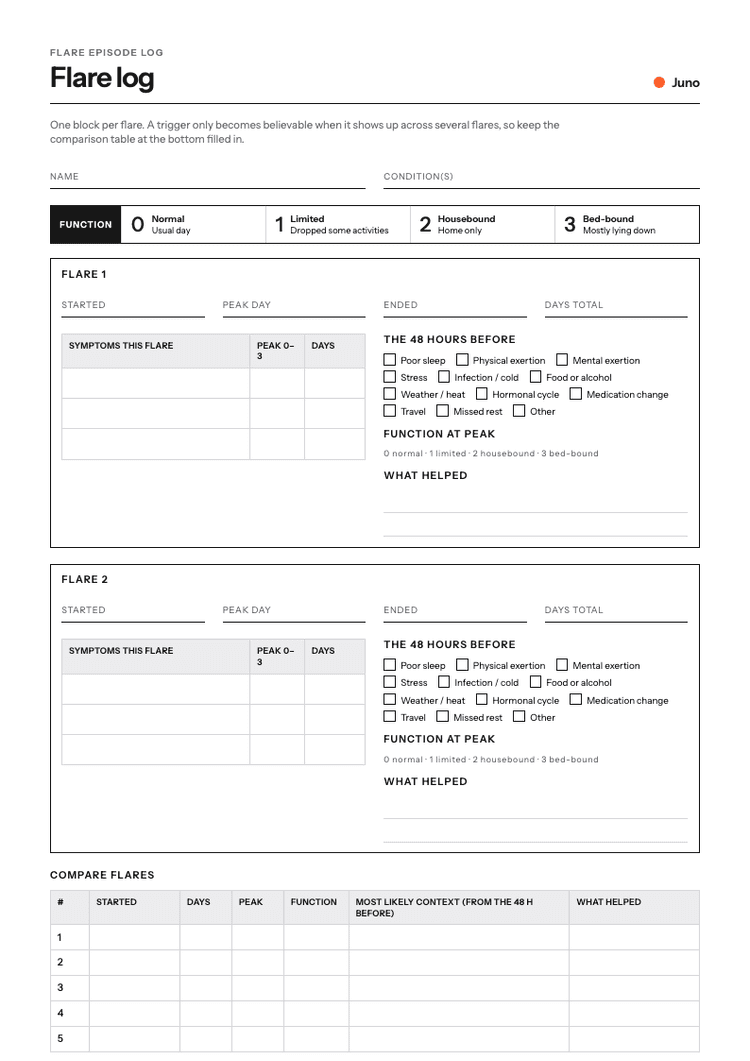
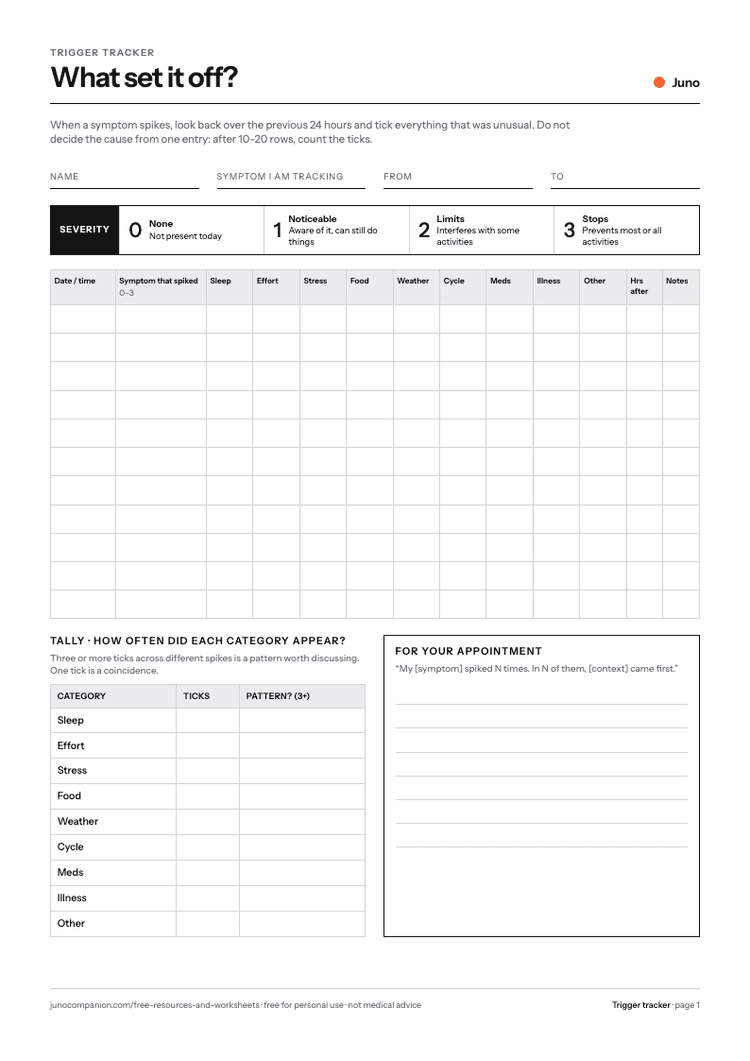
- Log each spike with a 24-hour look-back
- Tick categories rather than writing essays
- Count ticks so one coincidence never becomes a rule
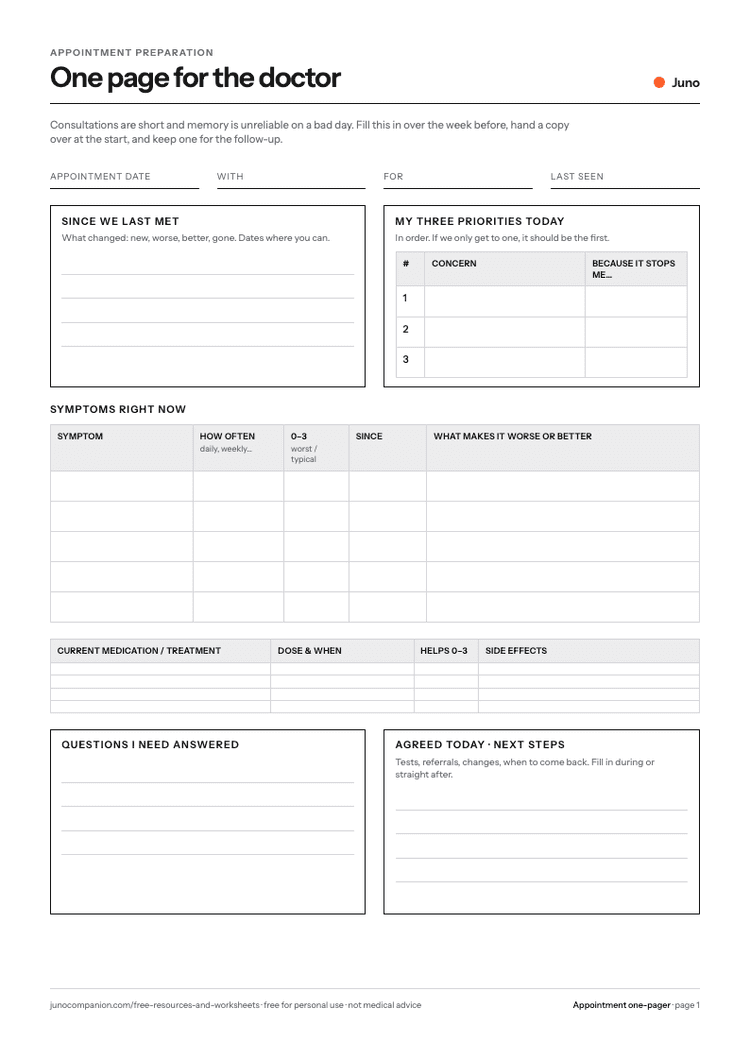
- Turn 10–20 entries into one sentence for your doctor
How to use it
- 1
When a symptom spikes, add a row and rate it 0–3.
- 2
Tick every category that was unusual in the previous 24 hours.
- 3
After 10–20 rows, tally the ticks by category.
- 4
Three or more ticks in one category is worth discussing.
What is on the sheet
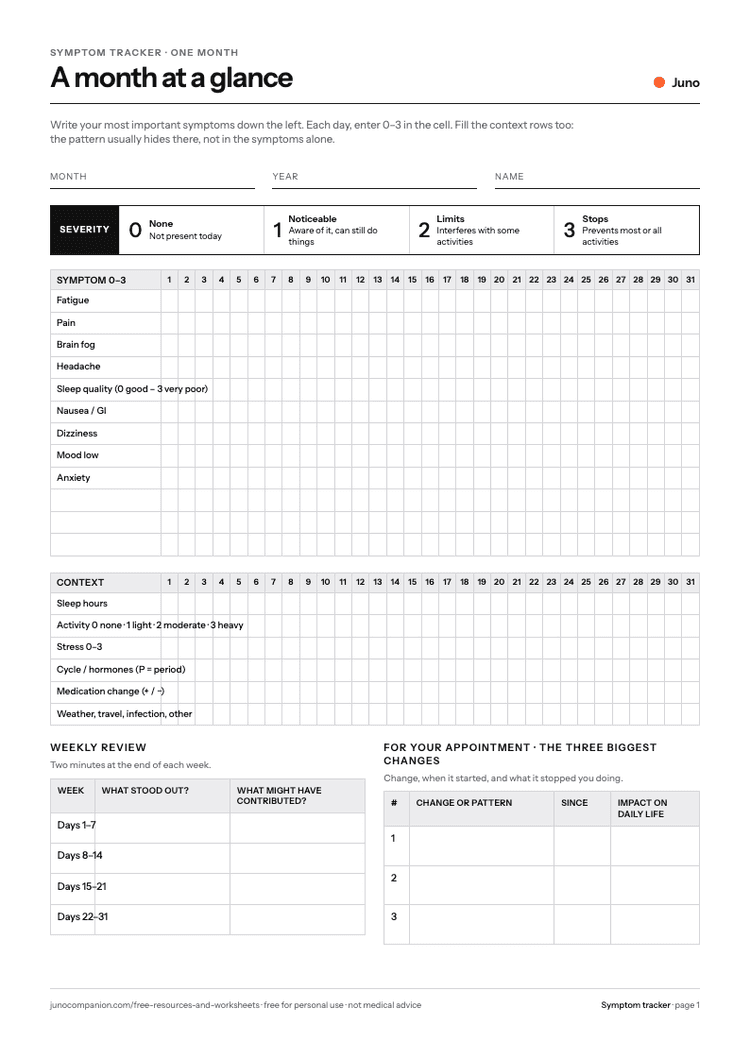
- Date and symptom that spiked, 0–3
- Nine trigger categories to tick
- Hours between trigger and symptom
- Tally of ticks per category
- Appointment sentence

Prefer not to use paper?
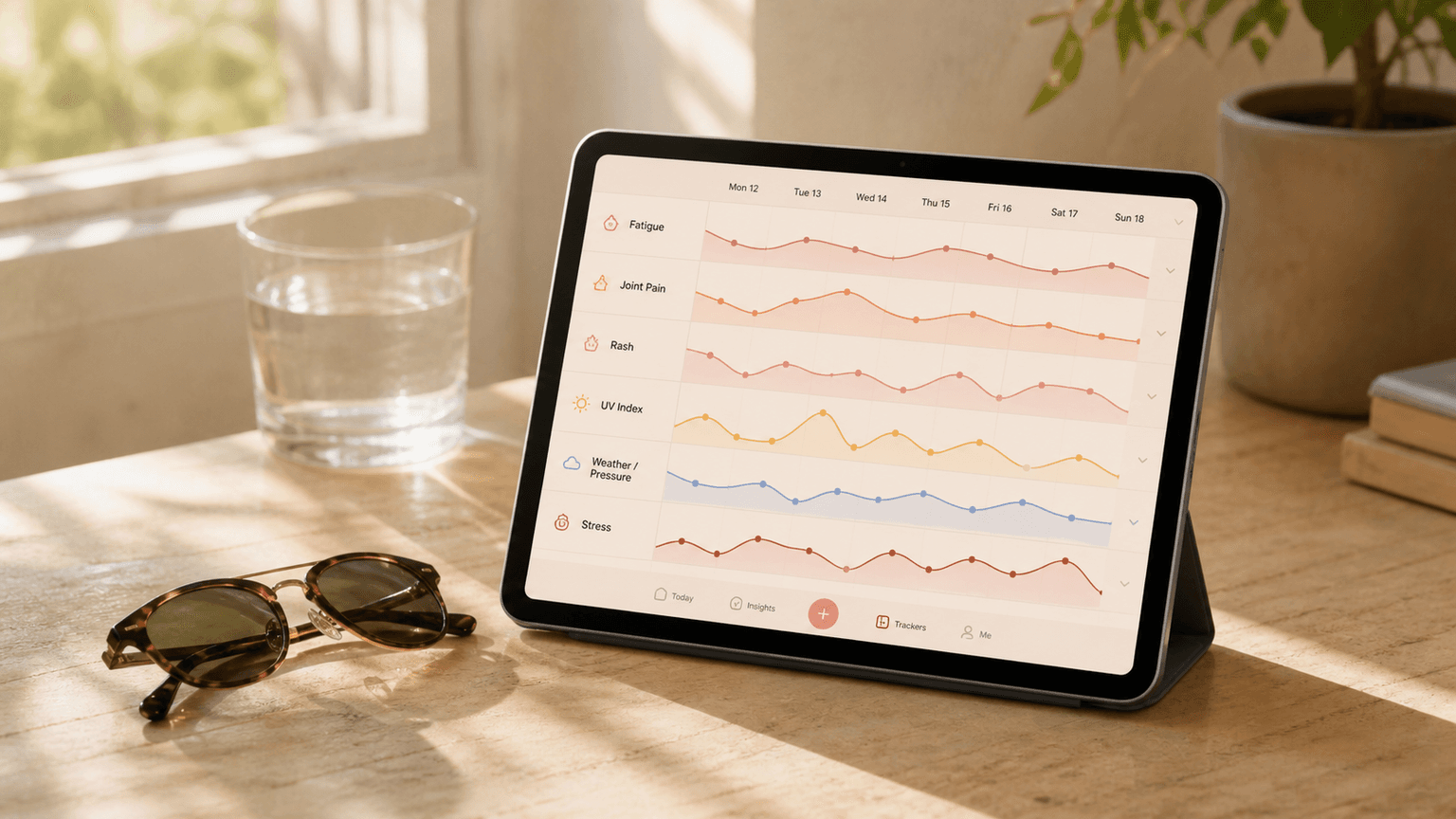
Tell Juno what happened in a sentence and it goes onto your timeline, ready to review before an appointment.


Questions
What is a trigger tracker?
A trigger tracker is a structured way to log what happens before symptoms spike so you can identify possible causes over time.
How far back should I look for triggers?
Start with the previous 24 hours. That window captures sleep, stress, food, exertion, weather, social events, and medication timing without making the log overwhelming.
How many entries do I need?
Patterns usually become more useful after 10-20 entries.
Can this be used for any condition?
Yes. It is condition-agnostic.
Related reading