Most people who are tired all the time are short of sleep, stressed, low in mood, not active enough or taking a medicine that makes them drowsy. If none of those explain it and it has lasted a few weeks, see a GP. Blood tests can check for anaemia, thyroid problems and diabetes.
The short version
- Sleep, stress, low mood, alcohol, too little or too much activity and some medicines are the most common causes, so rule them out first.
- See a GP if you have been tired for a few weeks and don’t know why, or it is affecting your daily life.
- First blood tests usually include a full blood count, ferritin (iron stores), thyroid function and HbA1c (longer-term blood sugar).
- Normal results mean those tests haven’t found a cause, not that nothing is wrong. ME/CFS has no test, and POTS is found by how your heart rate changes when you stand.
- Get emergency help if tiredness comes with chest pain, shortness of breath, a fast or irregular heartbeat or feeling you might pass out.
On this page
Is it normal to feel tired all the time?
Feeling tired now and then is normal. Most of the time, constant tiredness comes down to everyday things like poor sleep, stress or not moving much.12
It is worth a closer look when you can’t explain it, it has gone on for a while and it isn’t getting better. That can be a sign of a medical condition.1
Doctors sometimes use the word fatigue for tiredness that is extreme, doesn’t get better with rest and makes it hard to get through the day.23
Tired all the time checklist
Tick anything that fits. Print it and take it to your GP, so the appointment starts with the full picture.
Everyday causes
Sleep
- Under 6 hours most nights
- Bed and wake times change a lot
- Hard to fall or stay asleep
- Wake up unrefreshed, even after a full night
Life and habits
- Stress, low mood or a big life change
- Drinking more alcohol than usual
- Very little exercise, or much more than usual
- New medicine, or a dose change
Signs that can point to a cause
Night-time
- Told you snore loudly
- Told you gasp, snort or choke in your sleep
- Sleepy in the day despite enough hours in bed
Body
- Pale skin, palpitations or short of breath
- Very thirsty, peeing more, losing weight
- Feeling cold, gaining weight
- Restless, anxious, muscle weakness
Energy and standing
- Much worse after activity, sometimes a day later
- Brain fog: hard to focus or find words
- Dizzy or racing heart when you stand up
- Rest doesn’t help much
This checklist cannot tell you what is causing your tiredness. It helps you and your doctor decide what to check first.
What everyday things make you tired all the time?
These are worth ruling out first, because they are common and you can often change them.12
- Sleep. Not enough sleep, or trouble getting to sleep or staying asleep (insomnia). The NHS suggests aiming for 6 to 9 hours at the same times each night.1
- Stress and mood. Stress, depression and big life events, like a bereavement or a new baby.1
- Activity and food. Too little exercise, too much exercise, or eating poorly.2
- Alcohol and drugs. Drinking too much, or recreational drug use.2
- Hormone changes. Puberty, pregnancy and the menopause.1
- A recent illness. Infections like glandular fever and COVID-19 can leave you tired for a while.1
Can medicines make you tired?
Yes. Medicines that can cause tiredness include some sleeping tablets (sedative-hypnotics), opioid painkillers, beta-blockers and allergy medicines (antihistamines), including ones you buy without a prescription. Cough medicines, antidepressants and cancer treatments can too.23
Don’t stop a prescribed medicine on your own. Ask your doctor or pharmacist whether it could be the cause.3
Keep a sleep and energy diary
A simple sleep and symptom diary can help. GP guidance suggests one when daytime sleepiness might be a sleep problem.4 Note when you went to bed, when you woke, how rested you felt, and your energy through the day. Our free energy and fatigue tracker gives you a week on one page.
If you only get sleepy after meals, that is a different pattern. Our guide to feeling tired after eating covers it.
Which medical conditions make you tired all the time?
Your other symptoms are the best clue. The NHS lists these combinations.1
| Symptoms you might notice | Possible cause |
|---|---|
| Tired in the day, loud snoring, gasping, snorting or choking noises at night | Sleep apnoea1 |
| Lack of energy, palpitations, shortness of breath, pale skin | Iron deficiency anaemia1 |
| Very tired, very thirsty, peeing more (especially at night), weight loss | Diabetes1 |
| Tired all the time, hard to stay still, nervous, irritable, muscle weakness | Overactive thyroid1 |
| Extreme tiredness, feeling cold, putting on weight, low mood | Underactive thyroid8 |
| Extreme tiredness for at least 3 months, trouble thinking and remembering, flu-like symptoms | ME/CFS1 |
Many other conditions list tiredness as a symptom. They include depression, anxiety, fibromyalgia, lupus, rheumatoid arthritis, inflammatory bowel disease, low vitamin D, heart, kidney and liver disease, and COVID-19.2
If a thyroid test points to an underactive thyroid, our guide to Hashimoto’s symptoms covers its most common cause.
What blood tests will a doctor do for tiredness?
A GP will ask about your sleep, mood, diet, alcohol, medicines and supplements, and examine you. They may then arrange blood and urine tests to look for a cause.14
UK guidance for GPs lists these common first tests:4
- Full blood count and ferritin: anaemia and low iron stores
- ESR and CRP: signs of infection or inflammation
- Thyroid function: an underactive or overactive thyroid
- HbA1c: longer-term blood sugar, to check for diabetes
- Liver and kidney function
- Coeliac disease (a tTG antibody test)
- Calcium and phosphate, and a urine test
Depending on your symptoms, they may add vitamin D, vitamin B12 and folate, tests for past infections, or a 9am cortisol test.4
Don’t wait for routine tests if you might have type 1 diabetes. It can come on over a few days or weeks. If you are peeing more, very thirsty, tired and losing weight, ask for an urgent GP appointment or get help from NHS 111. A GP can do a finger-prick test to check your blood sugar there and then.11
If your ferritin comes back low, our guide on how to raise ferritin covers what usually helps. For help reading the rest, see how to read your blood test results.
What if your blood tests are normal but you’re still exhausted?
Normal results mean those tests haven’t found a cause. That makes some common causes less likely, but it doesn’t mean nothing is wrong, especially if you still feel unwell. Some conditions don’t show up on routine blood tests at all. ME/CFS has no test at all, and POTS is found by measuring your heart rate when you stand.510
If your GP doesn’t know the cause, they may refer you to a specialist.1 Two conditions that routine blood tests don’t pick up are POTS and ME/CFS. We cover more in why your blood tests can be normal when you feel so sick.
Questions worth asking at that appointment:
- What else could explain this?
- What would make you test further?
- When should we review it if nothing changes?
Could being tired all the time be POTS?
It can be. POTS (postural tachycardia syndrome) is a problem with the nervous system that runs heart rate and blood pressure. It can cause tiredness far beyond normal, and it is often overlooked or misdiagnosed.7
The tiredness may be linked to too little blood reaching the brain when you are upright. People describe an all-consuming exhaustion that rest, sleep and caffeine do little to fix.7
Clues are dizziness or a racing heart when you stand, brain fog and nearly fainting.7 A GP may check your heart rate and blood pressure before and after you stand up. A specialist may use a tilt table test.10 Some people with long-lasting symptoms after COVID-19 may actually have POTS.7
Our POTS symptoms checklist lists the signs to tick before an appointment.
Could being tired all the time be ME/CFS?
ME/CFS (myalgic encephalomyelitis or chronic fatigue syndrome) has no test. It is recognised from your symptoms once other causes are ruled out.5
In the UK, doctors are told to suspect it when all four of these have lasted at least 6 weeks in an adult (4 weeks in children and young people), have cut down what you can do, and nothing else explains them:5
- Tiredness that activity makes worse and rest doesn’t really fix
- Post-exertional malaise: a crash after activity, often delayed by hours or days, out of proportion to what you did, and slow to recover from
- Unrefreshing sleep: waking exhausted, flu-like or stiff
- Brain fog: trouble finding words, remembering or concentrating
A diagnosis is made once these have lasted 3 months.5 Some people with ME/CFS also feel dizzy or get palpitations when upright, including POTS.5
ME/CFS is badly under-diagnosed. The CDC estimates up to 3.3 million people in the US have it, and more than 9 in 10 have not been diagnosed by a doctor.6 People with it often meet disbelief, including from health professionals.5
If crashes after activity sound familiar, read how to spot your PEM window, or see our ME/CFS tracker page.
What should you write down before seeing a doctor?
GPs are told to ask about these, so it helps to have answers ready:4
- When it started, and whether it came on suddenly or slowly
- How bad it is and how often, and whether it changes through the day or week
- What makes it better or worse, including rest, sleep and activity
- What it stops you doing at work, at home and socially
- Every medicine and supplement, including ones you buy yourself
- Sleep, diet, alcohol and any recent infection or big life event
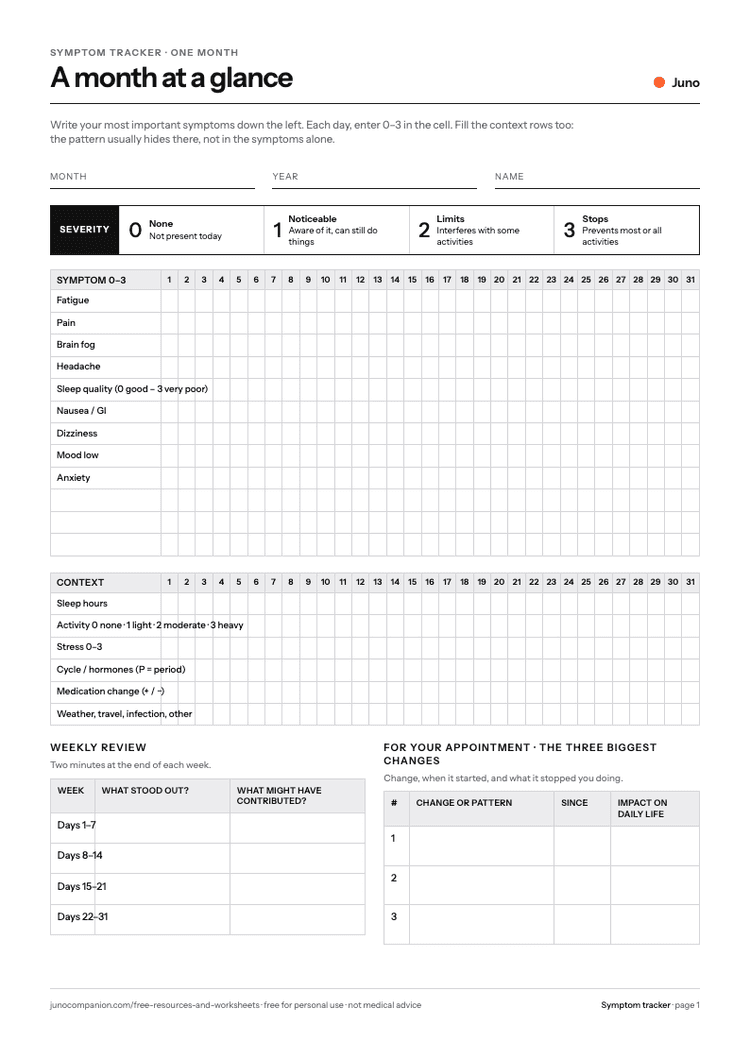
Notes made on the day are easier to rely on than memory. Print the checklist above, or keep a week of the energy and fatigue tracker.
When is tiredness an emergency?
Most tiredness is not an emergency. Get help straight away if it comes with any of these.2
Frequently asked questions
Why am I always tired even when I sleep enough?
How long should I be tired before seeing a doctor?
The NHS says to see a GP if you have been feeling tired for a few weeks and you’re not sure why, if it affects your daily life, or if you also have other symptoms such as weight loss, mood changes or gasping in your sleep.1
What blood tests check why you are always tired?
Common first tests are a full blood count and ferritin for anaemia and low iron, thyroid function, HbA1c for longer-term blood sugar, ESR and CRP for inflammation, liver and kidney tests and a coeliac test. Others, like vitamin D or B12, depend on your symptoms.4
What is the difference between tiredness and fatigue?
Can being tired all the time be a sign of something serious?
Usually it isn’t, but it can be. Tiredness is a symptom of conditions like anaemia, diabetes, thyroid disease, heart disease and depression. Get emergency help if it comes with chest pain, shortness of breath, a fast or irregular heartbeat or feeling you might pass out.2
Could being tired all the time be ME/CFS?
It could if your tiredness gets worse after activity, rest doesn’t fix it, sleep is unrefreshing and you have brain fog, and nothing else explains it. Doctors suspect it after 6 weeks in adults (4 weeks in children and young people) and diagnose it after 3 months. There is no test for it.5
Why am I tired and dizzy when I stand up?
Dizziness and tiredness that come on when you stand and ease when you sit or lie down can be a sign of POTS. A GP may check your heart rate and blood pressure before and after you stand up. Tell them if this is part of your pattern.10
Tools that go with this article
Sources
- NHS: Tiredness and fatigue
- Mayo Clinic: Fatigue, causes and when to see a doctor
- Cleveland Clinic: Fatigue
- NICE Clinical Knowledge Summaries: Tiredness/fatigue in adults, assessment
- NICE guideline NG206: Myalgic encephalomyelitis/chronic fatigue syndrome, recommendations
- CDC: ME/CFS basics
- Johns Hopkins Medicine: POTS, a little known cause of extreme fatigue
- NHS: Underactive thyroid (hypothyroidism)
- NHS: Help for suicidal thoughts
- NHS: Postural tachycardia syndrome (PoTS)
- NHS: Symptoms of type 1 diabetes
Turn day-to-day notes into a clearer health story
Juno helps you track symptoms through conversation, notice patterns, and prepare a structured summary for appointments. Explore Juno’s symptom tracker. Download Juno on the App Store.
This article is for general information only and does not replace advice from your own clinician. Juno is a health assistant, not a medical provider.
Last updated 14 November 2026