Spend energy on purpose.
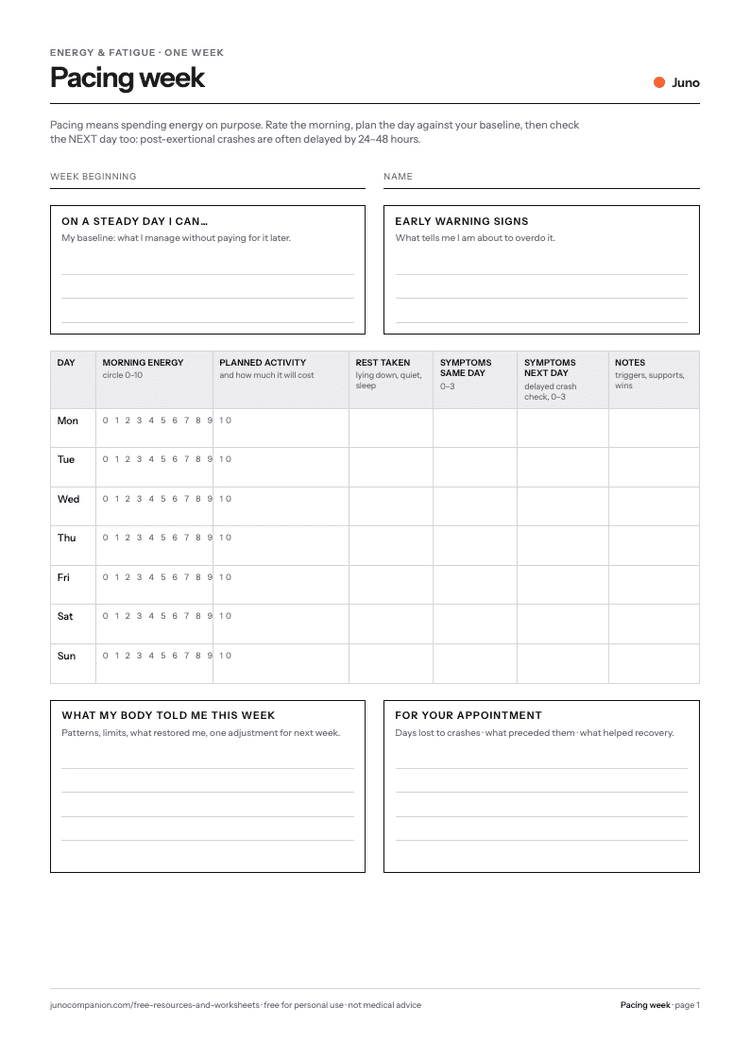
A one-week pacing sheet that checks the next day too, because crashes are often delayed by 24–48 hours.
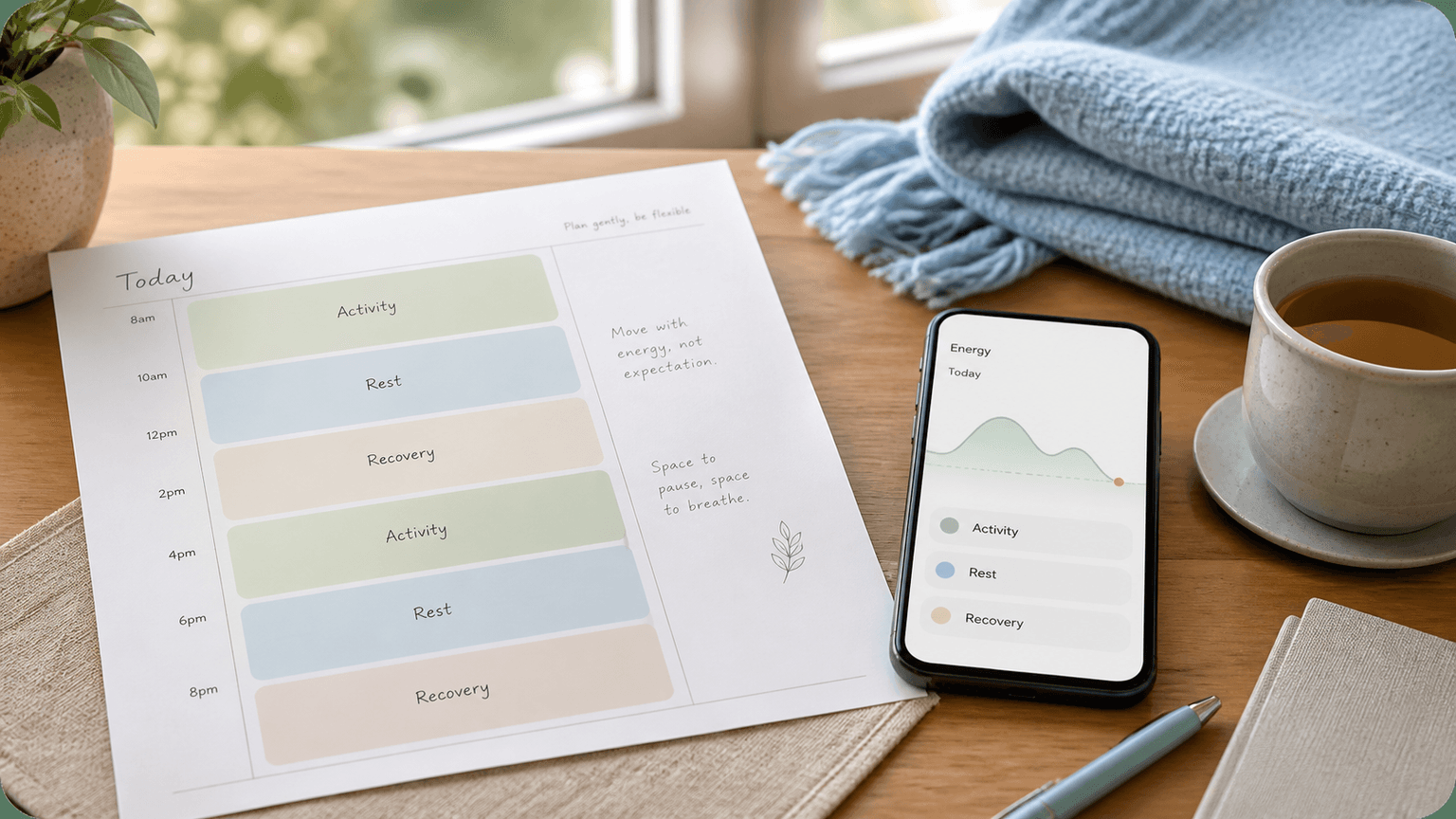
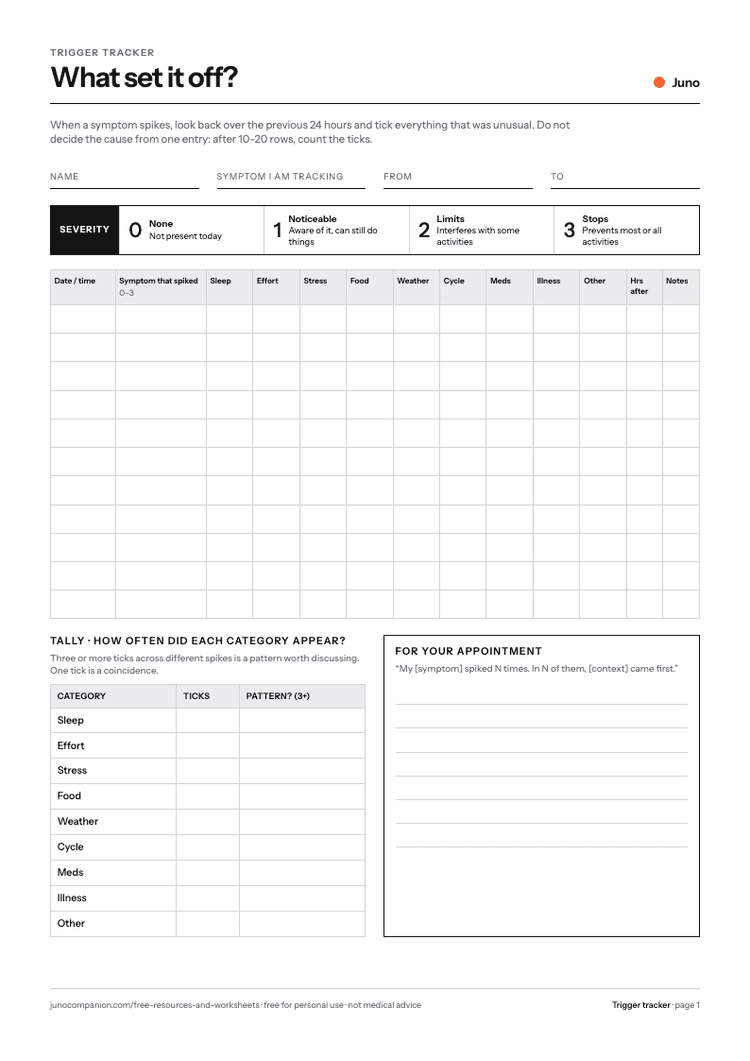
Pacing only works if you can see the bill arrive. This sheet puts the delayed crash check next to the plan.
What it helps you do
- Plan each day against a baseline instead of against yesterday
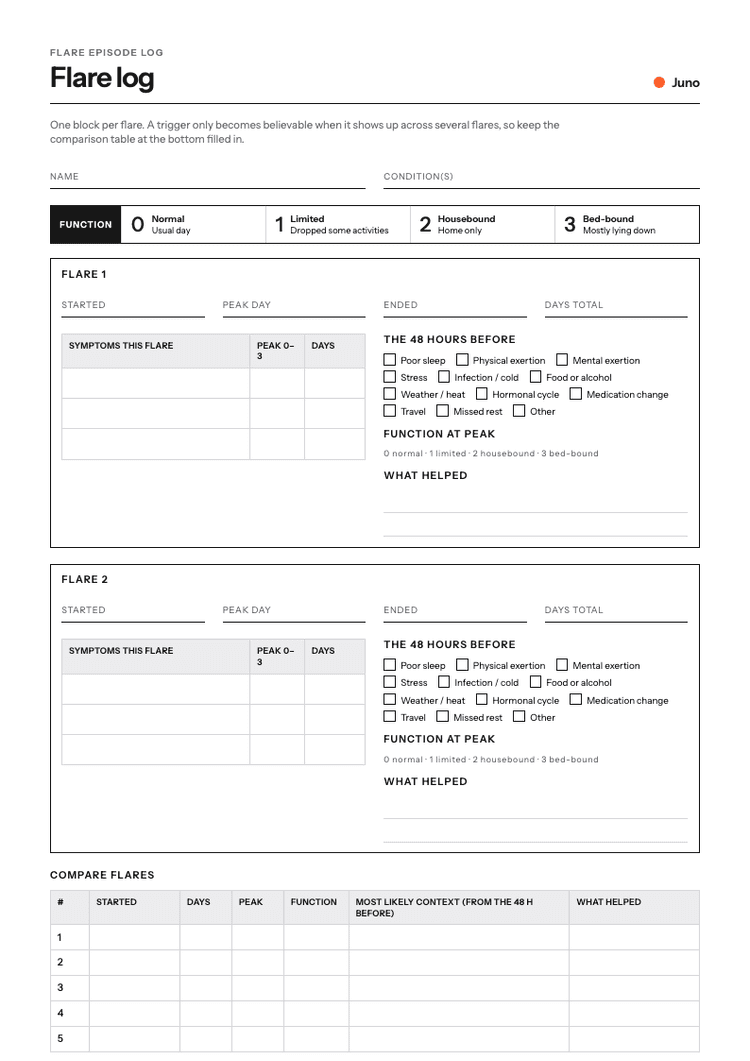
- Catch post-exertional crashes that arrive a day late
- See which rest actually restores you
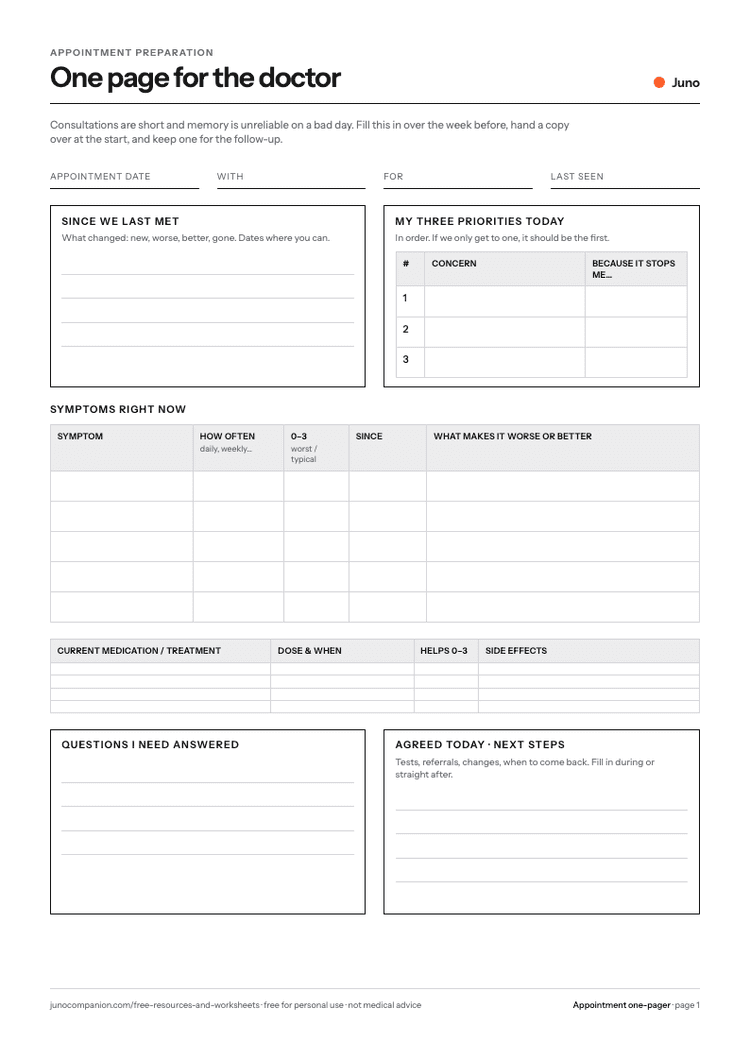
- Show a clinician how many days were lost and why
How to use it
- 1
Write your baseline and early warning signs once.
- 2
Each morning, circle your energy and plan the day with a cost estimate.
- 3
Record symptoms that day and again the next day.
- 4
At the end of the week, write what your body told you.
What is on the sheet
- Baseline: on a steady day I can…
- Early warning signs
- Morning energy 0–10
- Planned activity and its cost
- Rest taken
- Symptoms same day and NEXT day
- Weekly review and appointment notes

Prefer not to use paper?
Tell Juno what happened in a sentence and it goes onto your timeline, ready to review before an appointment.


Questions
What is the pacing week for?
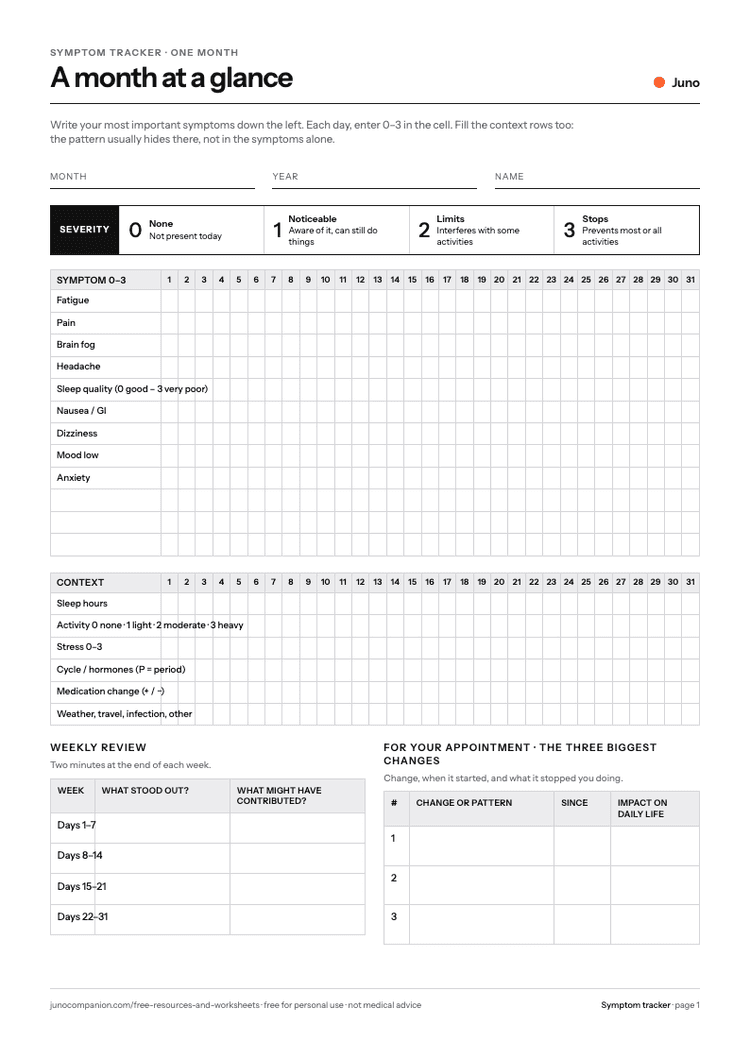
It gives you a structured way to record health context consistently, so patterns are easier to review later.
Can I print it?
Yes. The PDF is designed to be printed or saved digitally.
Can I use it for any condition?
Yes. It is condition-agnostic and can be used alongside chronic illness, recurring symptoms, flares, mood changes, fatigue, pain, or treatment notes.
Is this medical advice?
No. This worksheet is for tracking and appointment preparation. It does not diagnose, treat, or replace advice from a clinician.
Related reading