Juno vs Bearable (2026): Symptom Tracking Compared

Juno helps you track symptoms through conversation. Bearable gives you a structured diary with charts. Here is how they compare when you are living with chronic illness.
Quick answer
Choose Juno if you want to talk or type about your day, record symptoms from those conversations and prepare appointment summaries in one app. Choose Bearable if you prefer a structured diary, charts and a lower price. Both support manual logging; the better fit depends on how you want to track.
A symptom tracker is useful when it helps you remember what happened and gives you something you can act on. With chronic illness, the work of keeping that record matters too: some days you can explain a change; on others, a quick rating is enough.
Juno and Bearable approach that job differently. Juno builds tracking into an ongoing conversation. Bearable centres the experience on entries you choose and charts you can explore. This guide compares what that means for your daily routine, your next appointment and your budget. [2] [12]
Jump to the comparison table, or go straight to pricing and free features.
Juno vs Bearable at a glance
| What matters to you | Juno | Bearable |
|---|---|---|
| Logging | Voice or text conversations, automatic symptom recording, dictation and manual entries. [10] [12] | Custom symptoms, ratings, factors and notes. [2] |
| Patterns | Discuss changes using your shared history and connected health data. [1] [12] | Trends and comparison graphs; detailed correlations with Premium. [2] |
| Reports | PDF appointment summaries from your health history. [12] | Charts, timelines, calendars and CSV exports. [2] [5] |
| Connected data | 20+ advertised connections to wearables and health platforms, including Apple Health, Oura and Garmin. [1] | Apple Health, Health Connect and documented Fitbit syncing; other routes vary by device. [3] |
| Support | Voice and text AI support, check-ins and an in-app community. [4] | Reminders, goals and experiments. [2] |
| Offline use | Internet required. [1] | Offline use reported; not independently tested. [11] |
| Subscription | Juno Pro: $19.99/month or $99.99/year. [6] | Bearable Premium: $6.99/month or $34.99/year. [7] |
These are published features and standard US-dollar prices, checked against the sources below. Features, offers and local prices can change. Detailed Bearable correlations require Premium; Juno’s message and call allowances depend on the plan shown in the app. [2] [6]
Daily logging: conversation or a structured diary?
Juno: start with what you want to say
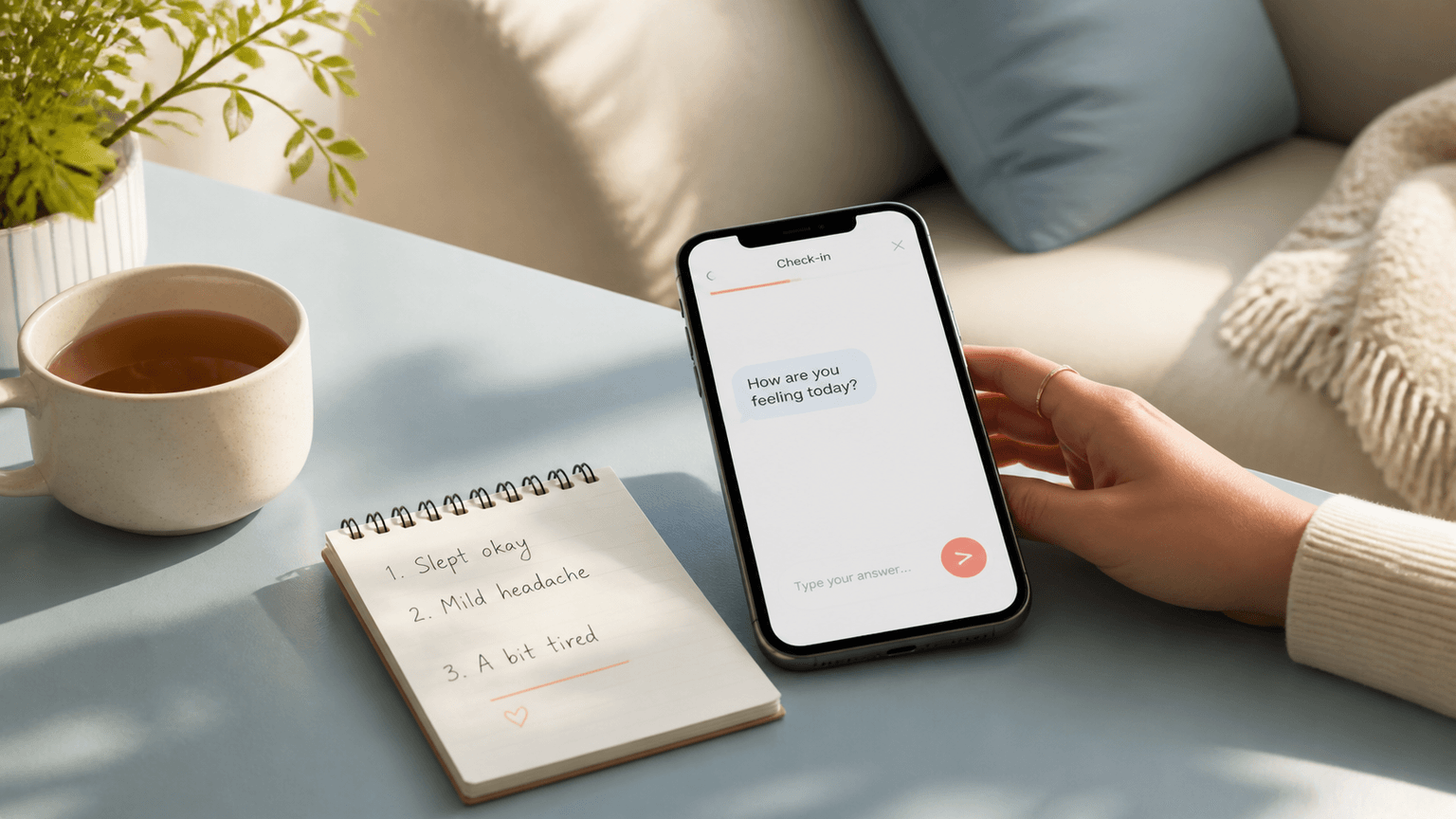
You can tell Juno, “My headache started after lunch, and I had to lie down.” Juno can capture symptom details from a voice or text conversation and build on the health history you have shared. You can also dictate a short message or make a manual entry. [10] [12]
This is what we mean by conversational tracking: the update you share can become part of your symptom record, rather than ending as a message you have to organise later. You can then return to the conversation to add context or ask about a change.
Juno is a good fit if you often know what you want to describe but find choosing fields and writing separate notes tiring. Check important details in the resulting record, especially dates and severity, because an AI can misunderstand what you meant. [6]
Bearable: choose what you want to measure
Bearable lets you set up custom symptoms and factors, record ratings and add notes. You can track sleep, mood, energy, medication and other parts of your routine alongside symptoms. Its free plan includes unlimited custom symptom tracking and symptom notes. [2]
A structured diary can be a better fit when you want to rate the same things each day and compare them later. If you already have a short logging routine that works, conversation may be an extra step you do not need.
Which is easier on a low-energy day?
There is no single easiest way to log. Speaking may help when typing hurts or finding the right fields feels difficult. A few taps may be easier when talking is tiring, you need privacy or you already know which symptom you want to rate.
Juno’s strength is the choice between conversation, dictation, text and manual logging. You can explain more on a better day and leave a short update on a harder one. Bearable suits people who find a familiar set of ratings and notes easier to repeat. [2] [10] [12]
For an illustrative example, imagine you slept poorly, your pain increased and you cancelled a plan. In Juno, you could describe those details in one message and review the symptom information it records. In Bearable, you could log sleep and pain and add a note about the cancelled plan. The information matters in both; the difference is how you enter and revisit it.
Try the smallest useful entry in each app: one symptom, when it happened and how it affected your day. Choose the approach you can realistically keep using. Our guide to tracking without burnout can help you keep that routine manageable.
Patterns: ask questions or explore the charts
Juno brings together conversations, the health history you share and connected measurements so you can discuss changes over time. Its homepage FAQ describes using context such as sleep, activity, weather and pollen. You can add the explanation a measurement misses, such as why you rested more than usual. [1] [12]
Bearable gives you trends and comparison graphs for the past 30 days on its free plan. Premium adds the Impacts tab, a correlations grid and longer report periods. That makes it a useful option if you enjoy examining the relationship between the factors you track and your symptom scores. [2]
Both apps offer health-data connections. Bearable’s documentation explains that the route and available measurements depend on the device and health platform; some wearables connect through Apple Health or Google Health Connect. Check your particular device and the measurements you need before choosing either app. [1] [3]
A repeated pattern is a starting point for a question, not proof of a cause. For example, poor sleep and higher pain may occur together without showing which came first. Use either app to preserve the sequence and bring clearer questions to your clinician.
Appointments: a written summary or selected charts
Juno can turn your recorded history into a PDF summary for an appointment. This is useful if the difficult part is pulling weeks of updates into a readable account. You can check the summary, correct missing details and decide which concerns to raise. See a sample Juno report to judge whether the format suits you. [12]
Bearable’s approach gives you control over which trends, charts and periods to share. Its guidance recommends reviewing your data, preparing questions and taking screenshots of relevant reports. It also offers timelines, calendars and CSV export. [2] [5]
Choose Juno if you want help drafting the account you will bring. Choose Bearable if you prefer to select the charts and entries yourself. With either app, read through what you share and put your most important questions first.
Pricing and free features
| Published standard price | Juno Pro | Bearable Premium |
|---|---|---|
| Monthly subscription | $19.99/month [6] | $6.99/month [7] |
| Annual subscription | $99.99/year [6] | $34.99/year [7] |
At those standard annual prices, Bearable Premium costs $65 less per year. Both companies may offer different local prices or promotions, and the price presented at checkout is the one to use for your decision. [6] [7]
Bearable’s free plan is worth considering before you pay for either app. It includes unlimited custom symptom tracking, mood, sleep, energy and medication tracking, reminders, notes, CSV export, and 30-day trends and comparison graphs. The detailed correlation reports and longer report periods sit in Premium. [2]
Juno is free to download with in-app purchases. Message and call allowances depend on your plan; check those limits and any trial terms in the app. Its paid offering makes most sense if you will use the conversations and support alongside tracking. [1] [4] [6]
If all you need is a consistent diary and basic charts, Bearable’s free plan may already cover it. If conversation helps you keep a record that you would otherwise skip, Juno’s additional features are the reason to consider the higher subscription price.
Privacy and internet access
Both companies say they do not sell personal data. Juno’s privacy policy describes encryption in transit and at rest and restrictions preventing its AI providers from using your health data for model training. Bearable’s policy describes encrypting tracked health data before backing it up on its servers. These are each company’s stated practices; they are not a ranking from an independent security audit. [8] [9]
Juno needs an internet connection. Bearable can be used offline according to the editorial information supplied for this comparison; we have not independently tested that behaviour. If reliable offline logging is essential, confirm how it works on your device before relying on it. [1] [11]
Before connecting a wearable or sharing a report, consider which information you want the app to hold and who should receive it. The Juno privacy policy and Bearable’s linked policy below explain their respective data practices. [9]
Which app should you choose?
Choose Juno if you want tracking and support together
- You would rather describe a change than organise every detail into fields.
- You want voice and text conversations that build on the history you share.
- You want help turning your record into an appointment summary.
- You value support and an in-app community alongside your tracking. [4] [12]
Choose Bearable if a structured diary suits you
- You prefer custom symptoms, ratings, notes and charts.
- You want to review correlations yourself and are considering Premium for its detailed reports.
- You want a substantial free tracking plan or a lower standard subscription price. [2] [7]
Our recommendation is Juno when you want help both keeping the record and talking through it. Bearable is a strong choice when your priority is a structured tracker at a lower cost. You do not need the app with the longest feature list; you need the one that makes your own routine easier.
Try Juno with one short update, or look at an example report before deciding.
About this comparison
This article is published by Juno and compares documented features, pricing and ways of using the apps. The sources include Bearable’s support pages, Juno’s product information and the company-supplied details identified below. It is not an independent product test or evidence that either app improves clinical outcomes.
The examples are illustrative. Feature access and offers can change, so check the current app and checkout before subscribing. Juno is an AI health assistant for tracking and wellbeing support; it does not diagnose or treat conditions. [6]
Frequently asked questions
Is Juno or Bearable better for symptom tracking?
Juno is a better fit if you want to describe symptoms by voice or text and use the conversation to build a record. Bearable suits people who prefer custom ratings, notes and charts. Both support manual logging. Choose based on the routine you can maintain and the features you will use. [2] [10] [12]
Can I log symptoms in Juno without talking?
Yes. You can type an update or make a manual symptom entry. Juno also supports voice dictation when you want to speak a message. You do not have to use a voice conversation every time you record a symptom. Manual logging and dictation details were supplied by the Juno team. [10]
Can I use Bearable for free?
Yes. Bearable’s free plan includes unlimited custom symptom tracking, notes, reminders, CSV export and 30-day trends and comparison graphs. Premium adds detailed correlation reports, longer report periods and other features. You can use the free diary before deciding whether those extras are useful to you. [2]
Can I bring my Bearable history into Juno?
Juno supports bringing in Bearable data according to information supplied by the Juno team, and Bearable offers CSV export. This comparison does not establish an automatic, continuous sync between the apps. Check the available import steps before moving your history, and keep your original export. [2] [10]
Can I use either app without internet?
Juno requires an internet connection. Bearable can be used offline according to information supplied for this article, although we have not independently tested its offline behaviour. If you need to log where reception is unreliable, confirm the available offline features on your device first. [1] [11]
Can I share my tracking with my doctor?
Yes. Juno offers PDF appointment summaries from your recorded history. Bearable offers charts, timelines, calendars and CSV export, and recommends selecting relevant reports when preparing for an appointment. Read through what you share, correct any errors and add the questions you want your clinician to address. [2] [5] [12]
Tools that go with this article
Sources
- Juno homepage FAQs: tracking, integrations, reports and internet access. Open “See more FAQs” for the full set of answers.
- Bearable: Free vs Premium features
- Bearable: syncing with other devices and apps — updated 24 June 2026
- Juno’s US App Store listing
- Bearable: sharing data with a doctor or therapist
- Juno Terms of Service
- Bearable: pricing and principles
- Juno Privacy Policy
- Bearable Privacy Policy
- Juno feature information supplied by co-founder Marshall Gould, 7 September 2026: manual symptom logging, voice dictation and support for bringing in Bearable data.
- Editorial information supplied by Marshall Gould, 7 September 2026: Bearable can be used offline. Offline use was not independently tested for this comparison.
- Juno’s Y Combinator profile and founder launch post
Turn day-to-day notes into a clearer health story
Juno helps you track symptoms through conversation, notice patterns, and prepare a structured summary for appointments. See how Juno works. Download Juno on the App Store.
This article is for general information only and does not replace advice from your own clinician. Juno is a health assistant, not a medical provider.
Last updated: 2026-09-14