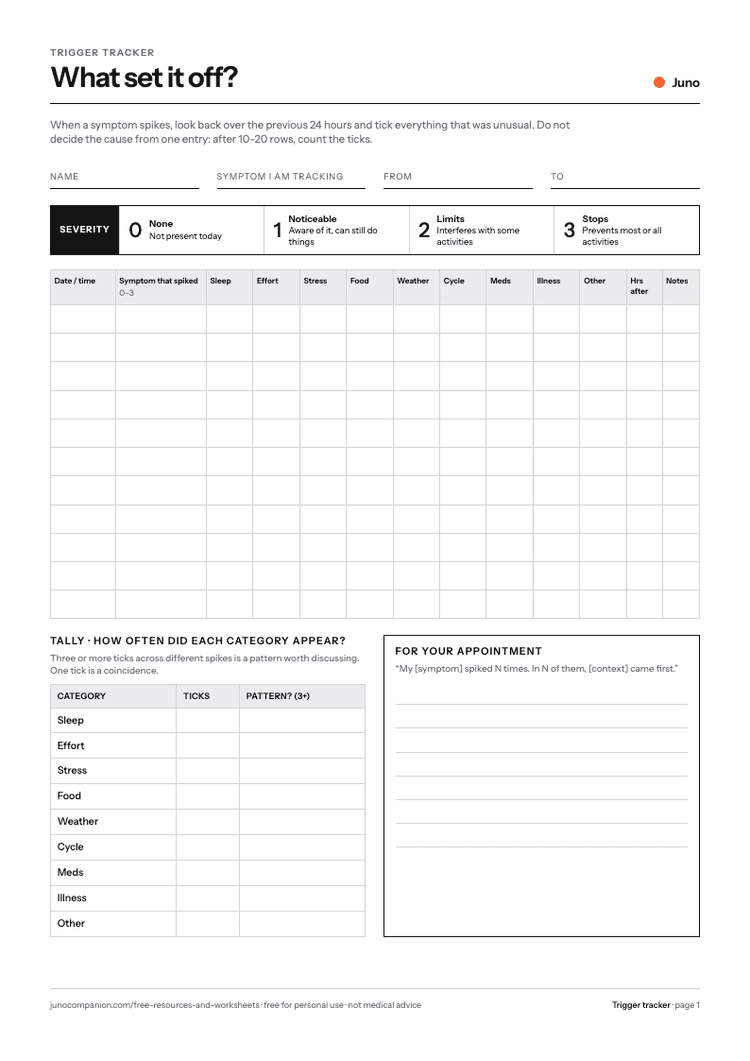
Track mood in context.
Record mood alongside sleep, stress, energy, and symptoms so patterns are easier to see.
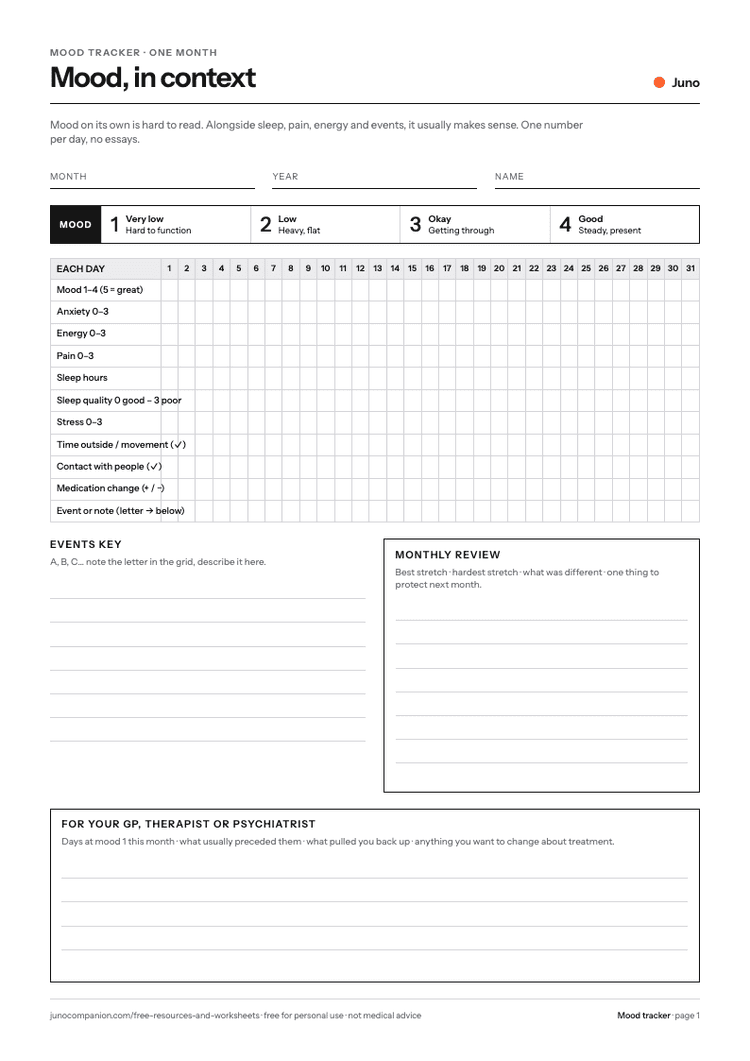
Mood is easier to understand when it is tracked with the context around it.
What it helps you do
- Read mood next to sleep, pain and energy
- Notice the best and hardest stretches of the month
- Link dips to events without writing a diary
- Protect one thing that clearly helped
How to use it
- 1
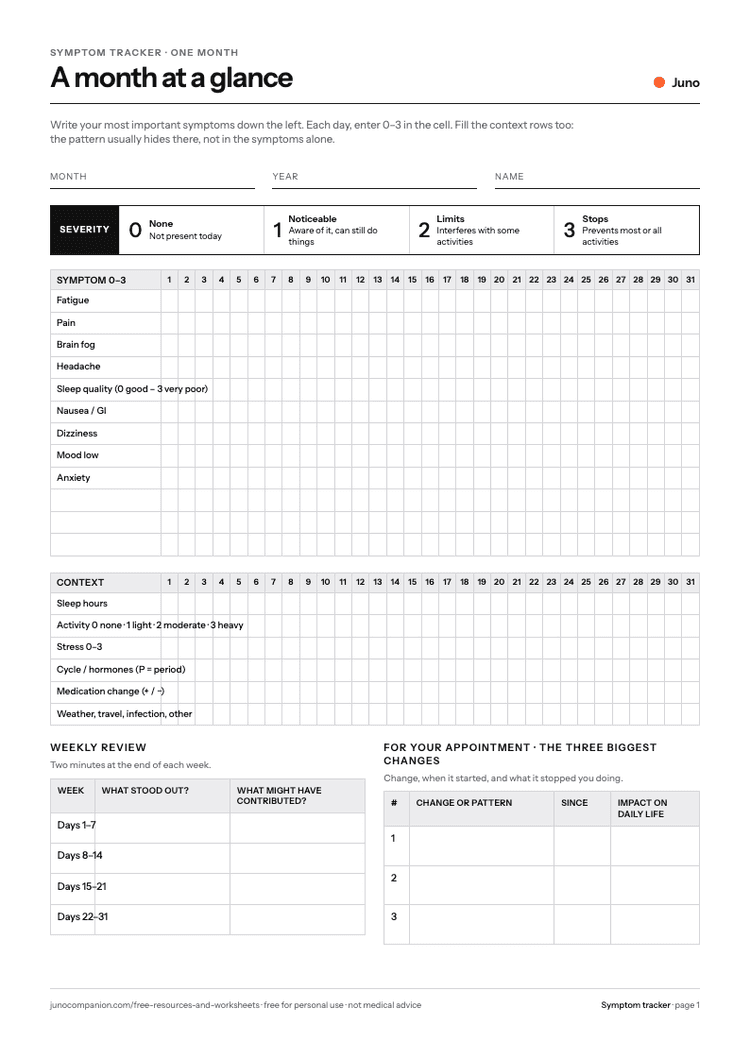
Once a day, fill the column: one number per row.
- 2
Mark events with a letter and describe them in the key.
- 3
At month end, find the best and hardest stretches.
- 4
Write one thing to protect next month.
What is on the sheet
- 31-day grid: mood 1–4, anxiety, energy, pain, sleep, stress
- Movement and contact ticks
- Medication changes
- Events key
- Monthly review

Prefer not to use paper?
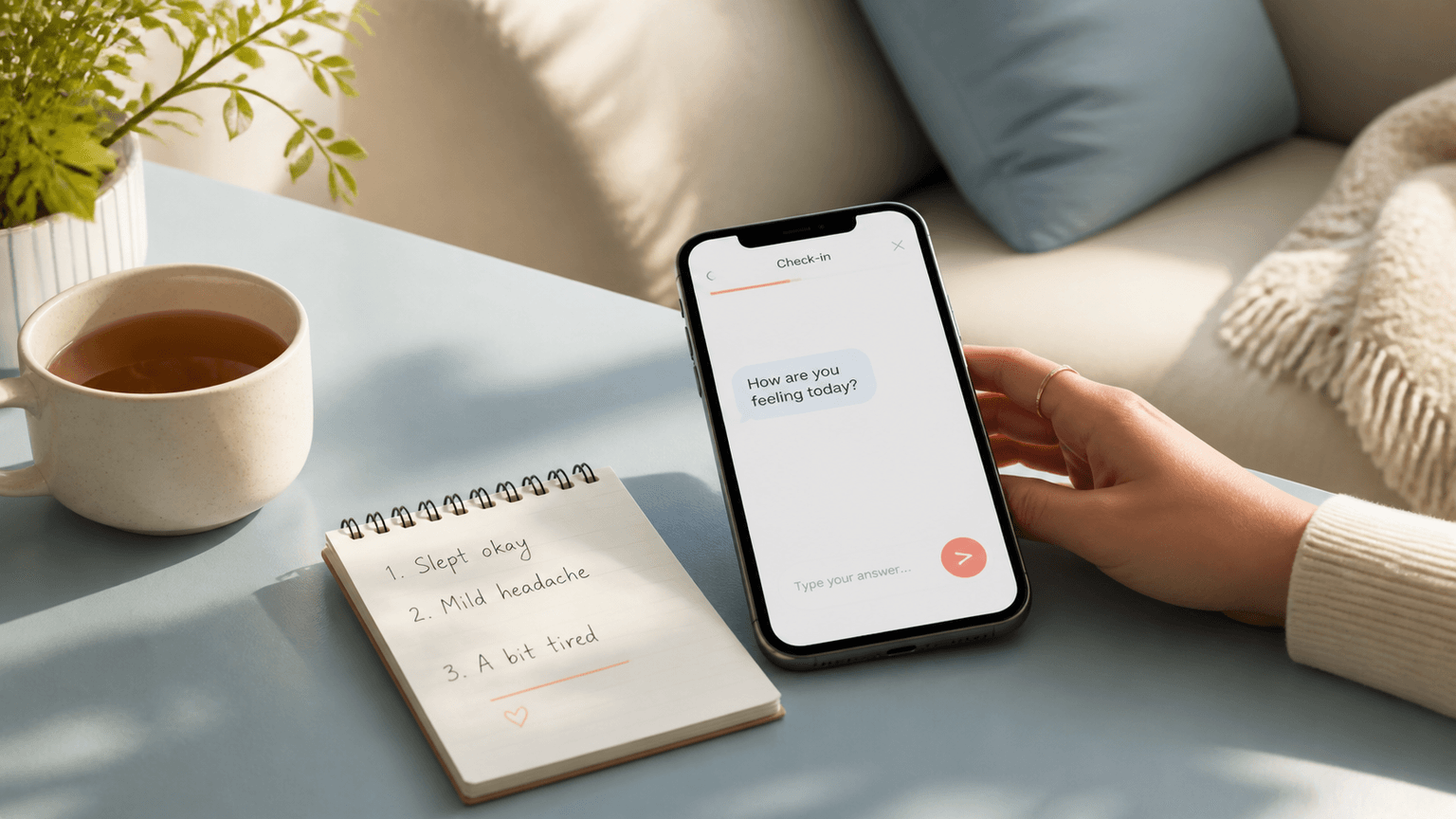
Tell Juno what happened in a sentence and it goes onto your timeline, ready to review before an appointment.


Questions
What is the mood tracker for?
It gives you a structured way to record health context consistently, so patterns are easier to review later.
Can I print it?
Yes. The PDF is designed to be printed or saved digitally.
Can I use it for any condition?
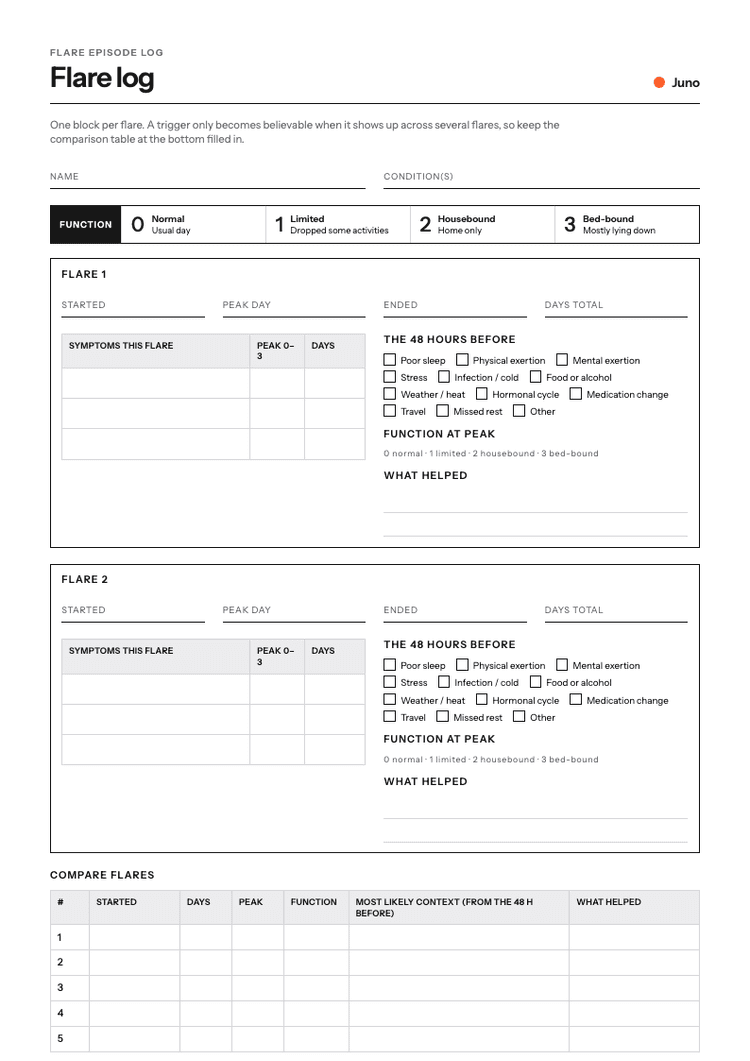
Yes. It is condition-agnostic and can be used alongside chronic illness, recurring symptoms, flares, mood changes, fatigue, pain, or treatment notes.
Is this medical advice?
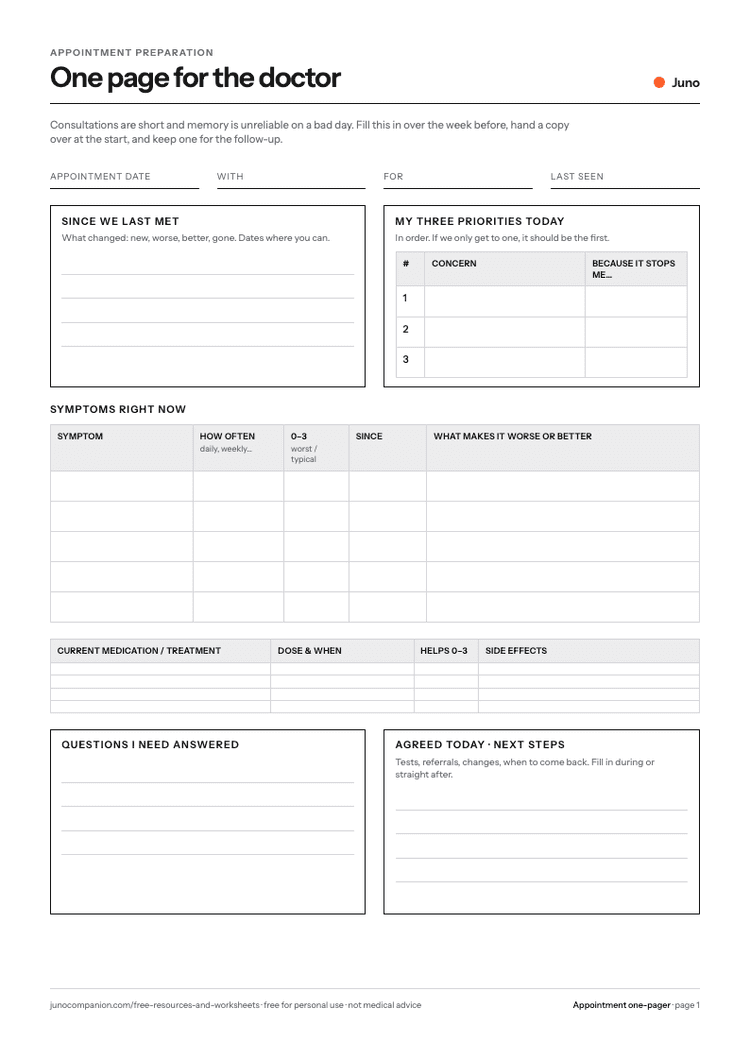
No. This worksheet is for tracking and appointment preparation. It does not diagnose, treat, or replace advice from a clinician.
Related reading