
Spoon Diary: a free spoon theory planner.
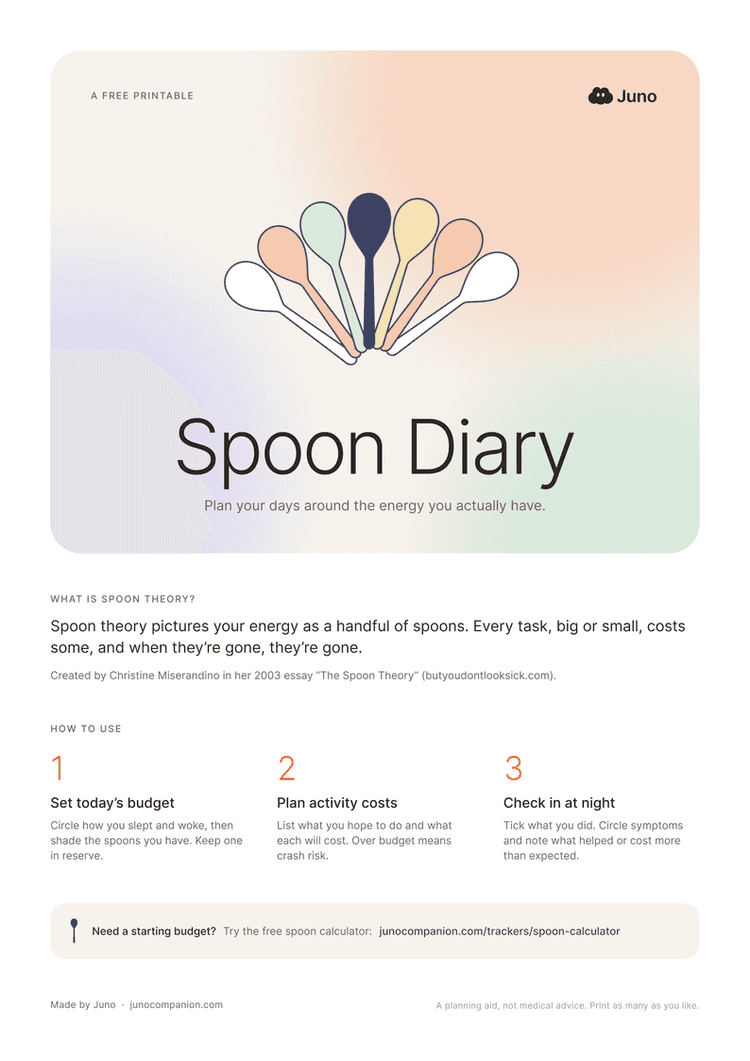
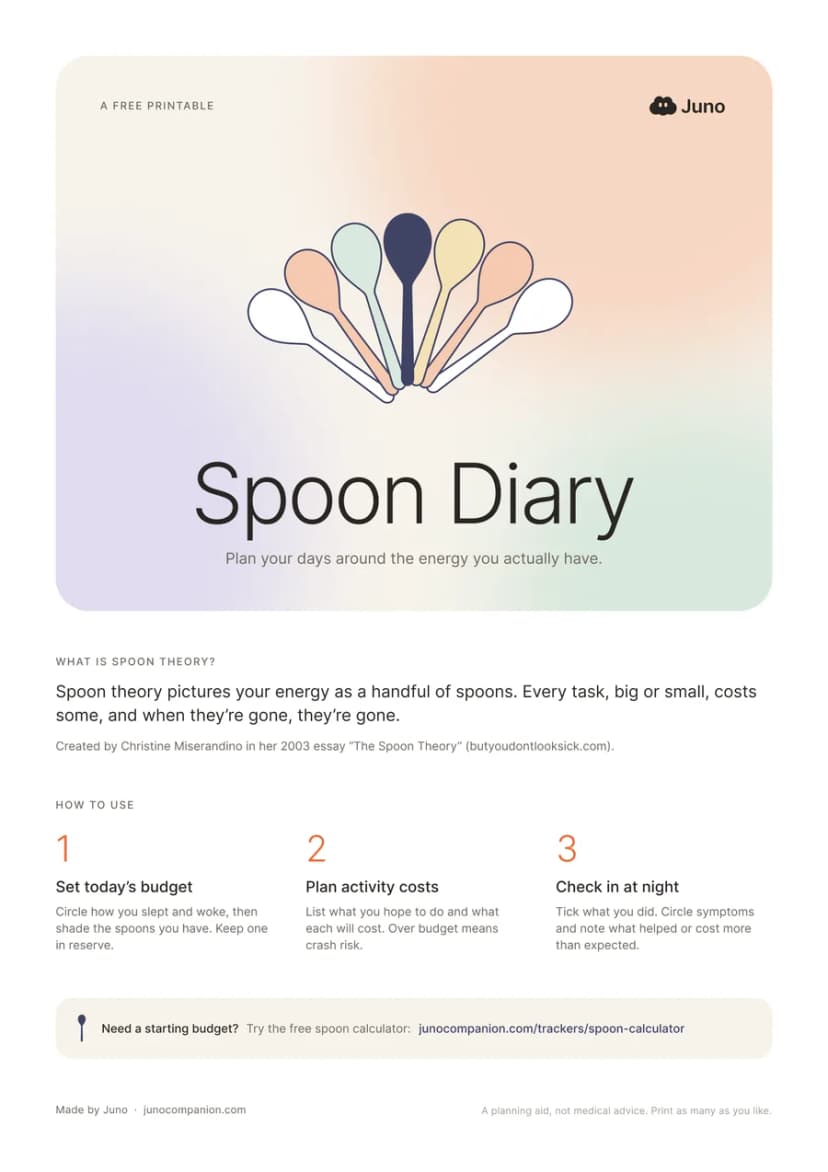
Plan your days around the energy you actually have. Set a spoon budget each morning, plan what things cost, and check in at night.
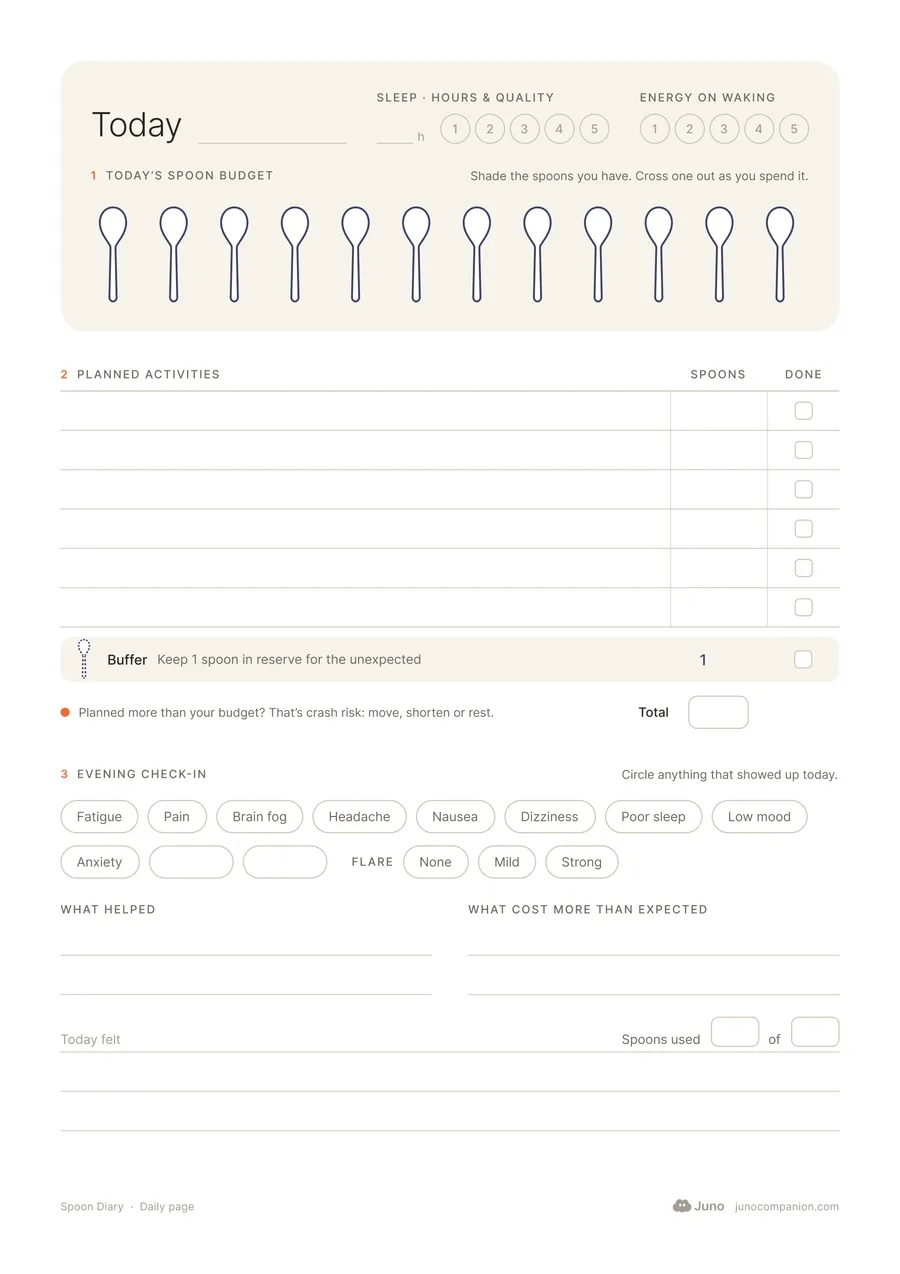
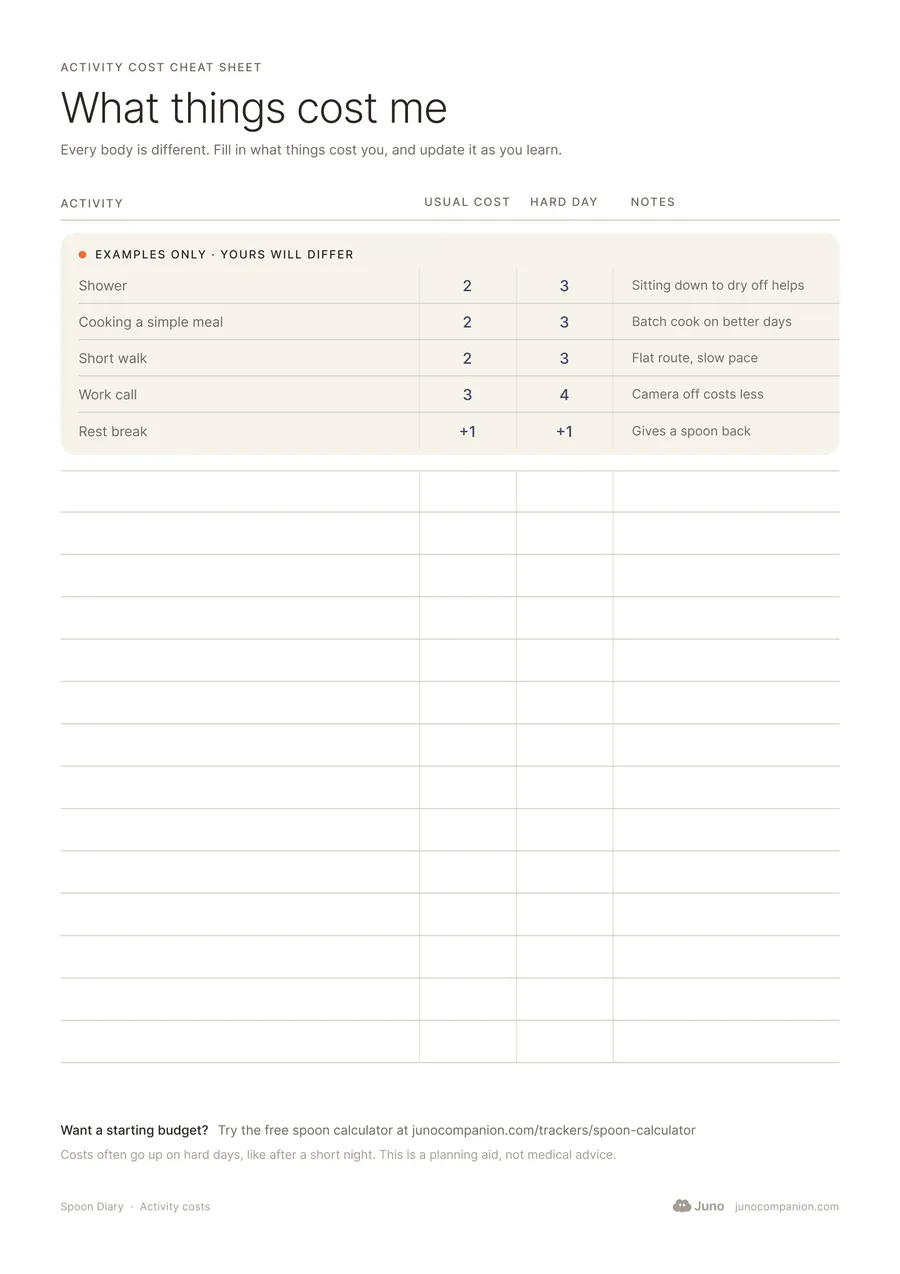
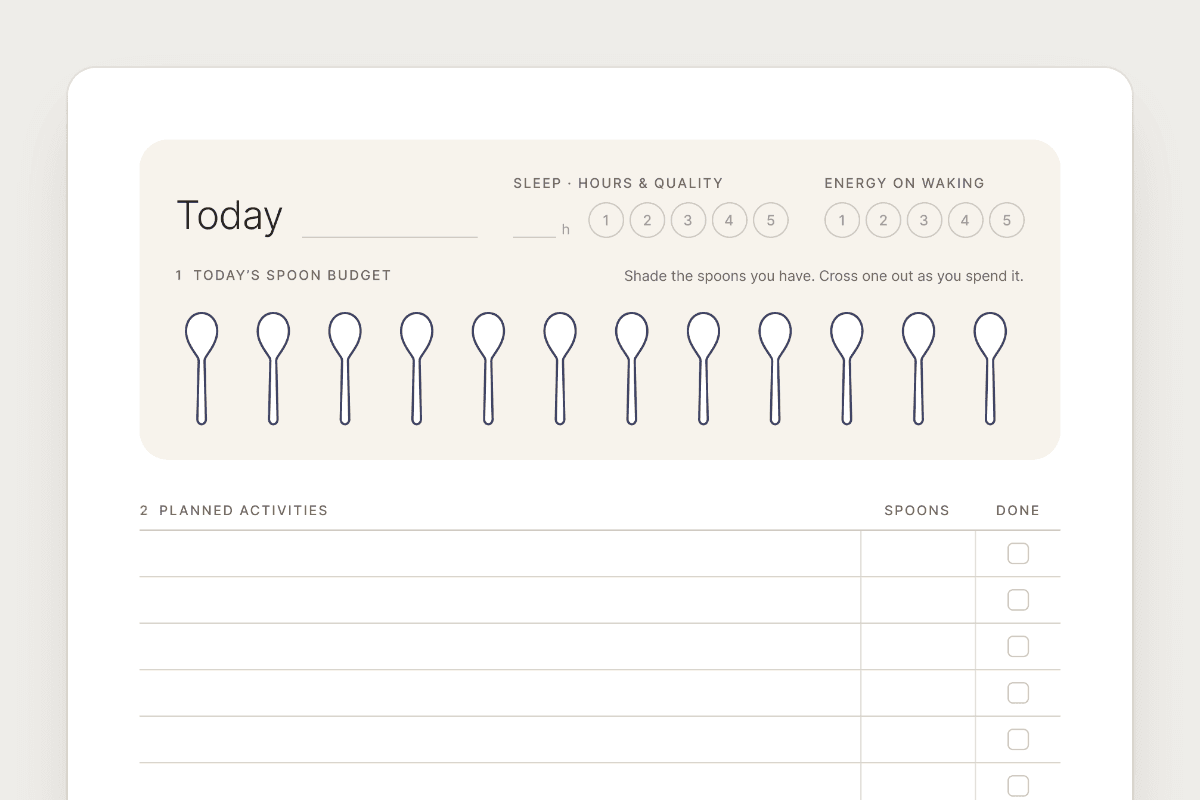
A week's set to print: a daily page with 12 spoons to shade, a list of planned activities with their spoon costs, a buffer spoon kept in reserve and an evening check-in, plus an activity cost sheet and a weekly overview with room for questions for your doctor.
Free · prints well in colour or greyscale · no email needed
What it helps you do
- See how many spoons you have before the day starts
- Price your regular tasks once, then plan against your budget
- Keep a spoon in reserve and notice crash risk early
- Bring a week of patterns and questions to your doctor
How to use it
- Print a week's set: the cover, the activity cost sheet, seven daily pages and the weekly overview. Print at 100% scale; greyscale is fine.
- Fill in the activity cost sheet once. Give each regular task a spoon cost; the example rows are only a starting point.
- Each morning, note your sleep and energy, shade the spoons you have and plan what you hope to do. Keep one spoon in reserve as a buffer.
- Tick things off during the day. If the plan goes over budget, that is crash risk: move, shorten or rest something.
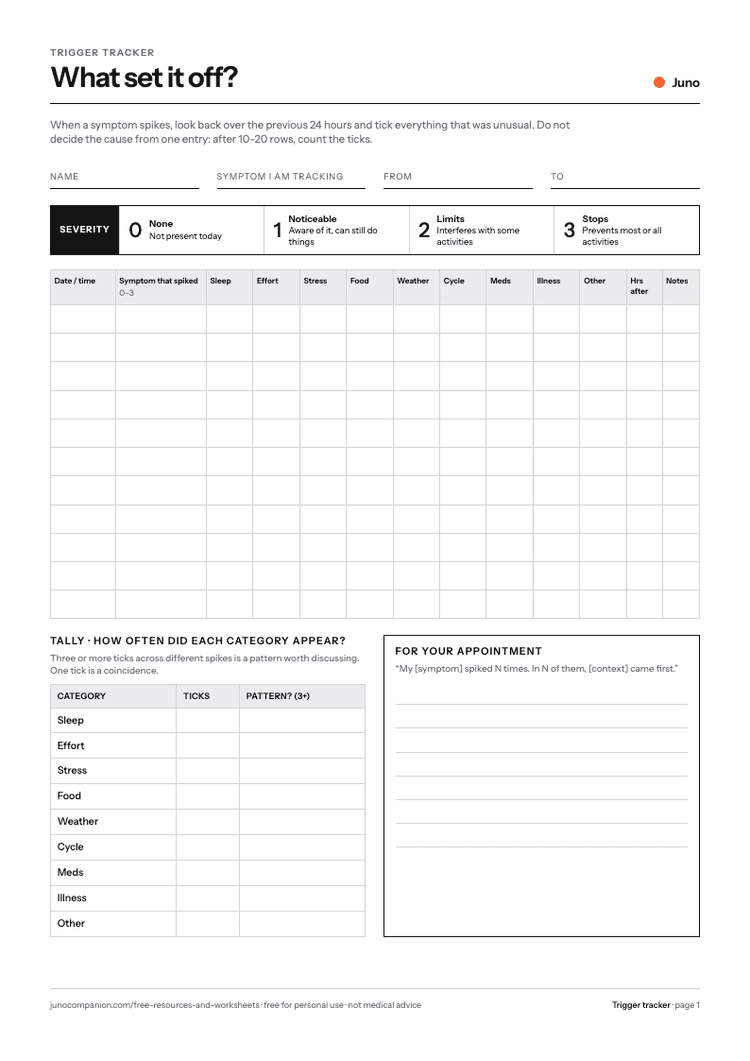
- In the evening, circle any symptoms, then note what helped and what cost more than expected.
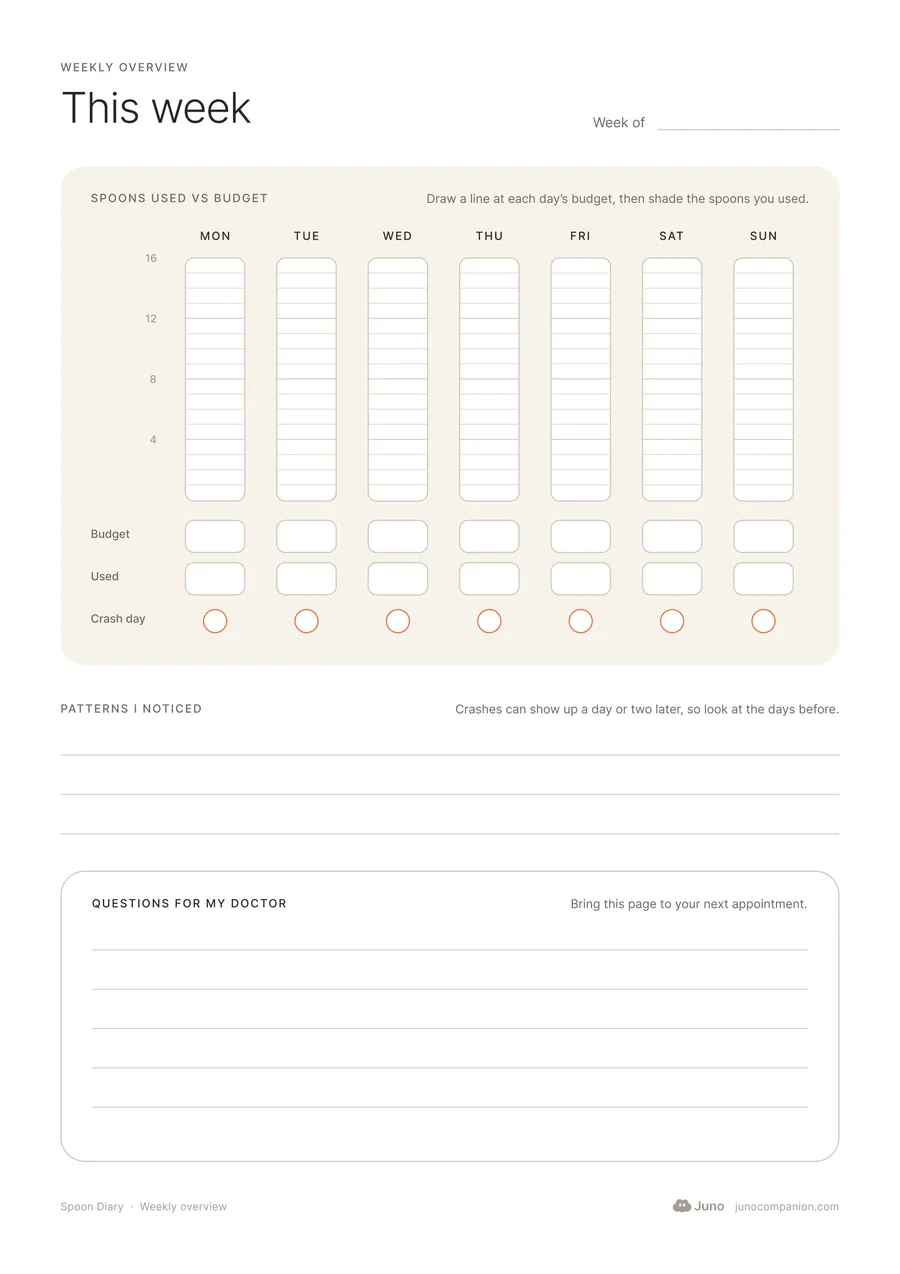
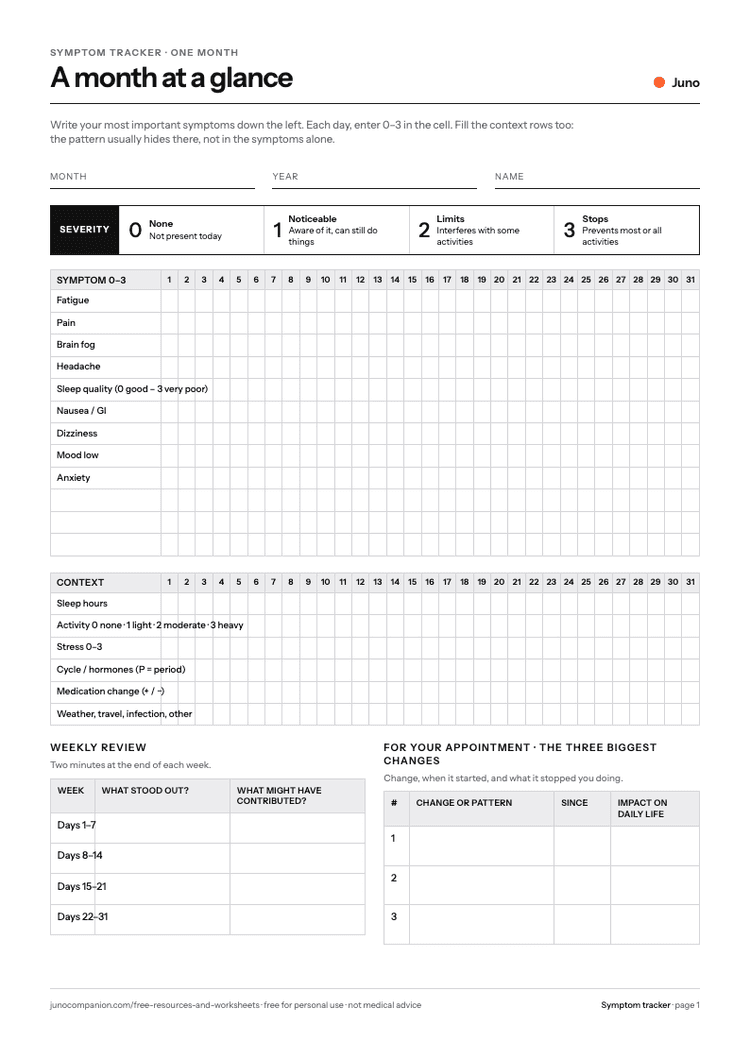
- At the end of the week, fill in the weekly overview: spoons used against budget, crash days, patterns you noticed and questions for your doctor.
What is on the sheet
- Sleep and energy on waking
- 12 spoons to shade for today's budget
- Planned activities with spoon costs
- A buffer spoon kept in reserve
- A crash-risk check
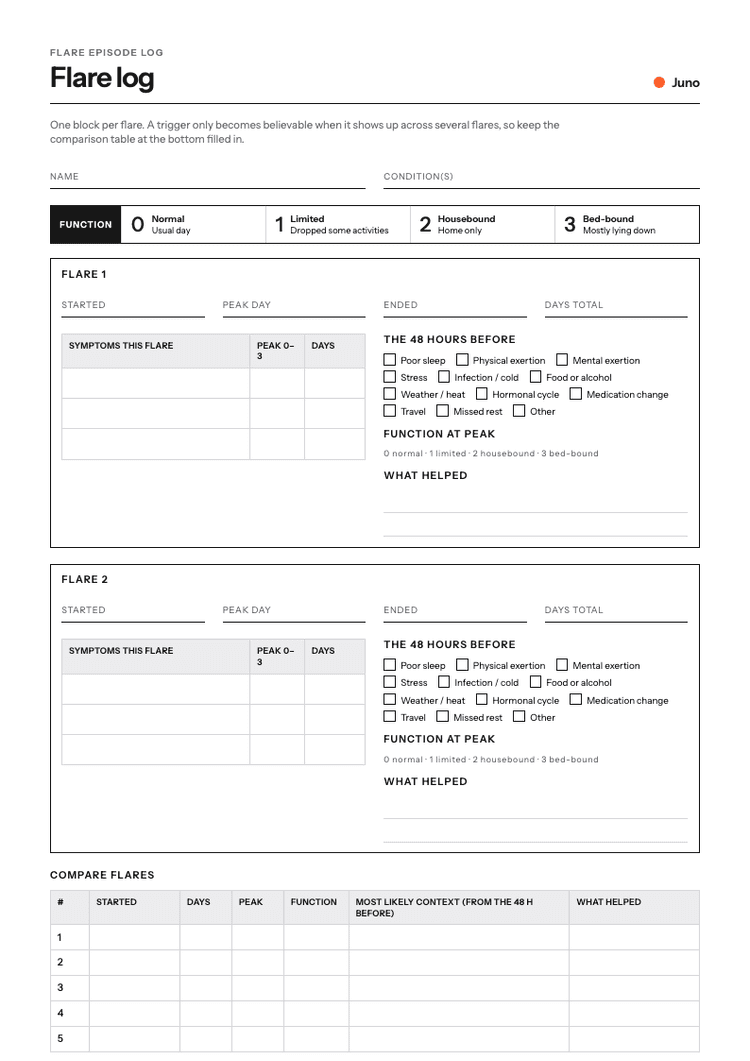
- Symptoms and flares to circle
- What helped and what cost more than expected
- A weekly overview with questions for your doctor
- An activity cost cheat sheet

Prefer not to use paper?
Tell Juno what happened in a sentence and it goes onto your timeline, ready to review before an appointment.


Free to download. Juno is a health assistant, not a medical provider, and never replaces advice from your own clinician.
What is inside
10 pages in each PDF, A4 and US Letter. Print the daily page as often as you like.
Where the spoons come from
Spoon theory was created by Christine Miserandino, a writer who lives with lupus, in her 2003 essay “The Spoon Theory”. It pictures your energy as a handful of spoons: every task costs some, and when they are gone, they are gone. Read spoon theory explained for where the idea came from and how people use it.
Not sure how many spoons to shade? The free spoon calculator turns how you feel today into a starting budget and shows when a plan risks a crash.
The Spoon Diary is a planning aid, not medical advice. It does not diagnose or treat anything. If your energy or symptoms are changing, talk to your clinician.
Questions
What is a spoon diary?
A spoon diary is a daily planner built on spoon theory. You give your energy a number of spoons, plan what each task will cost and check in at night, so over a week you can see what drains you and what helps.
Who created spoon theory?
Christine Miserandino, a writer who lives with lupus, in her 2003 essay The Spoon Theory on her website But You Don't Look Sick. The Spoon Diary is built on her idea and is not affiliated with her.
How many spoons should I start with?
The daily page has 12 spoons, the number in Miserandino's story. Shade fewer on a low day. For a starting number, the free spoon calculator turns today's energy into a budget.
What is in the PDF?
Ten pages: the cover and how-to, the activity cost sheet, seven daily pages and a weekly overview. There is an A4 and a US Letter version. Print at 100% scale; it prints well in greyscale.
Is this medical advice?
No. The Spoon Diary is a planning aid. It does not diagnose or treat anything and does not replace advice from your clinician. If your energy or symptoms are changing, talk to them.
Can I keep a spoon diary in an app instead?
Yes. In the Juno app, a daily energy check-in sets your spoon budget and Juno estimates what each task costs. The paper diary works on its own if you prefer to write things down.
More free worksheets
See all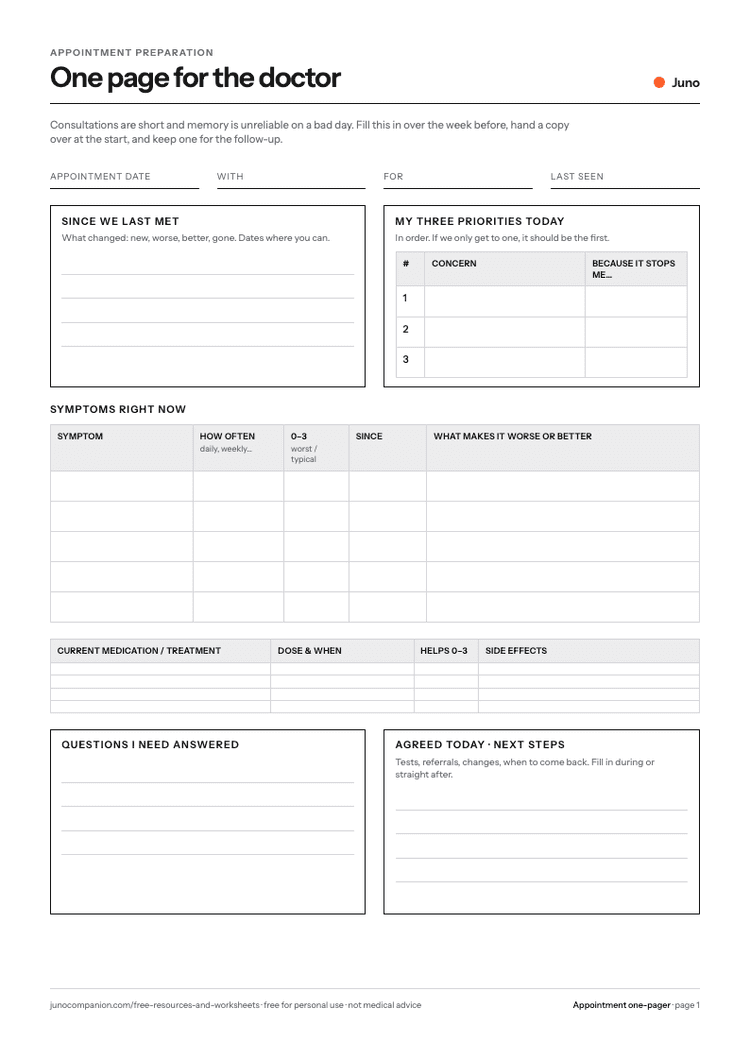
Juno, your 24/7 health assistant
- Free to download
- Syncs with 20+ wearables
- Doctor-ready summaries
Free to download. Juno is a health assistant, not a medical provider, and never replaces advice from your own clinician.